
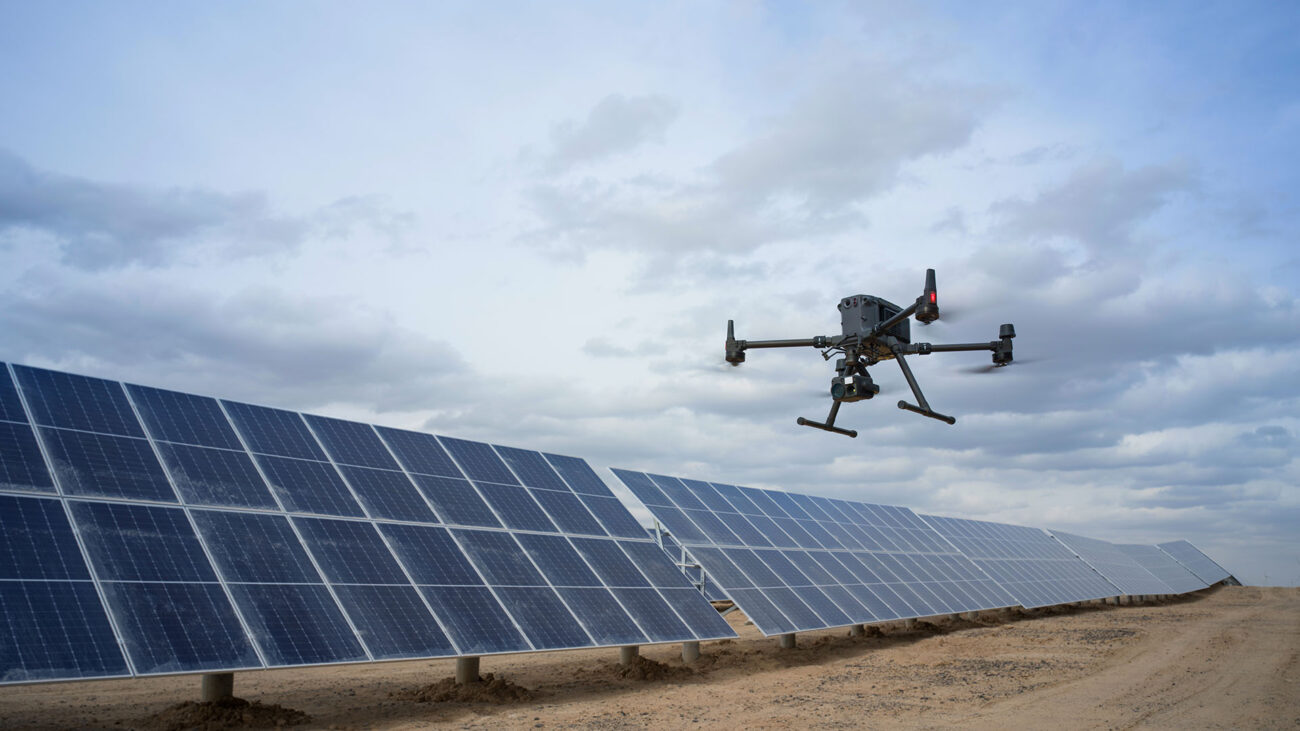
As the global renewables sector ramps up to meet Net Zero 2030 targets, new tech is reshaping the solar industry. In markets such as the US, Canada and Australia, thermal drone inspection has already become standard practice for both solar farms and commercial rooftop PV systems. It’s quickly replacing older, labour-heavy approaches like handheld thermography and IV curve tracing, which take far longer and cover far less.
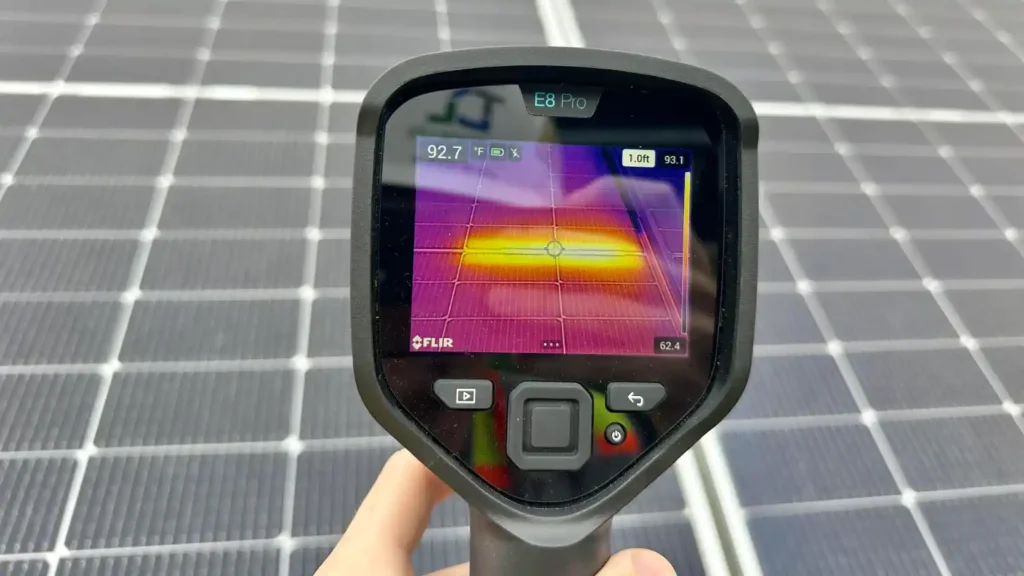
Here in Ireland, though, we’re still at an early stage. A handful of solar farms are already using drones to speed things up, but plenty of crews nationwide are still relying on handheld kit. By 2026, drones have proven to be up to 80% faster and around 65% cheaper than manual inspections, saving more than €2,600 per MW inspected.
Cost Comparison: Drone vs Manual Solar Inspections in Ireland
Traditional manual inspections, whether that’s handheld thermography, electrical testing or I-V curve tracing, are labour-heavy, patchy in coverage and expensive. With global solar capacity projected to reach 2.3 TW by 2025, squeezing performance from every array matters. In practice, manual checks often only touch 10–25% of a PV system, which means issues like hotspots and micro-cracks can slip through and chip away at output by as much as 5% per year.
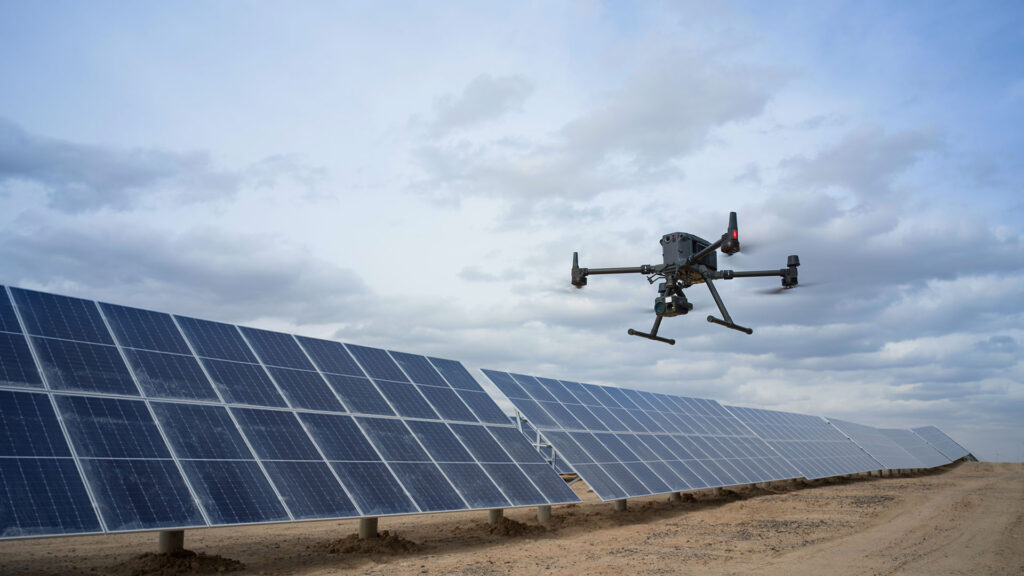
On a typical 10 MW solar farm, a manual inspection team can be looking at roughly 25 hours per MW. At €32–35 per hour, that’s around €10,000 in labour costs alone, before you factor in access time, reporting, repeat visits, or the opportunity cost of slower fault detection.
Aerospec Technologies, a solar O&M company, estimates that a single technician would need roughly 25 hours on foot to inspect 1 MW. Based on average Irish O&M technician rates (€30-€40/hr), a full walk-through inspection of a relatively small 5 MW site would come in at roughly €4,000 in labour alone.

| Farm Size | Manual Cost (Est.) | Manual Time (Hrs) | DJI M400 + H30T Time (Hrs) | Time Savings |
| 5 MW | €3,583 | 125 | 0.75 | ~99% |
| 10 MW | €7,167 | 250 | 1.50 | ~99% |
| 20 MW | €14,334 | 500 | 3.00 | Massive Efficiency |
| 50 MW | €35,834 | 1,250 | 7.50 | Game Changer |
| 100 MW | €71,669 | 2,500 | 15.00 | Full ROI < 1 Month |
The biggest win with aerial inspections is speed. Done well, they can cut inspection time by up to 75% versus on-foot methods, while still delivering very high confidence in the results. In 2026, platforms such as the DJI Matrice 400 RTK paired with a Zenmuse H30T thermal sensor can inspect a 20 MW solar farm in roughly 2 to 4 hours. Compare that with the order of 500 hours, about 20 working days, for an equivalent manual programme.
On larger sites the gap only widens. A 100 MW farm can be covered in around 10 to 20 hours by drone, versus roughly 2,500 hours, about 100 working days, on foot. That speed also helps minimise disruption, which is important when downtime on a medium-sized site can run to €1,000 to €5,000 per day. One solar asset owner reports saving €476,104 per year (inflation-adjusted to 2025 levels) by identifying and repairing defective modules that were unlikely to be picked up during routine walk-through inspections. With automated missions and AI-assisted planning, drones can typically cover 10 to 50 MW per day at up to 20 mph, capturing high-resolution thermal and RGB imagery that aligns with IEC 62446-3:2017 requirements.
Revenue Loss Estimations
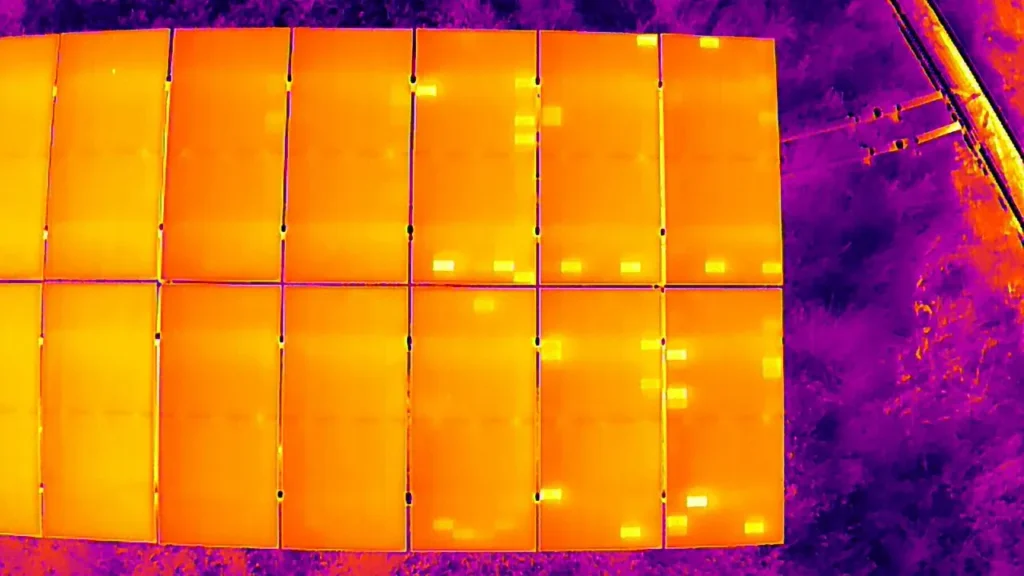
Aerial thermography inspections can deliver actionable data quickly, using 2025-level analytics to help optimise solar farm performance. Reports often estimate the likely revenue impact of faults and anomalies, taking account of local electricity rates and weather conditions. For instance, a 50 MW site in Co.Wicklow seeing a 4.9% loss from inverter issues could be down c. €209,000 per year at €0.10/kWh, while a 20 MW site in the Midwest with tracker faults might lose around €80,000 annually. A proper report typically include:

In-house or outsource?
A common question is whether to bring drone-based solar inspections in-house by training your own pilots, or to outsource the work to an experienced provider. Both routes can make sense, and the right choice usually comes down to three key questions:
1.How many inspections do you actually need to carry out?
Start with how many PV systems you manage and how often they need checking, typically once a year. Larger national solar and O&M firms looking after hundreds of sites often get better value from running an in-house programme. Smaller outfits with fewer than ten sites may find outsourcing more cost-effective, simply because the inspection workload isn’t frequent enough to justify building a full internal setup.
Do you have the capital to invest?
Infrared drone solar inspections are a very specialised area. In 2026, setting up an in-house programme typically means a minimum outlay of around €30,000, covering kit, training and software. That would include a higher-end platform such as the DJI Matrice 400 RTK €9,999 +VAT paired with a Zenmuse H30T thermal sensor €9,990+VAT, plus software subscriptions (about €4,300 per year) and pilot training (around €2,600) and 30-45 days (include time waiting prioerd for exam).
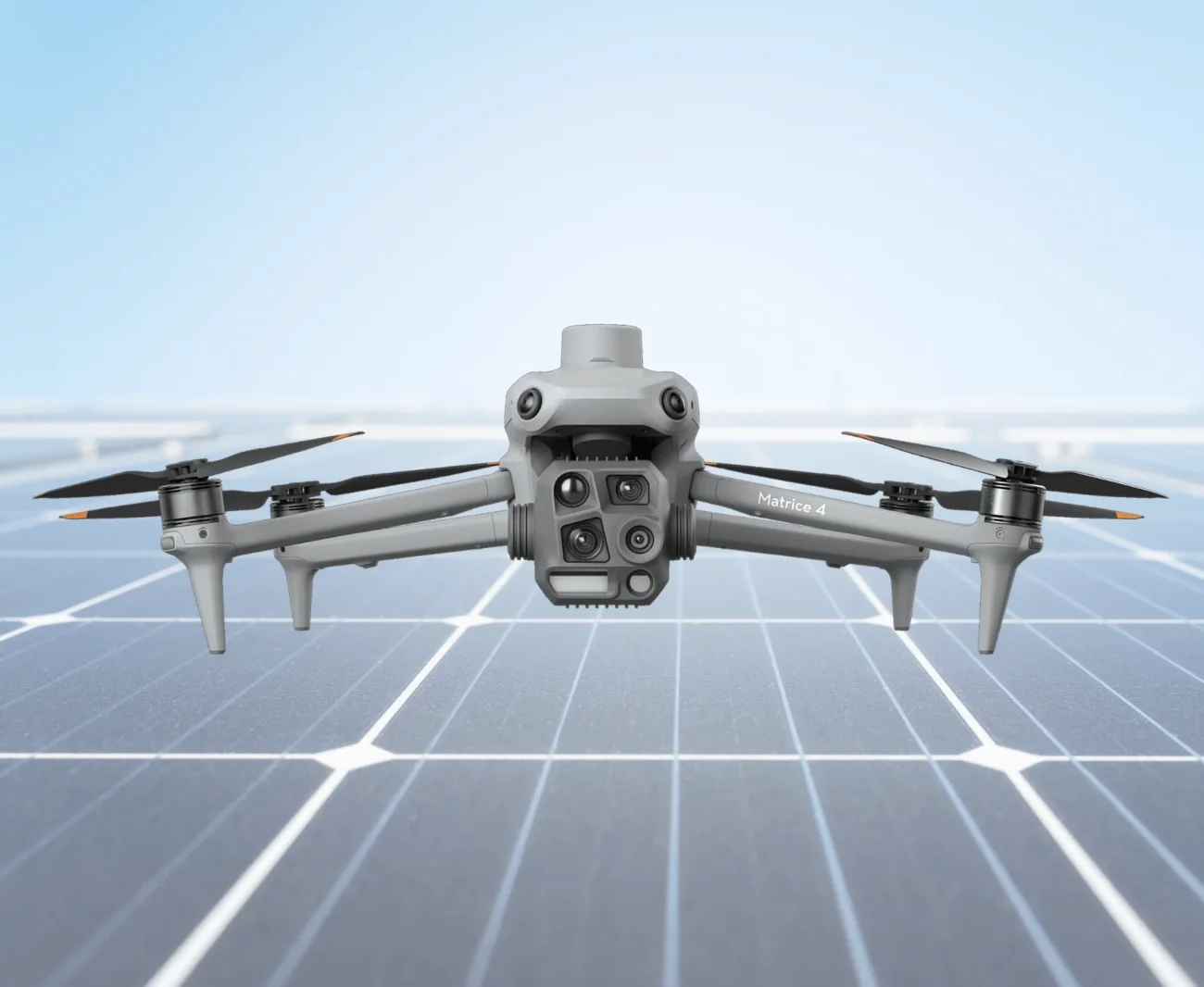
The Matrice 400 RTK paired with the Zenmuse H30T has become a go-to setup for aerial inspections, as it gives you both RGB and thermal in one workflow for pinpointing anomalies and then verifying them visually. DJI lists the H30T as a supported payload for the Matrice 400, and the H30 series is specced for platforms including DJI Matrice 400 and Matrice 350 RTK. (DJI)
More budget-friendly options, such as the DJI Matrice 4T, may come with slightly lower top speed, payload flexibility and endurance, but they can still deliver solid results in 2026 provided your processing stack is up to scratch and your capture settings are consistent.
Control vs. Capital: Why Owning Makes Sense in 2026
While outsourcing avoids initial capex, it comes with a hidden cost: Scheduling Dependency. In Ireland’s limited sunny windows, waiting for an external contractor can mean missing critical inspection times.
By investing in a DJI Matrice 400 RTK, you own the asset. This means you can inspect immediately after a storm, verify repairs the next day, and run ad-hoc checks without raising a new PO every time. With the H30T’s modular design, the platform is built to last, making the “capital churn” argument less relevant for modern enterprise gear.
Step-by-Step ROI Calculation for 50MW Solar Farms
Infrared drone inspections can cut labour time by up to 75% and pick up performance losses that walk-through checks often miss, which helps protect revenue. As a worked example, a 50 MW site inspected in roughly 5 hours (versus about 50 days on foot) could save c. €37,000 in labour, and recover c. €217,000 per year by identifying and fixing issues such as inverter faults.
Step 1: Work out the initial investment
Add up the cost of the aircraft, thermal payload, training, and software. A practical in-house setup typically comes in at around €31,000 for a Matrice 350/400-class platform with a thermal sensor, pilot training, and the core software you’ll need to process and report the data.
Step 2: Estimate the annual benefit
It’s usually two parts: labour saved and revenue recovered.
Labour savings can be modelled as 25 hours per MW × €28/hour, which is about €744 per MW. For a 50 MW site, that’s c. €37,000 per year.
Recovered revenue can be estimated as loss % × annual yield × tariff. For example:
4.9% × 2,000 MWh per MW per year × 50 MW × €0.10/kWh, which works out at about €217,000 per year under those assumptions.
Put together, the annual benefit is c. €254,000 (€37,000 labour + €217,000 recovered revenue).
Step 3: Factor in inspection frequency
Most sites work on one full thermography inspection per year. If you’re inspecting twice a year, or you’re managing multiple sites, scale the annual benefit accordingly.
Step 4: Calculate the payback period
Payback = initial investment ÷ annual benefit. Using the example above:
€31,000 ÷ €254,000 ≈ 0.12 years, or roughly 45 days.
Step 5: Calculate ROI
ROI = [(total savings over the equipment cycle − initial investment) ÷ initial investment] × 100. Over a 5-year upgrade cycle, total savings would be 5 × €254,000 = c. €1.27m, giving an ROI of around 4,000% on the same assumptions.
Evaluate Your Business Needs
To figure out whether drone inspections are a good fit for your business, it’s worth looking at a few practical questions.
How often are your sites inspected?
Owning a DJI M400 allows you to inspect quarterly or after every storm event, drastically lowering the cost-per-inspection compared to hiring external crews.
What inspection methods are you using today?
Handheld thermography and I-V curve tracing still have their place, but they’re slower and usually less complete than an aerial survey.
How thorough is the coverage?
A drone-led inspection can cover the full array, whereas manual programmes often rely on sampling, which means faults can slip through.
How do you track faults once they’re found?
The DJI Terra software included in our package automatically generates geo-referenced anomaly maps, allowing your maintenance team to drive straight to the exact panel for repairs.
How strong is your data set?
The Zenmuse H30T sensor captures radiometric thermal and high-res RGB data simultaneously, giving your engineers crystal-clear evidence to process warranty claims.
Do inspections force downtime?
Drones can reduce disruption significantly. In many cases you can survey with little to no downtime, instead of dragging disruption across the site as crews move row by row.
What are inspections costing you today?
Manual labour costs ~€744/MW. Investing in your own drone hardware eliminates this recurring cost, offering a full ROI typically within the first 50 MW inspected.
How long do inspections take?
Drones can typically cover 10–50 MW per day, compared with roughly 25 hours per MW on foot, freeing up people and time for higher-value work.With the DJI M400’s flight time and speed, your own team can cover 50 MW in a single day, versus days on foot.
Infrared drone inspections are reshaping how solar O&M is done in 2026, cutting inspection time by up to 75% and saving around €2,100 per MW, while helping keep workflows aligned with standards such as IEC 62446-3 and NFPA 70B. These inspections provide precise Delta T readings, making it easier to spot anomalies like inverter faults and tracker issues early, avoid costly downtime, and lift overall energy yield.
Get Expert Support in Ireland
If you want to learn how thermal drone technology can drive massive returns for EPC installers, asset owners, and O&M teams, Request Quote for DJI M400 Solar Package.
As an Official DJI Enterprise Dealer in Ireland, we provide full technical support and local warranty services directly from our Dublin base. We currently have the Matrice RTK 400 in stock and ready for immediate collection.Unlike buying from generic box-movers, we provide on-site setup at your solar farm and local warranty repair in Dublin.
Email us info@irpc.ie to find the ideal drone solution for your business.
Pingback: The ROI of Thermal Drone Solar Inspection in Ireland (2026)