
A practical guide for Irish organisations that want repeatable mapping, scheduled visual inspections and remote site monitoring without sending a pilot to site for every routine flight.
View DJI Dock 3 Request a Dock ConsultationAutomated drone operations are often described as “drone in a box”, but that phrase can make the system sound simpler than it is. In real enterprise use, a docked drone solution is not just a drone charger. It is a repeatable operating model that combines a drone, a dock, mission planning software, site procedures, communications, maintenance and aviation compliance.
For Irish businesses, the main question is not “can the drone fly by itself?” The better question is: does the site need the same type of drone data again and again? If the answer is yes, DJI Dock 3 with Matrice 4D can be a strong fit for construction progress records, quarry monitoring, industrial site documentation, port and logistics oversight, renewable energy sites and large private campuses.

1. What Is DJI Dock 3 with Matrice 4D?
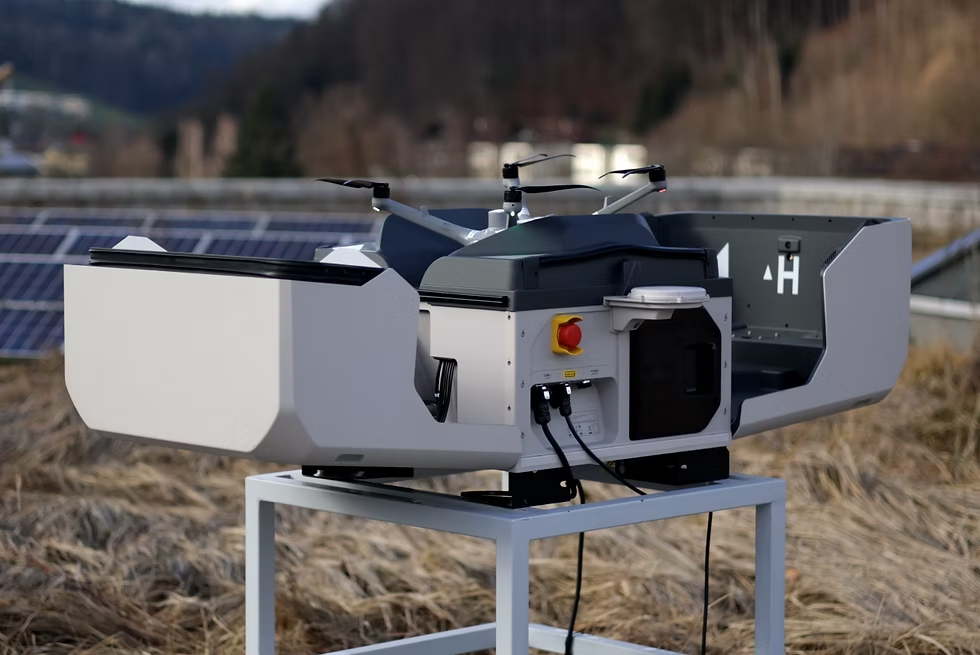
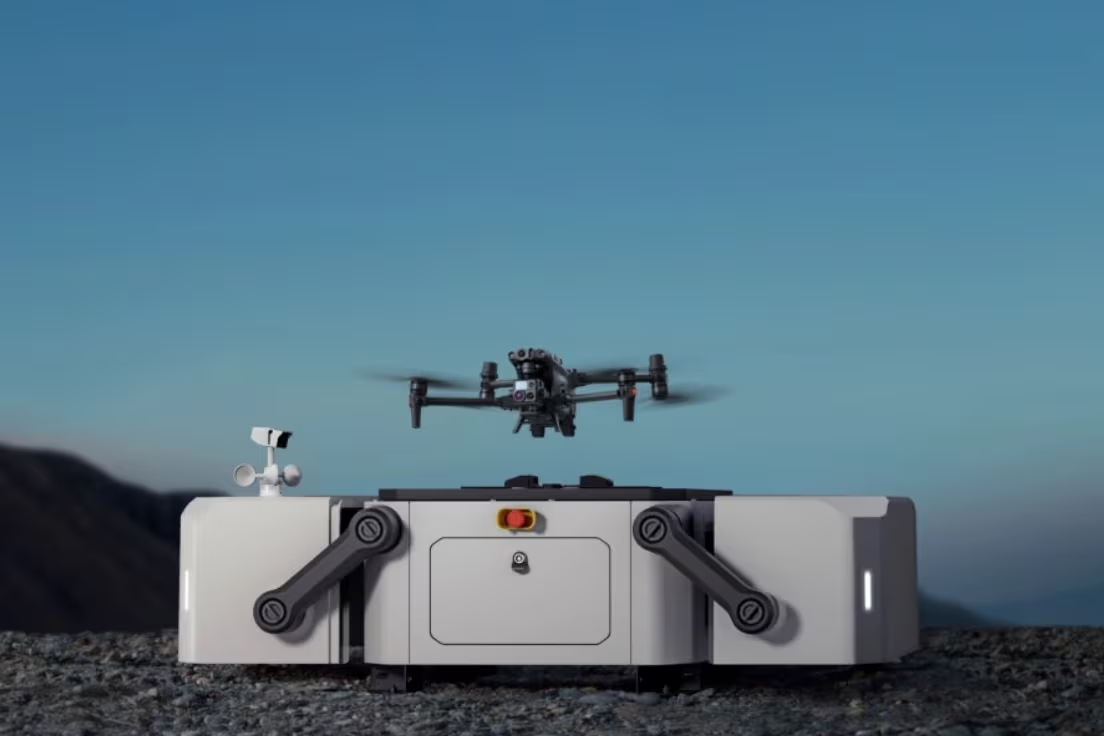
DJI Dock 3 with Matrice 4D is a dock-based enterprise drone system for scheduled, repeatable and remotely managed missions. Instead of bringing a drone, batteries and pilot equipment to a site every time, the aircraft lives inside the dock, charges inside the dock and can fly pre-planned routes when the operating conditions and permissions allow.
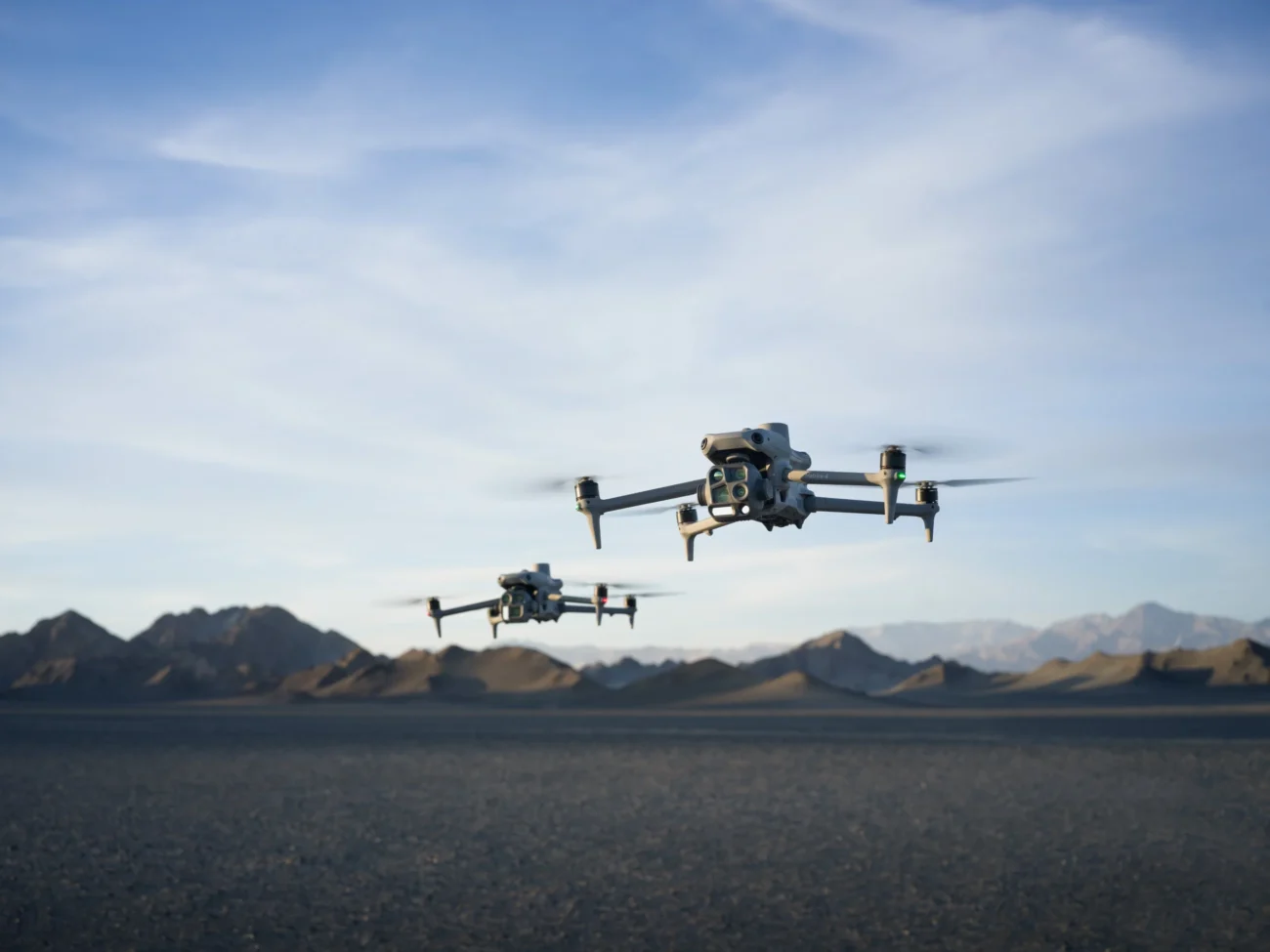
The Matrice 4D is the visual-data aircraft in the Dock 3 family. It is best understood as the option for RGB mapping, visual inspection, progress photography and recurring site documentation. It has a wide camera, medium tele camera, tele camera and laser range finder, giving teams a mix of broad site context and closer asset detail.
The key advantage is consistency. A one-off manual flight can capture a useful image, but a dock mission can capture the same route, angle and report format repeatedly. That is important when a business wants to compare a site this week, next week and next month.
2. How an Automated Dock Workflow Actually Works
A logical dock project should start with the business problem, not the hardware. The best deployments follow a clear sequence:
Define the mission objective
Decide whether the site needs mapping, progress documentation, perimeter records, asset inspection images, change detection or operational awareness. A dock should solve a repeat problem, not simply add a new gadget to the site.
Assess the site
Check take-off and landing clearance, obstacles, local airspace, nearby roads, people, power supply, internet connection, weather exposure, security and maintenance access. The dock location affects the reliability of the whole programme.
Plan safe repeat routes
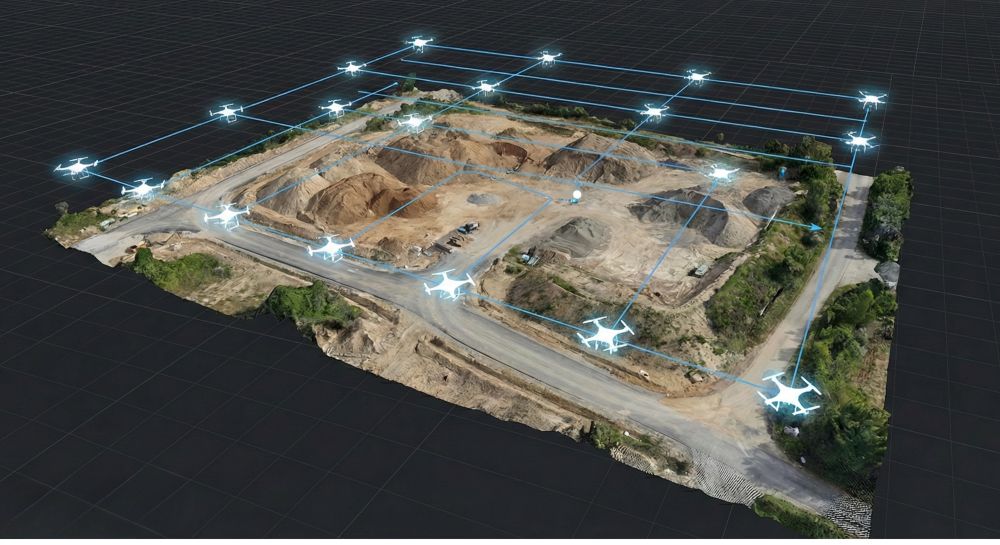
Create missions that can be flown consistently. For mapping, this may include grid routes and overlap. For inspection, it may include fixed viewpoints, standoff distances and safe approach paths around assets.
Set approval and monitoring rules
Define who is authorised to start missions, who checks conditions, who reviews FlightHub 2 alerts, who pauses flights and who handles abnormal events.
Capture, review and report
Turn the data into something useful for managers, engineers or site teams: maps, visual comparisons, inspection snapshots, progress reports, issue logs or maintenance evidence.
Maintain the system
Plan routine checks, firmware control, battery health, dock cleaning, aircraft inspection, data backup and support. Automation improves efficiency, but it still requires ownership.
3. Where Matrice 4D Dock Operations Make Sense in Ireland
The Matrice 4D is strongest when the site needs repeatable visual information. These are the most practical Irish use cases:
Progress records
Weekly or daily site overviews, roof progress, material movement, access routes, safety observations and stakeholder updates for large building or civil projects.
Site monitoring
Regular visual checks of haul roads, stockpile areas, water build-up, access points and high-risk zones before staff are sent into difficult areas.
Routine asset checks
Repeatable visual records around substations, yards, compounds, towers, pipelines or other assets where remote observation reduces unnecessary travel.
Operational awareness
Scheduled overviews of yards, storage areas, traffic flow, boundaries and operational changes across large sites.
Site documentation
Visual monitoring of solar farms, wind farm infrastructure, access roads, fencing, drainage and construction phases. Thermal analysis should use Matrice 4TD instead.
Recurring inspections
Repeat visual checks for roofs, hard-to-reach structures, storage areas, perimeter zones and post-weather event review.
4. Key Specifications That Matter for Real Operations
Specification tables can be confusing, so the important point is to connect each feature to the business workflow. The table below highlights the figures that matter most when considering Dock 3 with Matrice 4D.
| Area | Official specification / capability | Why it matters in Ireland |
|---|---|---|
| Dock protection | DJI Dock 3 is rated IP56 and supports an operating temperature range of -30°C to 50°C. | Useful for outdoor enterprise deployment, but Irish operators should still set conservative wind, rain and site safety procedures. |
| Charging workflow | DJI lists a 27-minute charge time from 15% to 95% under specified test conditions. | Supports repeated missions during a working day when the route, weather and operating approval allow it. |
| Aircraft endurance | Matrice 4D Series flight time is listed up to 54 minutes forward flight and 47 minutes hovering under test conditions. | Gives enough endurance for many site routes, although real flight time depends on weather, route, battery reserve and mission profile. |
| Camera system | Matrice 4D includes a 4/3 CMOS 20 MP wide camera with mechanical shutter, plus medium tele and tele cameras. | The wide camera supports mapping-style visual capture; tele cameras help with closer inspection details from safer standoff distances. |
| Laser range finder | The Matrice 4D Series includes a laser range finder module. | Helps operators understand target distance and supports more structured inspection workflows. |
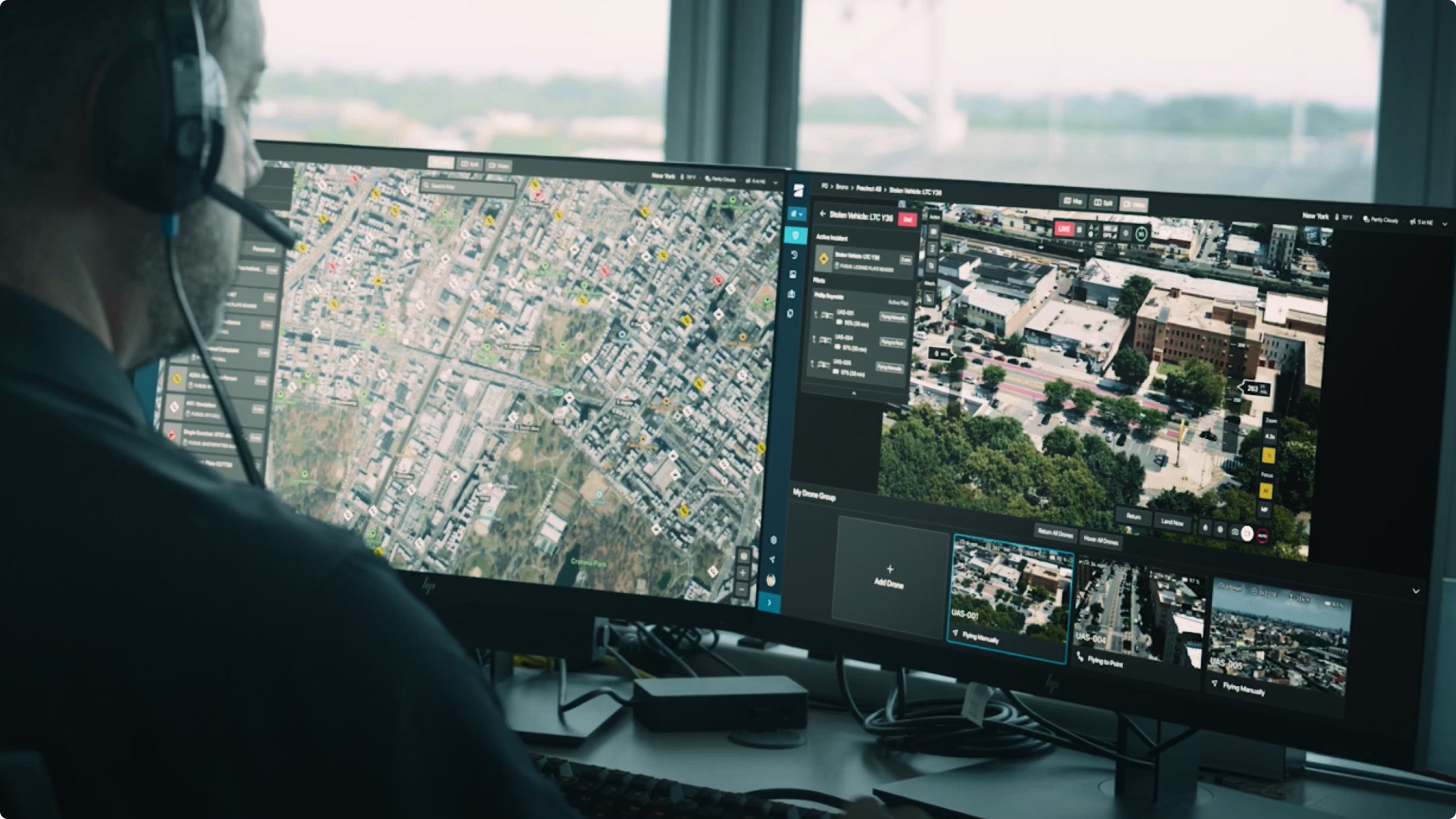
| Remote management | Dock workflows are designed around DJI FlightHub 2 for mission planning and remote operations management. | Important for teams that need centralised oversight across one or multiple sites. |
| Deployment model | Dock 3 supports fixed deployment and vehicle-mounted deployment. | Fixed dock suits one main site; vehicle-mounted deployment suits mobile teams serving different sites or corridors. |
5. Matrice 4D or Matrice 4TD: Which One Should You Choose?
The easiest way to decide is to focus on the data type. Matrice 4D is the better dock aircraft for visual documentation and mapping-style workflows. Matrice 4TD is the better dock aircraft when thermal data, night support or heat anomaly detection is central to the mission.
| Requirement | Better choice | Reason |
|---|---|---|
| Construction progress mapping | Matrice 4D | Visual data consistency and mechanical-shutter wide camera are the more relevant strengths. |
| Quarry visual monitoring | Matrice 4D | Good for recurring site overview, access checks and visual condition records. |
| Solar thermal anomaly inspection | Matrice 4TD | Thermal capture is required for heat anomaly workflows. |
| Emergency response or night-oriented patrols | Matrice 4TD | Thermal and low-light capabilities are more relevant than RGB mapping alone. |
| One-off manual mapping without a dock | Matrice 4E | If the team does not need a dock workflow, the portable Matrice 4E may be more practical. |
| Heavy-duty inspection or LiDAR payload work | Matrice 400 platform | For larger payloads, longer endurance and advanced inspection payloads, Matrice 400 is the higher-tier platform. |
6. Fixed Dock or Vehicle-Mounted Dock?
DJI Dock 3 gives buyers two different deployment ideas. They should not be treated as the same business case.
Best for one repeat site
Choose a fixed dock when the same site needs regular missions from the same launch area. Typical examples include quarries, ports, logistics yards, renewable sites, industrial campuses and construction compounds.
Best for mobile teams
Choose vehicle-mounted deployment when trained teams need to serve multiple locations, remote corridors or temporary sites, while still benefiting from dock-style launch, landing and charging workflows.
For many Irish organisations, fixed deployment will be easier to justify first because the operational area, route planning and safety procedures can be more controlled. Vehicle-mounted deployment is more flexible, but it requires stronger procedures around each new site.
7. What Data Does a Matrice 4D Dock Programme Produce?
A dock programme should produce useful outputs, not just flight logs. Before buying, teams should define the deliverables they actually need.
Site comparison
Repeat photos from the same route and angle, useful for weekly progress checks and change records.
Maps and models
Orthomosaics, 3D models or visual documentation when the capture plan and processing workflow are set up correctly.
Inspection evidence
Closer visual records of roofs, structures, yards, equipment, access roads or restricted areas.
Operational awareness
Remote visibility before sending staff to site, especially after storms, heavy rain or out-of-hours incidents.
Compliance record
Mission history, procedures and reviewed outputs that support a managed enterprise drone programme.
Management reports
Clear screenshots, annotated images and summary outputs that non-drone stakeholders can understand quickly.
8. Irish Regulatory and Operational Planning
Automated does not mean responsibility-free. In Ireland, drone operators must plan around IAA registration, pilot competency, UAS geographical zones, airspace restrictions, landowner permission, insurance, data protection and site risk assessment.
Dock-based operations can become more complex because they are often frequent, remote, repeatable or close to active infrastructure. Some projects may remain relatively simple if the site is controlled and the route is low risk. Others may require a more detailed operating authorisation, especially where the mission involves people, roads, controlled airspace, extended distances or higher-risk environments.
Pre-installation checklist
- Mission purpose: mapping, monitoring, inspection, security awareness or mixed use.
- Site suitability: safe launch zone, landing clearance, obstacle management and public access control.
- Connectivity: reliable power, network access and backup plan for outages.
- Weather policy: launch limits for wind, rain, visibility, coastal exposure and temperature.
- Operating approval: correct IAA/EASA category, authorisation pathway and site permissions.
- Data workflow: where images are stored, who reviews them and how reports are shared.
- Support plan: installation, training, maintenance, firmware, batteries and service response.
9. Common Mistakes to Avoid
Buying the dock before defining the workflow
A dock only creates value when the business has repeat missions. Start with the site problem, data requirement and reporting process.
Choosing Matrice 4D for thermal work
If the job depends on heat signatures, choose Matrice 4TD. Matrice 4D is the stronger choice for structured RGB data and visual workflows.
Treating automation as “set and forget”
Dock operations still require route review, maintenance, weather decisions, regulatory oversight and trained staff accountability.
FAQ: DJI Dock 3 with Matrice 4D in Ireland
Is DJI Dock 3 with Matrice 4D fully autonomous?
It supports automated and remotely managed workflows, but missions still require human planning, operational oversight, site procedures and legal responsibility. It should not be treated as an unsupervised “set and forget” system.
What is Matrice 4D best used for?
Matrice 4D is best for repeatable visual data capture: construction progress, quarry site monitoring, RGB mapping-style documentation, asset inspection images and recurring site records.
Should I choose Matrice 4D or Matrice 4TD?
Choose Matrice 4D if the main job is visual capture or mapping-style documentation. Choose Matrice 4TD if the job depends on thermal imaging, heat anomalies, night support or emergency-response visibility.
Can Dock 3 be used on a vehicle?
Yes. DJI positions Dock 3 as supporting vehicle-mounted deployment as well as fixed deployment. For Irish operators, vehicle-mounted workflows should be planned carefully because each new site may create a different risk profile.
Is Dock 3 suitable for Irish weather?
Dock 3 has an IP56 rating and a wide official operating temperature range, but Irish operators should still apply conservative weather limits for wind, rain, visibility and site exposure. Hardware rating does not remove operational judgement.
Do I need training before using DJI Dock 3?
Yes. A dock programme involves aircraft operation, mission planning, FlightHub 2 workflow, site safety, data management, maintenance and regulatory compliance. Training should be part of the deployment plan.
Final Verdict
DJI Dock 3 with Matrice 4D makes sense when an Irish organisation needs repeatable visual data from the same site or from a managed mobile workflow. It is strongest for scheduled mapping-style capture, visual inspection records, site monitoring and consistent progress documentation.
If your site needs thermal inspection or night-oriented response, move to Matrice 4TD. If your team only needs occasional manual mapping, Matrice 4E may be more practical. If you need heavy payloads, LiDAR or high-end inspection capability, consider Matrice 400.
Speak to Irish Drone About Dock 3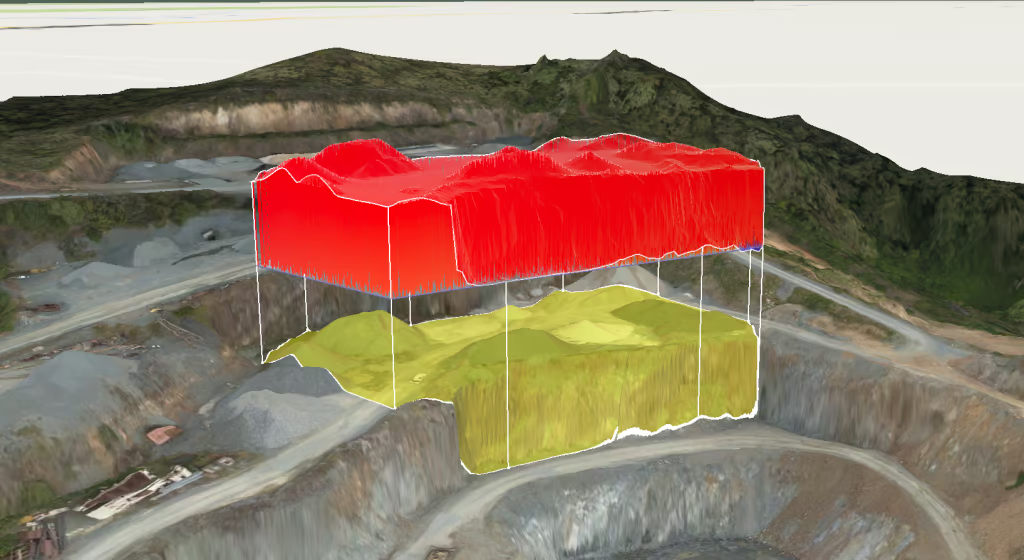
Leave a comment