
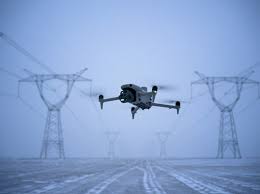
For utility inspection work, the best drone is not simply the aircraft with the longest flight time. The real question is whether the drone can collect useful visual and thermal evidence while keeping people away from avoidable hazards. In Ireland, that means working around wind, rain, coastal exposure, remote terrain, live electrical assets, complex land access and strict aviation rules.
Best overall recommendation: for serious utility inspection programmes in 2026, DJI Matrice 400 with Zenmuse H30T is the strongest all-round setup. It gives long endurance, heavier payload capacity, enterprise-grade obstacle sensing, powerful zoom, thermal imaging and the flexibility needed for transmission lines, substations, wind turbines and large solar sites. For smaller teams that need a compact inspection aircraft, DJI Matrice 4T is the practical portable choice.
Why utilities inspection is different from general drone work
Utilities inspection is more demanding than a standard aerial photo mission. A drone might need to inspect an insulator on a high-voltage tower, document a suspected hotspot in a solar string, review leading-edge erosion on turbine blades, record a damaged roof-mounted PV system, or confirm storm damage after a winter weather event. The imagery must be sharp, the thermal data must be useful, and the workflow must produce a report that engineers and asset managers can trust.
Irish conditions make this even more important. Wind farms are often exposed. Solar farms may cover large rural sites. Distribution lines may run across farms, bogland and hilly terrain. Industrial estates, ports and substations may have access restrictions. Drone inspection gives teams a safer way to collect evidence from above, but it only works when the aircraft, sensor, operator and reporting workflow are matched to the asset.


Best overall drone: DJI Matrice 400 with Zenmuse H30T
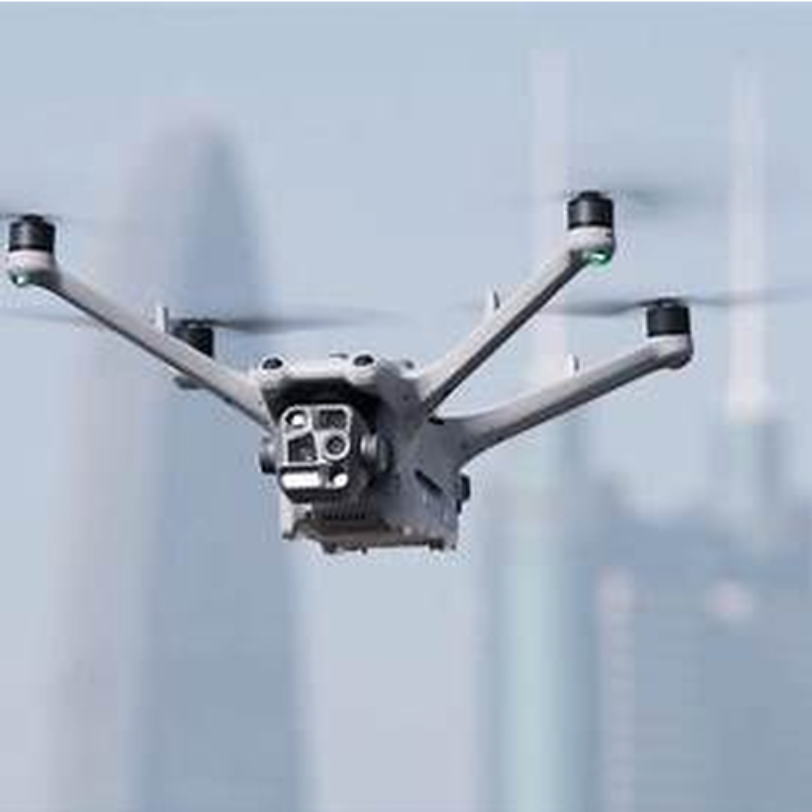
DJI Matrice 400 is the most suitable current DJI enterprise platform for demanding utilities inspection because it is built for longer, heavier and more complex missions. DJI lists Matrice 400 with up to 59 minutes of flight time and up to 6 kg payload capacity, giving inspection teams more flexibility for long routes, repeat passes, larger payloads and complex sites.
For utilities, the most important payload is often Zenmuse H30T. The Zenmuse H30 Series includes a zoom camera with up to 34× optical zoom and 400× digital zoom. The H30T version adds thermal imaging, which is essential for many energy inspection tasks. In practical terms, that means one aircraft can collect detailed visual evidence and thermal indicators during the same inspection programme.
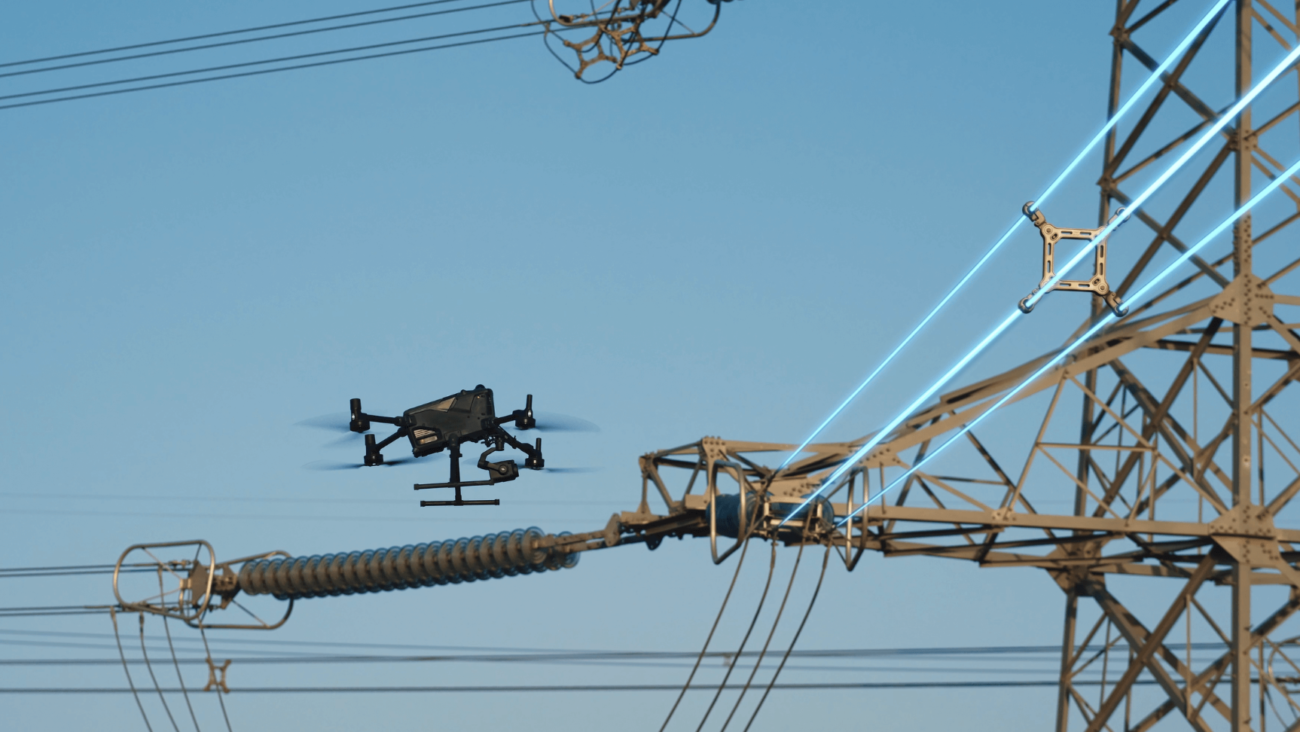
Matrice 400 is especially relevant for Irish utilities because DJI highlights power-line-level obstacle sensing, including LiDAR, mmWave radar and vision sensors. This does not remove the need for skilled pilots and safe separation, but it makes the platform more appropriate for utility environments than a basic camera drone.
Where Matrice 400 + H30T makes the most sense
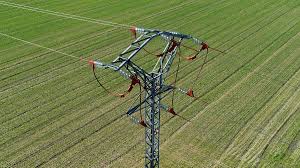
- Transmission powerlines: detailed inspection of towers, crossarms, insulators, fittings, conductors and vegetation context.
- Substations: visual and thermal review of selected equipment, access areas, perimeter assets and supporting structures.
- Large solar farms: RGB and thermal data collection across wide sites where manual inspection is slow.
- Wind turbines: blade, tower and nacelle inspection where zoom stability and controlled flight planning matter.
- Storm response: rapid situational awareness after high winds, flooding or access disruption.
Best portable inspection drone: DJI Matrice 4T
DJI Matrice 4T is the compact choice for teams that need a fast, portable, multi-sensor inspection aircraft. DJI positions Matrice 4T for industries including electricity, emergency response, public safety and forestry. Its thermal specification is highly relevant for utility work: DJI lists Matrice 4T thermal sensitivity at ≤50 mK @ F1.0, spot and area measurement, and temperature measurement ranges of -20°C to 150°C in high gain and 0°C to 550°C in low gain.
For an Irish contractor or facilities team, Matrice 4T can be the better daily tool when the site is smaller, deployment speed matters, or the team does not need the larger Matrice 400 platform. It is suitable for distribution assets, small solar farms, roof-mounted PV systems, local authority buildings, industrial estate checks and preliminary wind farm site assessments.

Powerline inspection: what the drone must capture
Powerline inspection is about evidence, not just aerial viewing. A good inspection workflow should help engineers review specific components, compare findings across repeated missions and prioritise follow-up. For transmission assets, Matrice 400 with H30T is the preferred setup because the operator can combine longer flight time, standoff zoom, thermal review and a platform designed for more complex missions.
For distribution networks or faster spot checks, Matrice 4T can be the better tool. DJI’s powerline inspection solution page specifically identifies the compact Matrice 4T with visible light and thermal imaging cameras as suitable for temperature inspections of distribution network equipment.
Insulators and fittings
Capture high-resolution imagery of cracked insulators, damaged hardware, missing components, corrosion and contamination indicators.
Hotspot screening
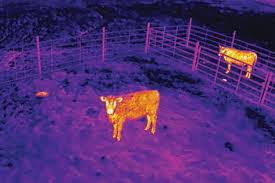
Thermal imagery can help identify abnormal heat patterns that may require closer engineering investigation.
Vegetation and terrain
Aerial data helps teams understand access, vegetation risk, storm damage and route conditions before sending ground crews.
Irish field note: in rural Ireland, line inspection may involve farm access, uneven ground, boggy conditions, private land permissions and unpredictable weather. A drone workflow should include pre-planned take-off locations, landowner coordination, battery planning and a clear process for reporting defects by tower, pole or span reference.
Solar farm inspection: thermal data plus site context
Solar inspection is one of the clearest utilities use cases for thermal drones. Irish solar farms may not have the extreme solar conditions seen in warmer countries, but operators still need to identify underperforming modules, string issues, installation defects, soiling patterns, vegetation problems, storm damage and equipment anomalies.
The inspection should capture both thermal and RGB data. Thermal imagery helps identify abnormal heat signatures. RGB imagery adds context: row number, panel position, visible damage, access routes, inverter locations, vegetation, fencing and drainage issues. For large solar farms, Matrice 400 with H30T is the stronger platform. For smaller solar farms and roof-mounted PV systems, Matrice 4T is usually easier to deploy.
Solar inspection checklist
- Use a repeatable flight path so findings can be compared across inspections.
- Record site conditions, sunlight, wind, cloud cover and any limitations in the report.
- Capture RGB context images for every thermal anomaly.
- Classify issues by row, string, inverter area or asset reference.
- Separate suspected electrical faults from vegetation, dirt, shadowing or physical damage.
- Deliver findings in a format that the O&M team can action quickly.
Wind turbine inspection: close detail without unnecessary work at height
Wind turbines are a natural fit for drone inspection because they are tall, exposed and expensive to inspect manually. A drone can capture blade, tower and nacelle imagery while reducing the need for rope access or platform access during early assessment. The aim is not to replace every engineering inspection, but to triage, document and prioritise work more efficiently.
For wind farms in Ireland, Matrice 400 with H30T is the stronger enterprise option. It has the endurance and payload flexibility for more serious inspection work, while the H30T payload supports detailed zoom imagery and thermal review where relevant. Matrice 4T can also be useful for quick turbine checks, site overview and smaller operations, but the larger platform is better suited to demanding inspection programmes.

Typical wind turbine findings a drone can support
- Leading-edge erosion and surface damage on blades.
- Lightning strike indicators and localised defects.
- Contamination, cracks, coating issues or visible deformation.
- Nacelle, hub and tower condition records.
- Access road, hardstanding and site condition documentation.
Where DJI Dock 3 fits into utilities inspection
Not every utilities inspection should be manual and ad-hoc. Some sites need regular monitoring, rapid response or repeat patrols from the same location. DJI Dock 3 is relevant here because DJI positions it with Matrice 4D or Matrice 4TD for 24/7 remote operations and vehicle-mounted deployment. This is useful for industrial sites, ports, substations, solar farms and utilities compounds where repeat monitoring is more valuable than one-off capture.
Dock workflows are not just a hardware purchase. In Ireland, the operator must consider site security, communications, landing area, maintenance, weather exposure, airspace, privacy, flight permissions and whether the operation is within visual line of sight or requires a more advanced approval route.
Comparison table: which DJI setup should you choose?
| Inspection task | Best DJI setup | Why it fits | Irish business use case |
|---|---|---|---|
| Transmission powerline inspection | Matrice 400 + Zenmuse H30T | Longer endurance, heavy-duty platform, strong zoom, thermal data and power-line-level obstacle sensing. | Utility operators, grid contractors, storm response teams and engineering inspection providers. |
| Distribution network checks | Matrice 4T | Portable thermal and visible-light inspection capability for faster field deployment. | Localised pole routes, substations, rural distribution checks and rapid fault investigation. |
| Large solar farm inspection | Matrice 400 + Zenmuse H30T | Better endurance and sensor flexibility for large sites with combined RGB and thermal reporting. | Solar O&M teams, asset owners, EPC contractors and renewable energy investors. |
| Small solar / roof PV inspection | Matrice 4T | Fast deployment and thermal capture for smaller sites, roofs and routine maintenance checks. | Facilities managers, electrical contractors and commercial property owners. |
| Wind turbine blade inspection | Matrice 400 + Zenmuse H30T | Stable enterprise platform with zoom detail and endurance for structured turbine capture. | Wind farm operators, blade inspection companies and renewable asset managers. |
| Repeat remote monitoring | DJI Dock 3 + Matrice 4TD | Dock-based remote operations for scheduled patrols and consistent repeat site data. | Ports, energy compounds, industrial sites, solar farms and secure utility facilities. |
Recommended inspection workflow for Irish utility teams
Define the asset and inspection standard
Decide whether the job is a visual defect inspection, thermal screening, storm damage assessment, condition baseline or repeat monitoring task. Agree the asset naming system before the drone leaves the ground.
Choose the platform around the output
Use Matrice 400 with H30T when the job needs endurance, detailed zoom and thermal capture. Use Matrice 4T when the team needs a compact thermal drone for rapid checks. Use Dock 3 only when the site justifies repeat remote operations.
Plan the route and permissions
Review airspace, UAS geographical zones, land access, site hazards, emergency procedures, weather and whether the mission can be flown within visual line of sight under the correct operational category.
Capture visual and thermal evidence
Photograph each finding in context and then in detail. Record asset IDs, tower numbers, rows, turbine IDs, panel strings, timestamps and sensor settings.
Deliver an actionable report
The client needs prioritised findings, images, thermal evidence, location references, severity levels and recommended follow-up — not just a folder of drone photos.
Irish aviation and safety considerations
Commercial utility inspection in Ireland must be planned around aviation safety and regulatory requirements. The Irish Aviation Authority states that drone operators are legally required to register if they own a drone over 250 g or a drone with a camera. EASA explains that one of the core Open Category rules is to fly within visual line of sight and below 120 m, unless a permitted exception or a different authorisation route applies.
For utilities inspection, many jobs may involve higher-risk locations, extended routes, sensitive sites, people nearby, private land, critical infrastructure or remote operations. These conditions can move a project beyond a simple low-risk flight. Teams should check IAA requirements, operator registration, remote pilot competency, insurance, privacy obligations, UAS geographical zones and whether an operational authorisation is needed.
Important: this article is a practical buying and workflow guide, not legal advice. Always check the latest IAA and EASA rules before operating, especially for work near critical infrastructure, over private land, close to people, near controlled airspace or beyond visual line of sight.
Final recommendation
For Irish utilities inspection, the best drone setup depends on the site scale and the inspection output:
- Best overall: DJI Matrice 400 with Zenmuse H30T.
- Best portable thermal option: DJI Matrice 4T.
- Best for large transmission and wind work: DJI Matrice 400 with H30T.
- Best for smaller solar and distribution tasks: DJI Matrice 4T.
- Best for repeat remote monitoring: DJI Dock 3 with Matrice 4TD, where the regulatory and site conditions support it.
For most professional Irish inspection companies, the smartest route is to build around Matrice 400 + H30T as the high-end inspection platform, then add Matrice 4T for fast site checks and routine thermal work. That combination covers powerlines, solar farms, wind turbines, substations, industrial facilities and emergency response tasks without forcing every job onto one aircraft.
Leave a comment