
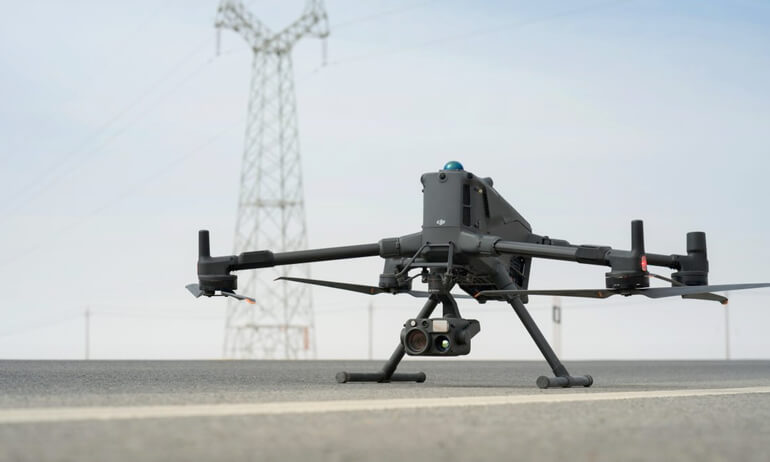
Powerline inspection in Ireland is not a simple aerial photography task. Crews may need to inspect transmission towers, distribution poles, insulators, conductors, fittings, substations, vegetation encroachment, storm damage and access routes. The sites can be rural, coastal, mountainous, forest-edge or close to roads and communities. For this reason, the best drone is not only the one with the best camera; it is the one that can support a safe, repeatable and evidence-driven inspection workflow.
Quick answer: DJI Matrice 400 is the right choice for Irish powerline inspection when the work is high-value, recurring, long-route, technically demanding or payload-heavy. Pair it with Zenmuse H30T for thermal and zoom inspection, and consider Zenmuse L3 when transmission corridor modelling, vegetation context or LiDAR point clouds are required. If the job is a quick local distribution check, Matrice 4T may be enough.
Why powerline inspection is different from normal asset inspection
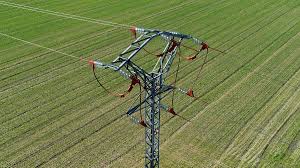
Inspecting a roof, yard or building facade is usually a contained task. Powerlines are different. The asset is linear, often elevated, often close to thin wires, and often located in environments where access is slow or hazardous. Irish power networks also run through farmland, bogland, forestry edges, exposed upland areas and coastal locations. A drone can reduce manual access, but it must be flown with serious attention to obstacle management, distance, image quality, weather and permissions.
For business users, the key question is not “Can Matrice 400 take good images?” It can. The better question is: does Matrice 400 reduce operational risk and improve inspection quality enough to justify the investment?
The Matrice 400 becomes attractive when powerline inspection is not a one-off job, but a professional utility workflow that needs endurance, sensor flexibility, repeatable routes and reliable evidence.
What makes DJI Matrice 400 relevant for powerline work?
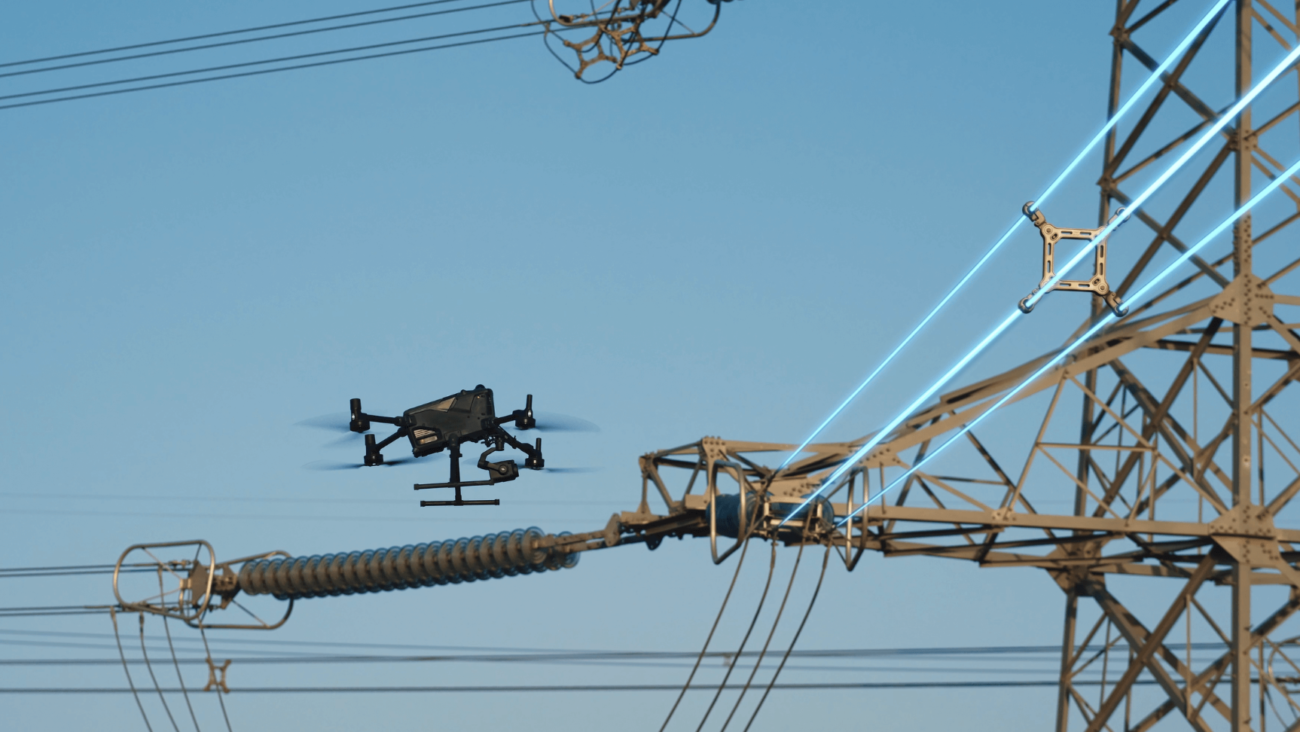
DJI positions the Matrice 400 as its enterprise flagship drone platform. DJI states that it offers up to 59 minutes of flight time, a maximum payload capacity of up to 6 kg, and integrated rotating LiDAR plus millimetre-wave radar for power-line-level obstacle sensing. DJI also states that it supports the O4 Enterprise Enhanced Video Transmission system and Airborne Relay Video Transmission for safer and easier operations.
Longer single missions
More flight time helps when crews are covering longer sections of line, inspecting multiple structures from one access point, or working in locations where landing and relaunching is inefficient.
Thermal, zoom and LiDAR options
Matrice 400 can support high-value payload choices for different stages of the work: H30T for inspection evidence and L3 for corridor modelling or terrain-linked data.
Power-line-level sensing
The platform’s sensing architecture is particularly relevant around lines, poles, towers, hills, masts, trees and other visually complex inspection environments.
Best payload pairing: Zenmuse H30T for inspection evidence
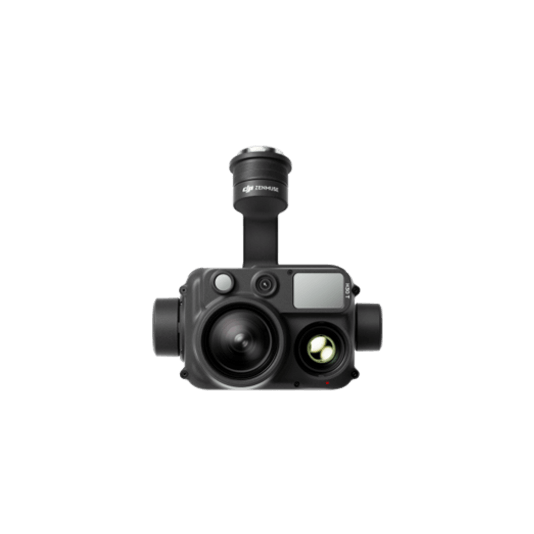
Zenmuse H30T is the strongest all-round inspection payload
For most powerline inspection teams, Zenmuse H30T is the first payload to consider. It combines visual zoom, thermal imaging, laser rangefinding and night-support features in one payload. DJI lists the H30 Series with up to 34× optical zoom and up to 400× digital zoom, while H30T adds a high-resolution thermal camera.
In practical Irish utility work, this means crews can capture context images, detailed component images and thermal evidence from a safer stand-off distance. It is useful for inspecting poles, towers, crossarms, insulators, fittings, overheated components, substation-related assets and storm-response findings.
When Zenmuse L3 makes sense on powerline projects
Zenmuse L3 is not the payload for every powerline inspection, but it is highly relevant where the job includes corridor intelligence. DJI describes L3 as a long-range, high-accuracy aerial LiDAR system with a 1535 nm LiDAR, detection range up to 950 m under DJI’s stated test conditions, and dual 100 MP RGB mapping cameras. DJI also describes daily coverage up to 100 km² in stated conditions.
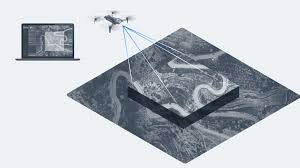
For Irish grid and infrastructure teams, L3 becomes interesting when inspection is connected to vegetation management, route planning, terrain, access, flood-risk areas, embankments, forestry edges or corridor change detection. A visual photograph can show a defect; LiDAR can help show where that defect sits in a corridor and what surrounds it.
Practical Irish use cases
Long-route inspection and tower checks
Matrice 400 is best suited to more demanding transmission-line jobs where route length, access difficulty and inspection value justify a flagship aircraft. The operator can use H30T for detailed visual/thermal evidence and L3 where corridor modelling adds value.
Poles, crossarms and fittings
Distribution work may not always need Matrice 400. For a quick local pole or transformer inspection, Matrice 4T can be more portable. Matrice 400 makes more sense when the work is recurring, remote, high-risk or requires stronger sensor options.
Forestry-edge and rural corridors
In rural Ireland, lines often run close to trees, hedgerows and uneven land. L3 data can help where the inspection question includes vegetation, terrain and clearance context rather than just component imagery.
Post-weather event inspection
After high winds or storms, a drone can help teams prioritise where crews should go first. H30T can help document visible damage and thermal anomalies, while careful route planning supports safer field operations.
Where Matrice 400 is the right choice
| Scenario | Why Matrice 400 fits | Recommended payload/workflow |
|---|---|---|
| Long transmission routes | Longer endurance and enterprise workflow capacity help reduce downtime and improve productivity across larger corridors. | Matrice 400 + H30T for inspection; add L3 for corridor modelling. |
| Complex wire environments | Power-line-level obstacle sensing is highly relevant around conductors, towers, surrounding wires and complex inspection approaches. | Route planning, safe stand-off inspection and trained pilots. |
| Thermal and visual evidence in one job | H30T allows teams to combine zoom inspection, thermal review, rangefinding and context capture. | Matrice 400 + Zenmuse H30T. |
| Vegetation and corridor analysis | LiDAR data can help teams understand clearance, ground context and route structure. | Matrice 400 + Zenmuse L3 + DJI Terra. |
| Enterprise reporting | Repeatable missions, organised data capture and asset-system integration become more important as inspection volume increases. | DJI Pilot 2, DJI Terra, FlightHub 2 and internal asset workflows. |
Where Matrice 400 may be more than you need
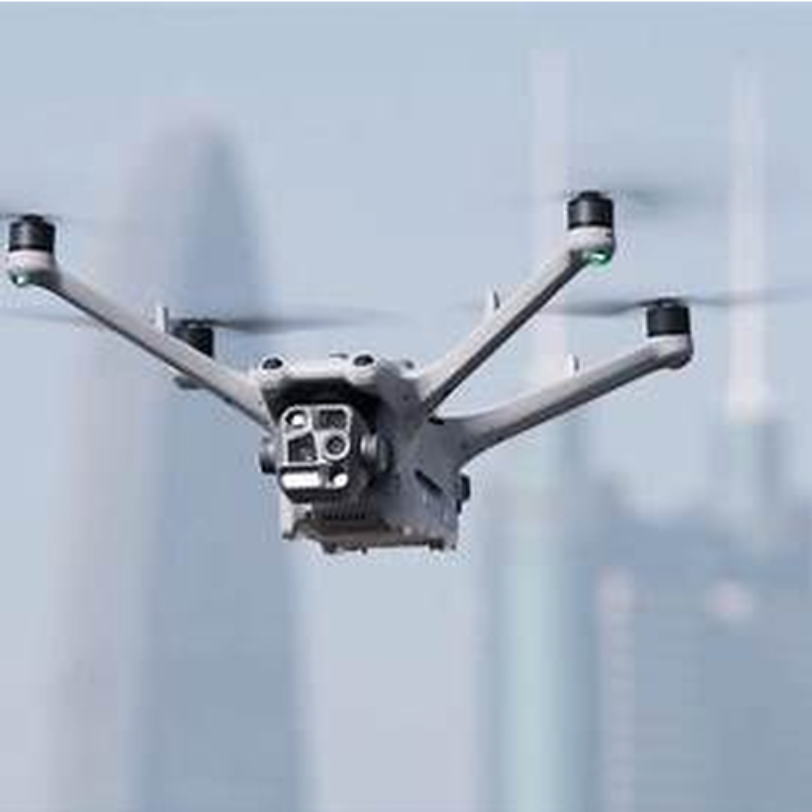
Matrice 400 is not the most practical answer for every Irish utility inspection. If a crew only needs quick thermal checks of nearby distribution assets, or if the inspection team prioritises fast deployment and easy transport over long endurance and payload flexibility, a smaller platform such as DJI Matrice 4T may be more efficient.
Think of Matrice 400 as the choice for serious infrastructure programmes. Think of Matrice 4T as the compact choice for fast response, local thermal checks and smaller inspection jobs. Many enterprise teams may eventually use both: Matrice 4T for rapid local inspections, and Matrice 400 for the more demanding utility and corridor work.
Suggested workflow for Irish powerline inspection teams
Define the asset scope
Clarify whether the job is component inspection, thermal anomaly detection, corridor mapping, vegetation review or post-storm triage.
Select payloads
Use H30T for zoom and thermal evidence. Use L3 when route, terrain and point-cloud context are part of the deliverable.
Plan the route
Check access points, airspace, local constraints, safe stand-off distances, emergency procedures and weather windows.
Report by asset ID
Deliver findings in a usable format: structure ID, defect type, severity, image evidence, thermal notes and maintenance recommendation.
Important compliance and safety notes for Ireland
Professional powerline inspection in Ireland needs more than a capable aircraft. Operators should consider IAA operator registration, remote pilot competency, UAS geographical zones, controlled airspace, landowner or utility permissions, insurance, privacy requirements and the operational category of the flight. Many infrastructure jobs may move beyond simple low-risk operations depending on proximity, route complexity, people, property, VLOS/BVLOS needs or site constraints.
The Irish Aviation Authority states that drone operators using any drone over 250 g, or any drone with a camera or sensor, are required to register. EASA also defines Open, Specific and Certified categories; more complex or higher-risk operations may require Specific Category authorisation. For utility work, this should be assessed before the job is sold or scheduled.
Safety reminder: powerline inspection must be planned with utility procedures, electrical hazards and aviation rules in mind. DJI sensing features can support safer operations, but they do not replace trained pilots, risk assessment, operational authorisation where required, or safe-distance procedures around live electrical infrastructure.
Buyer recommendation
Choose DJI Matrice 400 if your Irish business is building a serious utility inspection capability, especially for transmission assets, longer rural corridors, vegetation-linked inspection, high-detail thermal/visual reporting or repeat enterprise work. It is the right platform when inspection quality, safety margin, payload choice and operational scalability matter more than the lowest equipment cost.
Do not choose Matrice 400 simply because it is the flagship model. If the jobs are smaller, local and mostly quick thermal checks, Matrice 4T may be more practical. If the work is pure photogrammetry rather than inspection, Matrice 4E may be more relevant. If the work involves corridor LiDAR and asset context, Matrice 400 with L3 becomes much more compelling.
Final verdict: is it the right choice?
Yes — for the right powerline inspection programme. DJI Matrice 400 is one of the strongest current DJI enterprise options for professional powerline inspection in Ireland. Pair it with Zenmuse H30T for thermal and zoom inspection, use Zenmuse L3 where corridor modelling matters, and build the workflow around safe operations, asset IDs and actionable maintenance reporting.
For Irish buyers, the best purchase decision is not simply “Matrice 400 or not”. It is: Which powerline tasks do we need to complete, what evidence do engineers need, and which payload combination creates the safest and most useful result?

Leave a comment