

BUILDING & ROOF INSPECTION · PRACTICAL SELECTION GUIDE
Use aerial thermal imaging to prioritise investigations, with a survey window and verification method suited to heat loss or roof moisture.
Evidence reviewed 14 November 2026 · Ireland

Author · Irish Drone
Published by Irish Drone
The model choices and workflow checklists below are editorial recommendations. Manufacturer statements, research findings and regulatory guidance are cited separately. No Irish Drone field test or customer case is claimed.
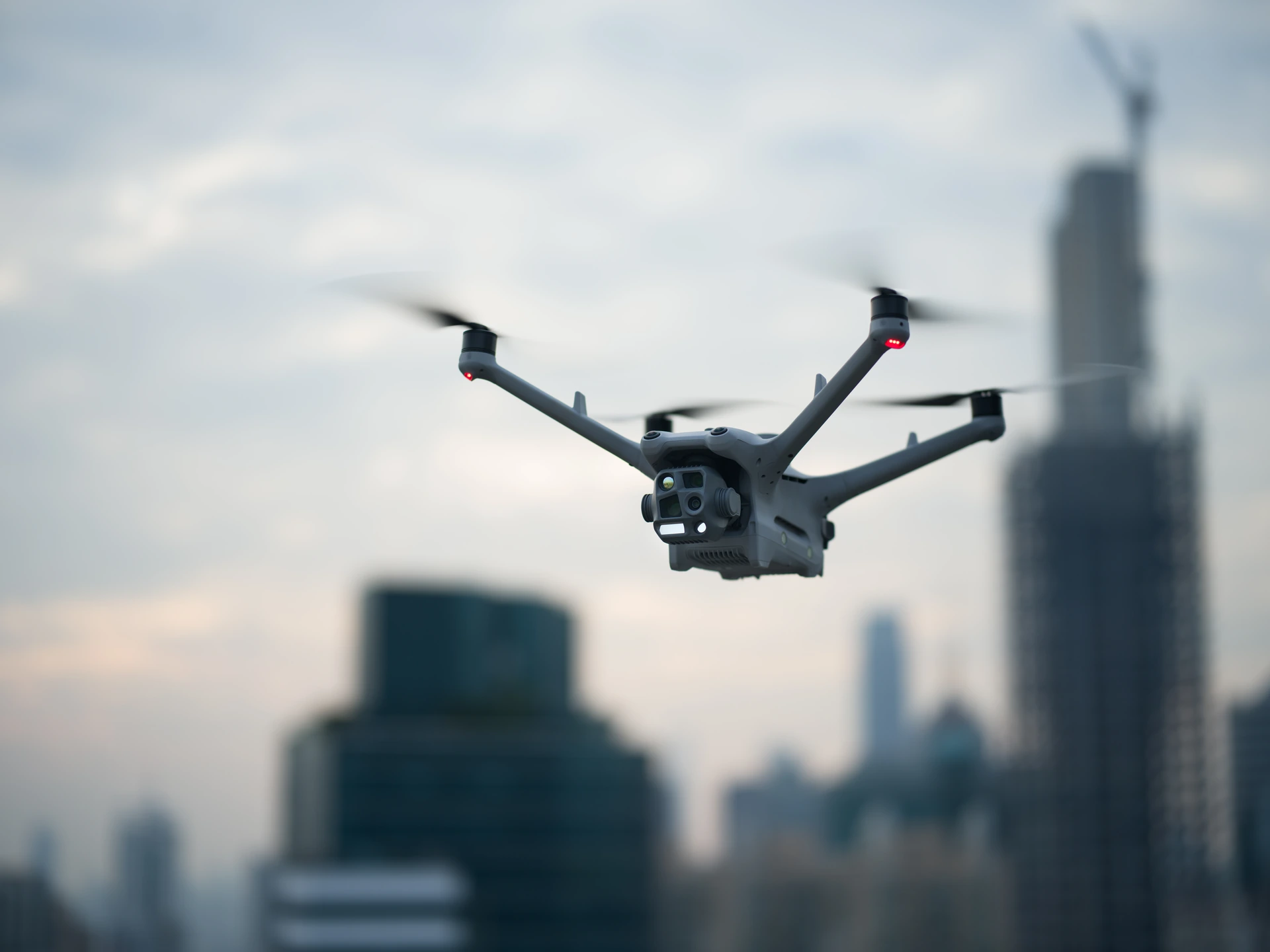
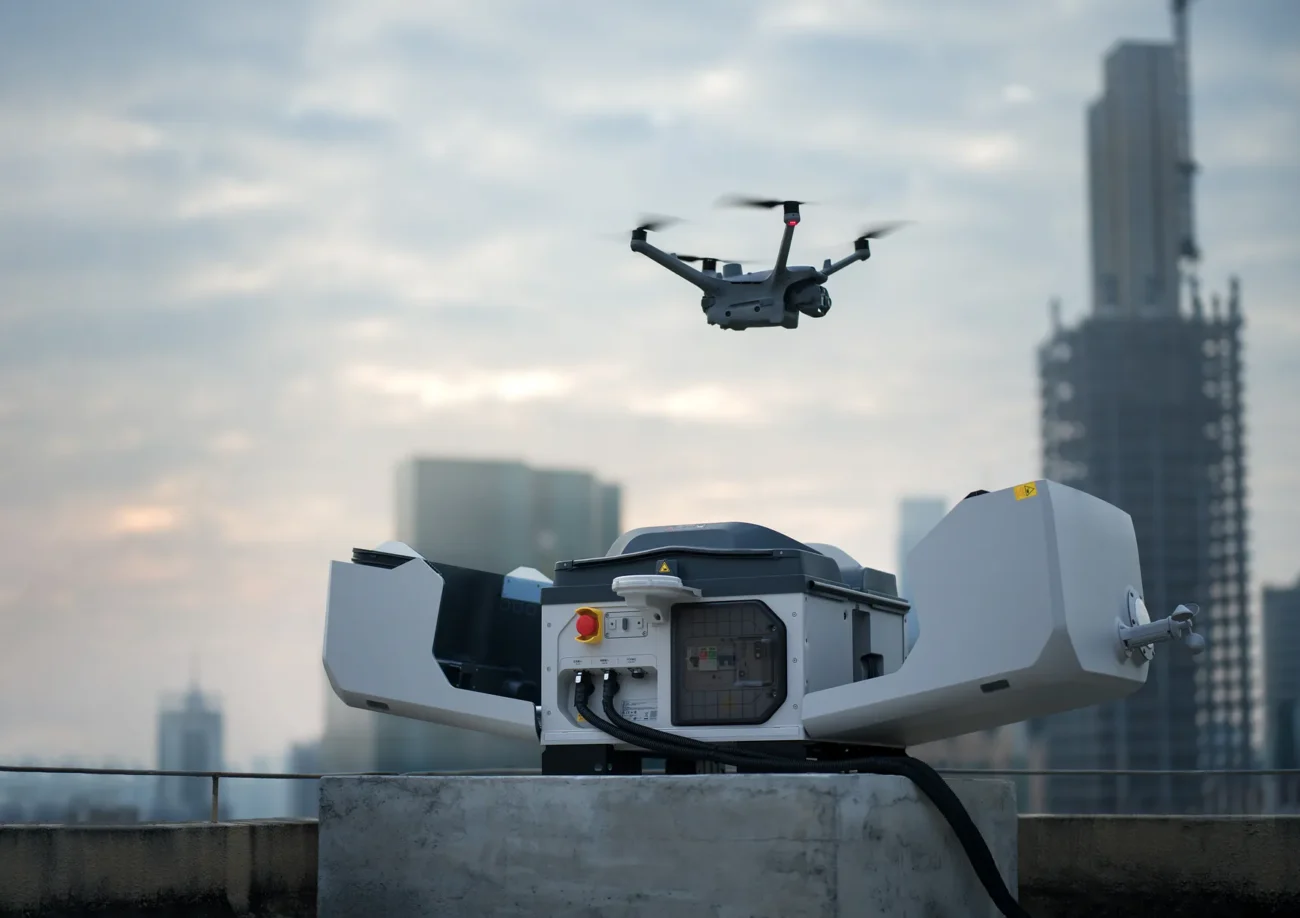
Official DJI application visual: Matrice 4T in an urban building setting. This is a manufacturer visual, not a documented roof inspection. Source.
Roof Inspection: Matrice 4T vs 4TD
Start with the building or roof question, the surfaces to be observed and the follow-up decision.
Use our building and roof inspection guide to compare visual surveys, thermal records and thermal mapping before choosing a package.
Our recommendation is to assess the Matrice 4T first for a travelling team and the Matrice 4TD for a justified recurring-site programme. Test the deployment arrangement and usable image coverage rather than assuming a speed, endurance or performance advantage.
Before choosing either aircraft, agree the inspection question and review representative images with the person who will interpret the findings. A useful trial must demonstrate the required view and traceability under appropriate conditions.
Survey Window Considerations
Thermal inspection does not definitively locate leaks or calculate whole-building heat loss from a single flight. It serves to prioritise follow-up actions, which must be supported by physical investigation.[1]
Heat-loss envelope inspections require clear indoor/outdoor thermal contrast and minimal solar masking. Roof moisture screening, however, requires a more detailed understanding of the building assembly and its condition—factors not always aligned with heat-loss inspection schedules.
FLIR describes indoor/outdoor contrast and the masking effects of solar loading and wind.[2] Our recommendation is to set the survey window around the building and the investigation method. Review occupancy, heating history, roof layers, recent repairs and rainfall before proceeding.
Heat-loss screening and roof-moisture investigation ask different questions
| Question | Heat-loss screening | Roof-moisture investigation |
|---|---|---|
| aim | surface patterns that can guide insulation/air-leakage follow-up | thermally different areas that warrant targeted investigation |
| useful conditions | meaningful indoor/outdoor contrast and the building operating state | roof construction/material, wetting history and suitable heating/cooling conditions |
| what to record | note sun, wind, surface and capture conditions | record surface, recent weather and capture time |
| next check | building professional reviews the fabric and energy question | a competent roof professional confirms using appropriate physical/moisture checks |
Choose the survey conditions for the question being investigated; these two jobs do not automatically share the same thermal window.[7]
A drone thermal image is not a BER and is not, by itself, a formal building-defect assessment. SEAI states that only registered BER assessors can publish BER certificates and advisory reports.[8]
Interpretation and Workflow
When conducting a thermal survey, it is essential to record RGB and thermal data for each component zone. Include weather conditions, solar history, wind speed, surface condition, viewing distance, and camera settings. Recheck ambiguous patches from another angle if operation allows.
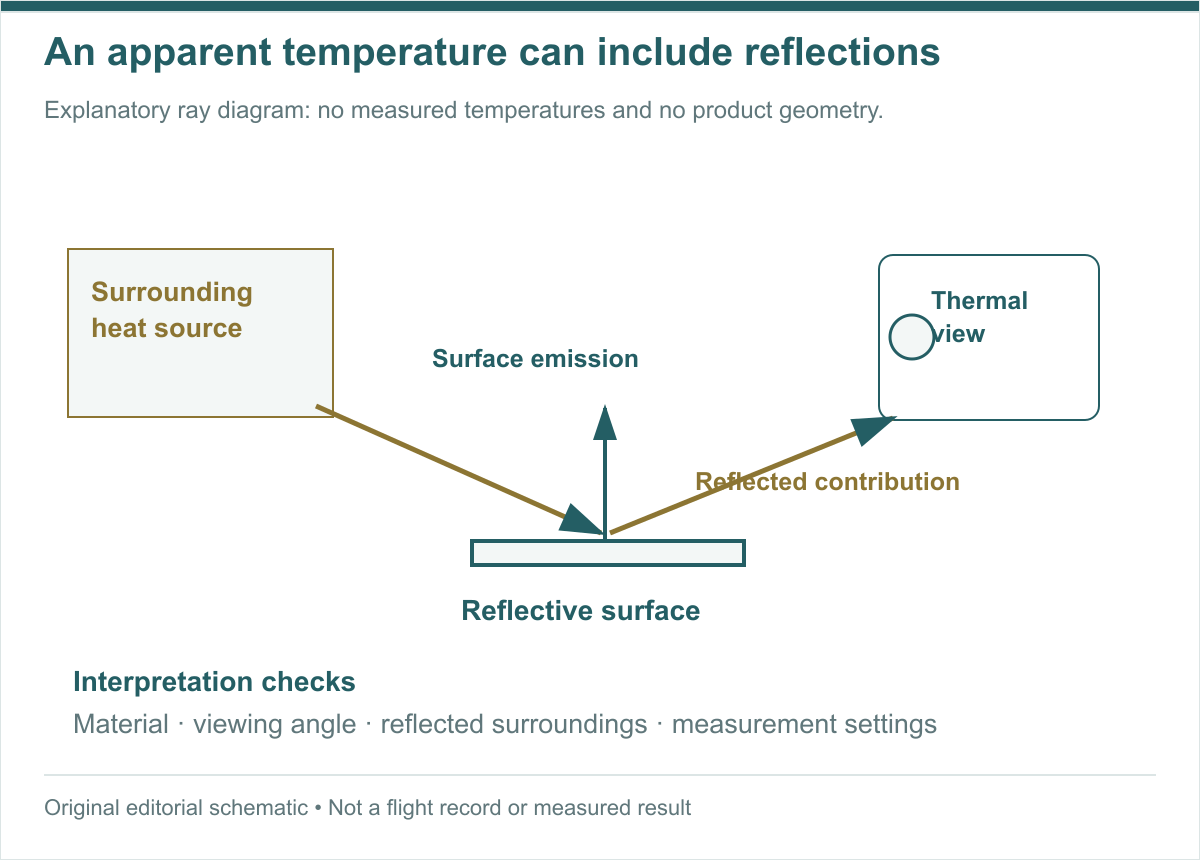
Low-emissivity surfaces reflect surroundings, so apparent metal temperatures should not be assumed as actual temperatures.[3] Colours in black/white/rainbow palettes are visual aids and do not indicate defect severity. Thermal anomalies may suggest moisture or heat loss but require physical confirmation by a competent person.
Hypothetical example, not an observed project: a warmer roof patch may require checking the construction detail, reflections and recent repairs before assigning a cause. Any thermal pattern must be reviewed in context with the building’s history and condition.
What Was Observed vs What Is Still Needed
On a phone, swipe horizontally to read the full table.
| Observation | Physical Check Required |
|---|---|
| Thermal patch on roof surface | Review paired RGB and context, then choose the appropriate physical check |
| Linear pattern aligned with construction detail | Review building assembly and construction history |
| Missing coverage or inaccessible area | Plan further access or additional survey flights |
See our thermal roof mapping guide.
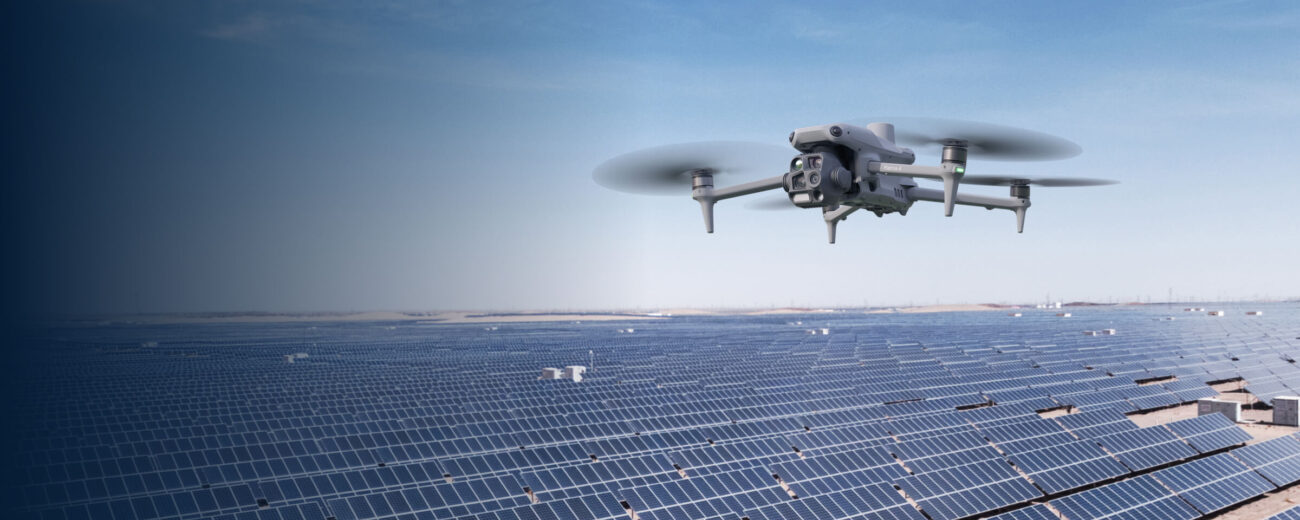
This guide explains equipment selection and inspection methods; it is not an Irish Drone Matrice 4T/4TD roof investigation case study. Our Matrice 4T rooftop PV capture shows solar modules; it is not evidence of roof moisture or insulation defects.
Roof Platform Comparison: Matrice 4T vs 4TD
When selecting a drone platform for building heat-loss and roof inspections, the choice between the DJI Matrice 4T and Matrice 4TD hinges on operational conditions and mission requirements. Enhanced output does not create four times as many physical detector pixels.
For effective thermal surveying, pixel coverage and focus clarity are more critical than maximum digital zoom. Our recommendation is to test whether the intended view resolves the feature of interest while preserving useful temperature data. A larger enhanced output is not evidence of better native sampling or a guaranteed temperature measurement.
DJI states that the 4T is not waterproof[6]. Confirm the operating limits for the selected aircraft and check the actual survey conditions, including icing risk and wind. Operators must still consider environmental risks when deploying either aircraft.
Our recommendation is to use the 4T for short, frequent inspections where portability and ease of deployment are priorities. For a recurring site, assess the 4TD alongside the proposed support, maintenance and intervention arrangements; confirm the conditions allowed by the operating manual.
Equipment for the proposed roof survey
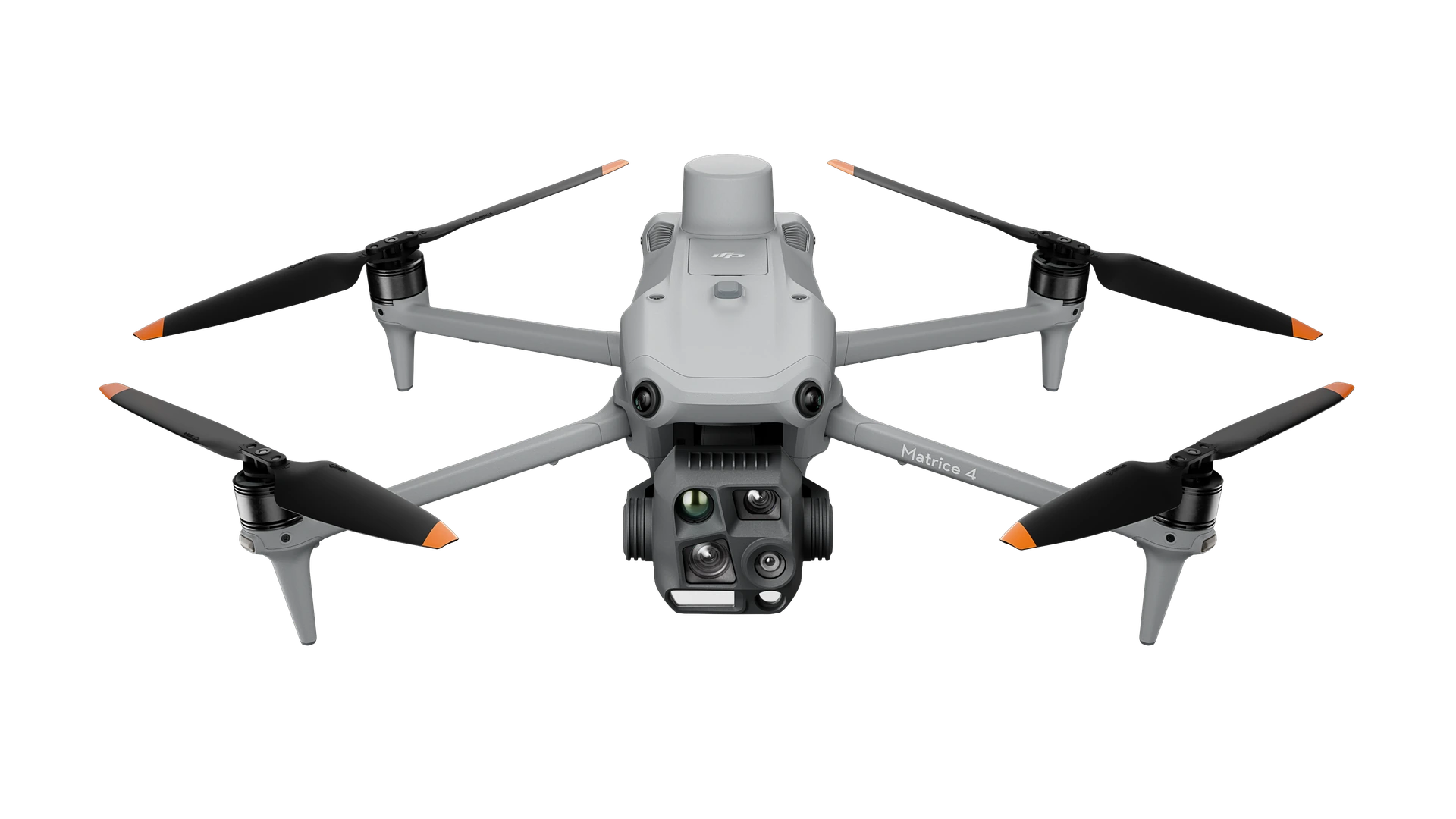
DJI Matrice 4T
Review a portable aircraft and field kit for a visiting survey team.
Official DJI Media: Matrice 4T front-view product rendering. Image: DJI / DJI Europe. Source. · Full-size product image.
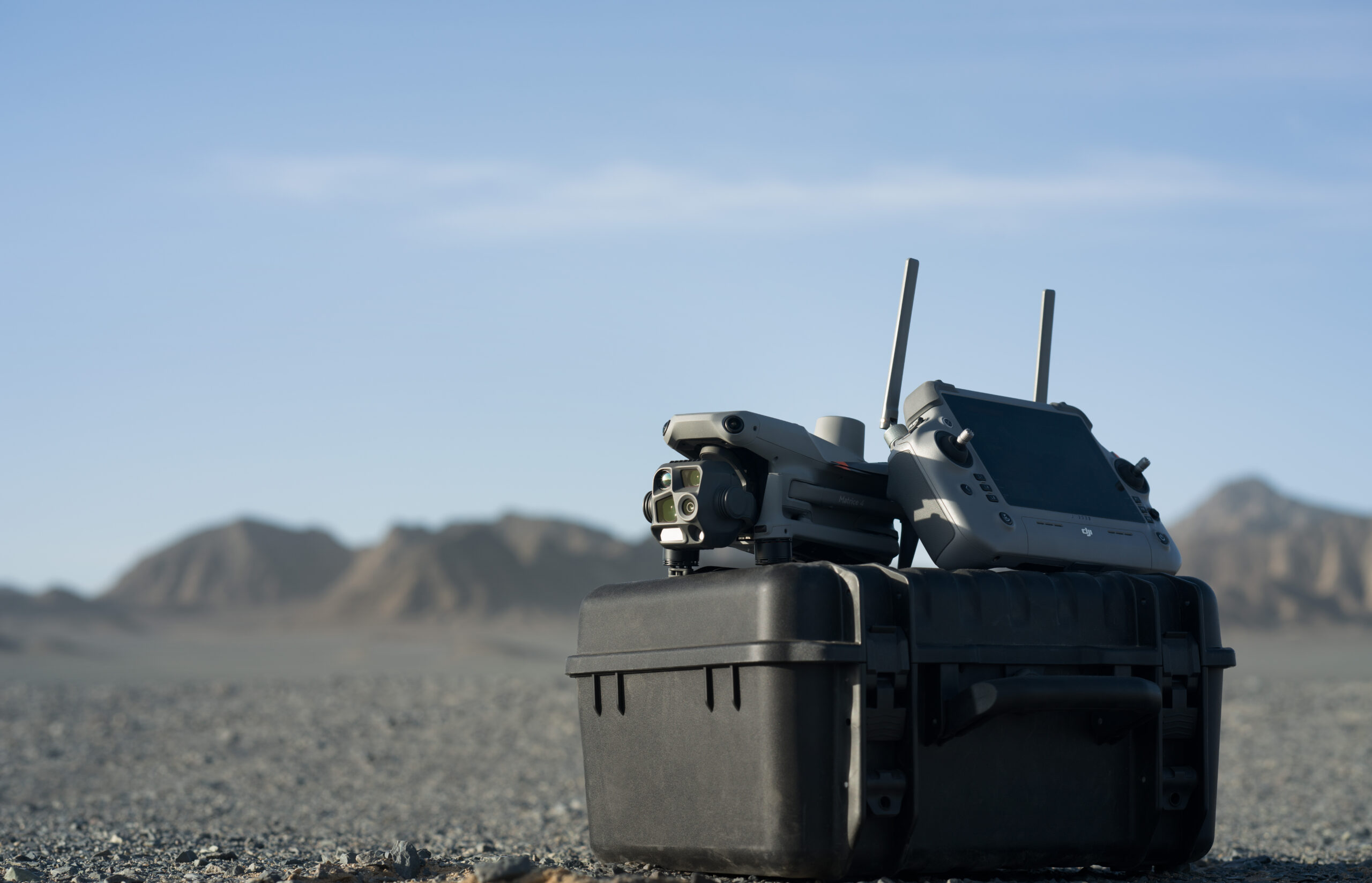
DJI Matrice 4TD
Review the aircraft and the controller or Dock deployment proposed for the site.
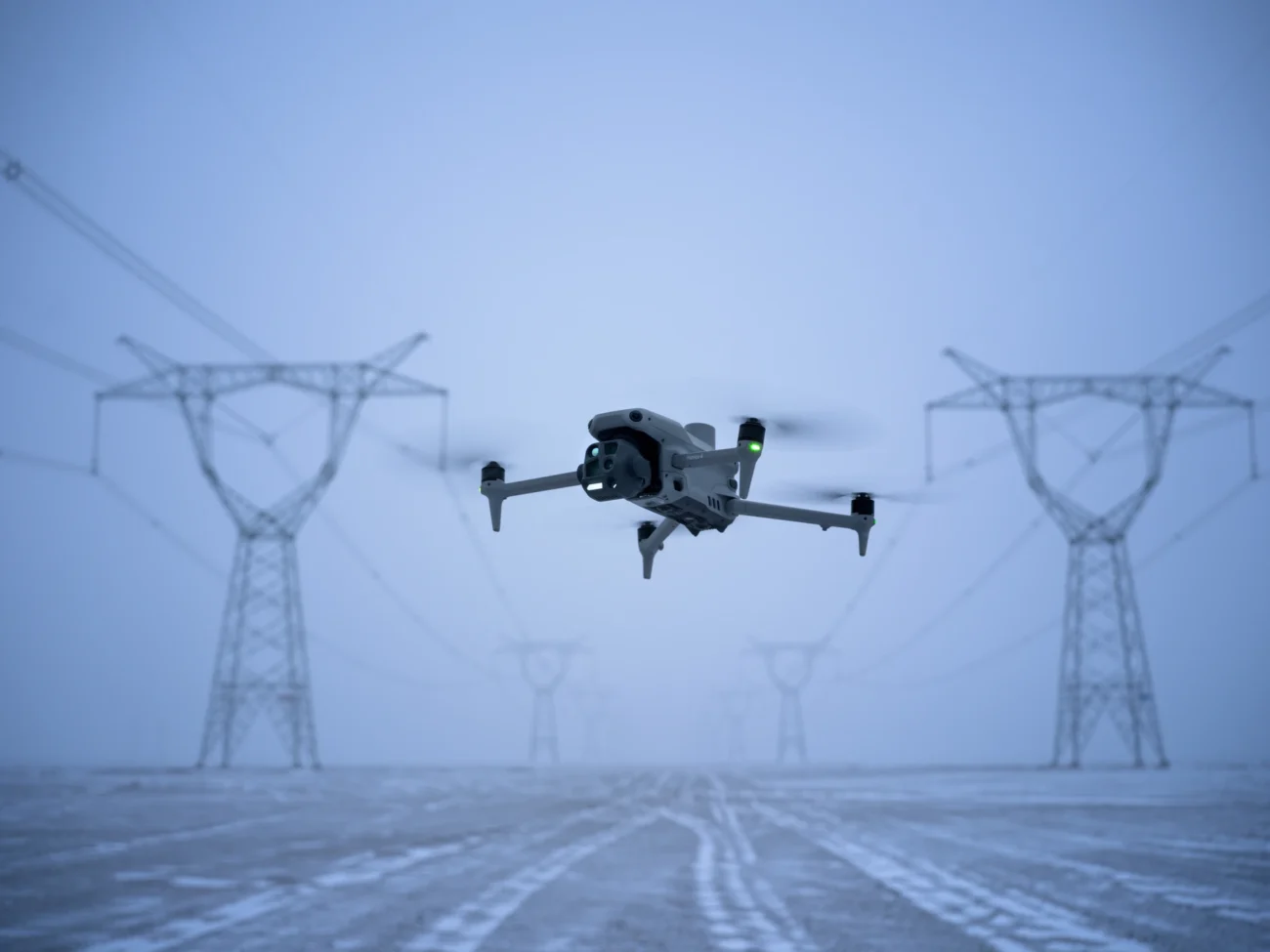
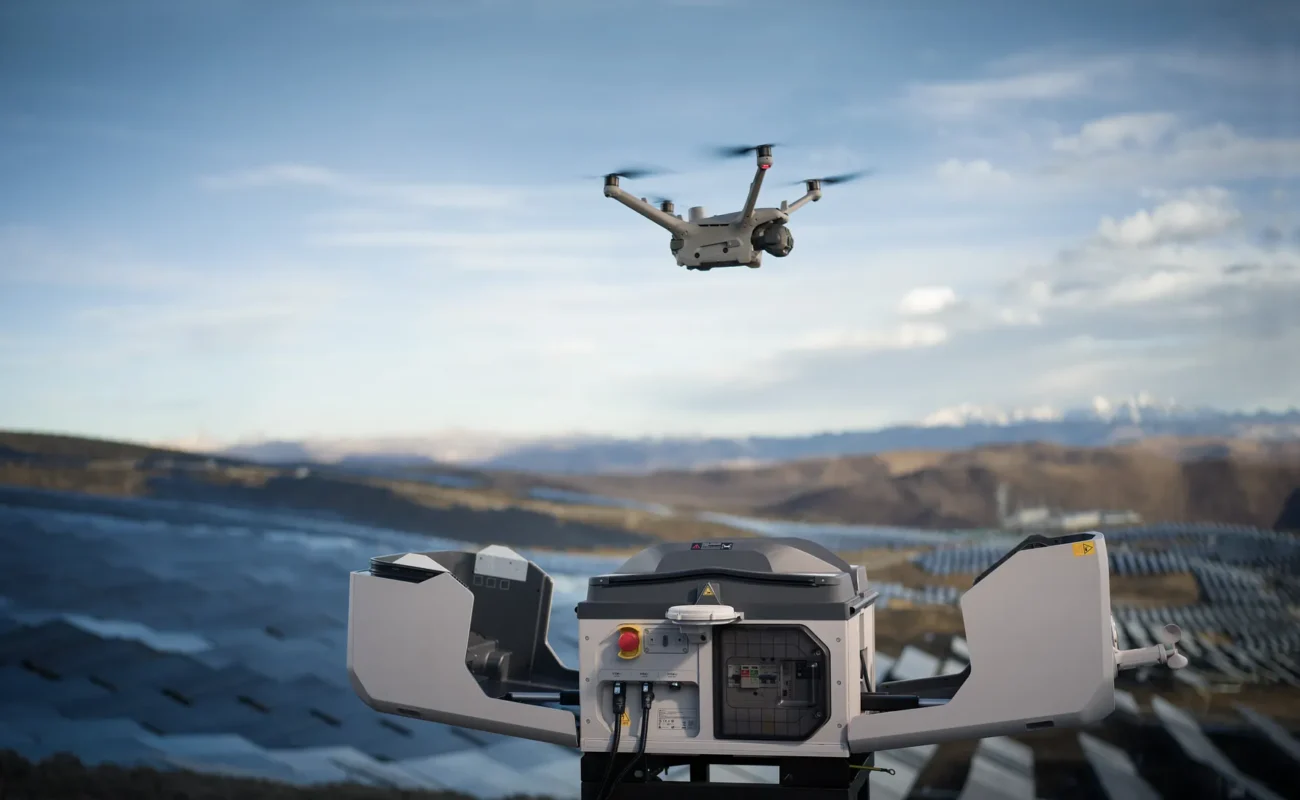
Official DJI Media: Matrice 4TD in flight. Photo: DJI / DJI Europe. Source. · Full-size product image.
Agree the investigation method and the required image evidence before choosing the kit.
Report Structure and Data Handling
Effective thermal inspection reports must preserve radiometric data integrity. Our recommendation is to retain original radiometric thermal files alongside paired RGB imagery. It is essential to verify that the software version used can correctly interpret temperature data.
A structured report should include:
- Asset or roof zone identification
- Image location and date
- Conditions during survey
- Gain, emissivity, and reflected temperature settings
- Observed thermal patterns
- Proposed verification steps
- Priority approved by a responsible expert
Separating raw evidence from interpretation is critical. Any unobserved areas must be clearly noted to avoid misrepresentation in conclusions.
Frequently Asked Questions: Matrice 4T vs 4TD for Roof Surveys
- Does a thermal pattern prove roof moisture? No. A moisture-like pattern can have other explanations. Arrange an appropriate physical moisture check before assigning a cause[1].
- Can I compare colours from two different dates? Not reliably without verifying settings, range, and environmental conditions. Raw colour data is not directly comparable.
- Does enhanced output increase the native detector pixel count? No. The enhanced file has more output pixels; the physical detector remains unchanged.
- Does IP55 make wet weather a good survey window? Not necessarily. Quality and safety must be prioritised over convenience. Wet conditions can compromise both data accuracy and operator safety.
For more information on commercial roof surveys, visit our dedicated page: Commercial Roof Survey.
Discuss the right roof inspection setup
Provide details on roof material, inspection goals, drawings, and desired report format.
- Equipment for roof surveyors and building consultants — tell us the roof material, access and whether the question concerns heat loss or moisture.
- Commercial roof thermal inspection configuration — share the building extent, inspection frequency and required report.
- Training and workflow consultation — tell us the intended workflow; any training or specialist support is subject to separately confirmed scope and availability.
References and technical evidence
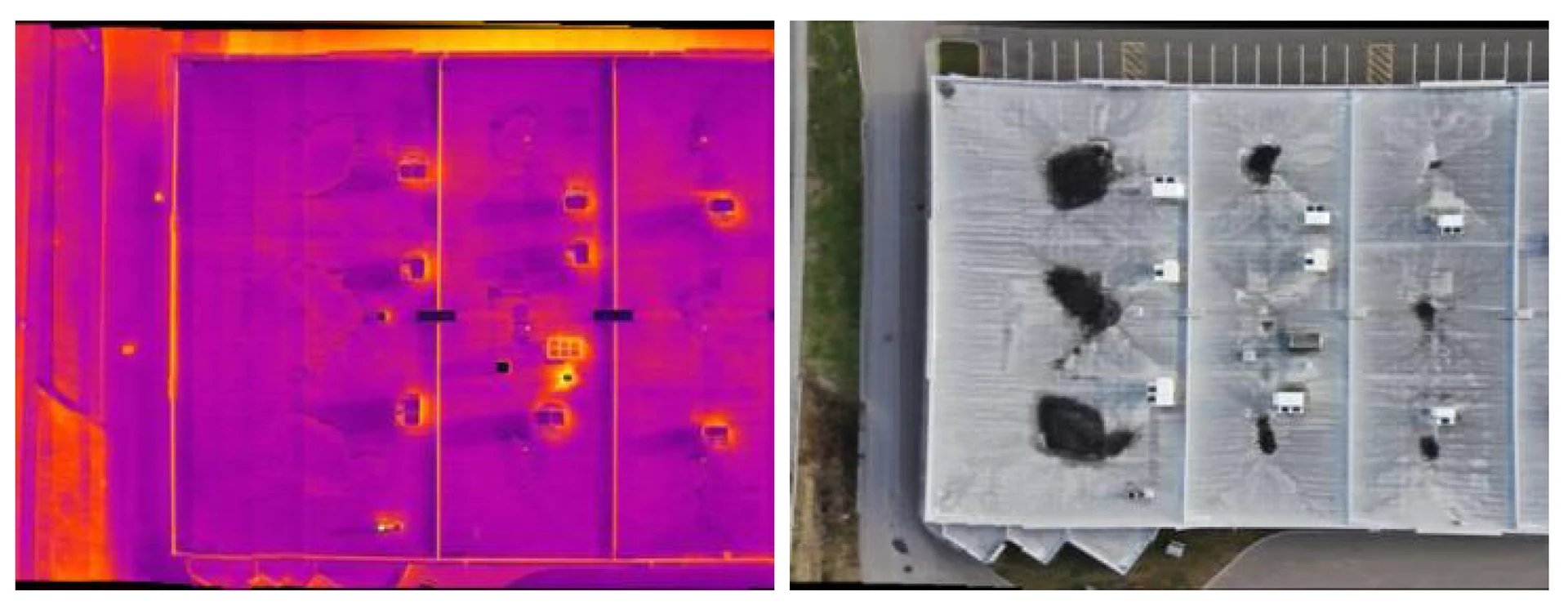
Research method reference: M300 / H20T roof mosaics
This published example explains a roof-image method. It is not evidence of Matrice 4T/4TD performance or an Irish Drone roof investigation.
Sources, versions and access dates
- How To Detect a Water Leak with Thermal Imaging
Teledyne FLIR · 2019-10-04 · manufacturer technical guidance
https://www.flir.com/discover/professional-tools/how-to-detect-a-water-leak-with-thermal-imaging
Accessed 13 November 2026. - Things to Know Before Conducting a Building Energy Audit
Teledyne FLIR · n.d. (publication date unconfirmed) · manufacturer technical guidance
https://www.flir.com/en-eu/discover/professional-tools/things-to-know-before-conducting-a-building-energy-audit/
Accessed 13 November 2026. - How Does Emissivity Affect Thermal Imaging?
Teledyne FLIR · 2021-11-01 · manufacturer technical guidance
https://www.flir.com/discover/professional-tools/how-does-emissivity-affect-thermal-imaging/
Accessed 13 November 2026. - DJI Matrice 4 Series — Specifications
DJI · n.d.; current page accessed 2026-11-13 · manufacturer
https://enterprise.dji.com/matrice-4-series/specs
Accessed 13 November 2026. - DJI Dock 3 — Specifications, including Matrice 4D/4TD
DJI · n.d.; current page accessed 2026-11-13 · manufacturer
https://enterprise.dji.com/dock-3/specs
Accessed 13 November 2026. - DJI Matrice 4 Series — FAQ
DJI · n.d.; current page accessed 2026-11-13 · manufacturer
https://enterprise.dji.com/matrice-4-series/faq
Accessed 13 November 2026. - Thermography Reference Documentation — chapters 4.1 and 4.4
FLIR Systems · 2019; T810442, r.AB/58786
https://support.flir.com/DSDownload/Assets/T810442-en-US_A4.pdf
Accessed 14 November 2026. - DEAP: Dwelling Energy Assessment Procedure
Sustainable Energy Authority of Ireland · Current official guidance page
https://www.seai.ie/ber/support-for-ber-assessors/deap
Accessed 14 November 2026. - Robust Multi-Modal Image Registration for Image Fusion Enhancement in Infrastructure Inspection
Shahsavarani et al., Sensors24(12),3994 · 20 June 2024; CC BY 4.0
https://www.mdpi.com/1424-8220/24/12/3994
Accessed 14 November 2026.


Leave a comment