

BUILDINGS & ROOFING · RESIDENTIAL THERMAL
Agree the heating, weather and access conditions before a residential flight, then hand over thermal observations with the context a building professional needs.
Evidence reviewed 3 November 2026 · Ireland
The practical answer
Define the concern and conditions before capture, retain visible context and original files, and arrange competent follow-up. BL-01 supplies an M4T equipment workflow and templates. It does not include processing software, a signed building assessment or a BER.
Describe the concern before the flight
Start with what the occupier notices and the decision pending. A cold room, recurring damp mark and uncertainty after retrofit work are different briefs. Ask the building professional what observations would help distinguish possible explanations. Include when the concern occurs, earlier repairs and relevant drawings.
A hypothetical homeowner might need to show a contractor an upper-wall pattern relative to a roof junction. That is a reasonable capture question when the reviewer defines the evidence. It does not authorise a declaration of missing insulation from aerial colour. Put the question, property reference, reviewer and expected next step on one page before selecting a date.
An example acceptance sheet could ask for a located record of one reported junction, a visible reference and an uncertainty statement. It should also say who will review the evidence and what would trigger another investigation. This hypothetical brief tests communication; it does not prescribe a diagnosis or a particular building treatment.
Bring building context to image review
Historic England describes surface thermography as investigation requiring building and services context. [1] Ask which construction information matters, rather than collecting every available occupancy record. Explain known alterations and uncertainties to the reviewer. Keep private information limited to the agreed purpose.
Number elevations, slopes, extensions and junctions consistently. Pair a thermal observation with a visible overview and detail where appropriate. Record what was hidden by overhangs, vegetation or geometry. A colleague who did not attend should understand the location. A different-looking surface is not automatically a heat-flow calculation, moisture measurement or confirmed construction defect.

Agree an interpretable capture window
Let the practitioner specify conditions relevant to the investigation, including building operation and recent weather. Do not turn general advice into one universal time of night or temperature threshold for every dwelling. If conditions are unsuitable, postpone or redefine the task rather than treating any flight as success.
Use a pre-visit sheet covering the concern, zones, relevant materials and known changes. The operator separately checks aircraft instructions and the flight arrangement. The homeowner should understand what access or information is required and why. Preparation involving heating, electrical equipment or roof access belongs with responsible competent people. Avoid improvising changes to building systems to obtain a persuasive photograph.
Keep a traceable capture sequence
Before the visit, agree zones and context, organise access and identify who can authorise a change. During capture, retain an overview, relevant visible detail and original thermal record for each accepted observation. Give related files the same finding identifier so they remain connected after transfer.
Before leaving, open representative originals against the acceptance sheet. Is the concern located, is the required detail readable and are missing views identified? Afterwards, prepare an observation register with file references and the next investigation owner. Preserve an unchanged source copy. This is an evidence-management recommendation, not a claim that every colour difference needs remedial work or that a supplier has inspected the property.
Keep a thermal record separate from a BER
SEAI provides a registered-assessor BER assessment route. [2] If the customer needs a BER, formal retrofit evidence or a signed building conclusion, commission the corresponding professional process. A drone dataset and reporting template do not replace it. Do not infer an energy rating from a thermogram.
Agree report language before work. Separate an observation, a possible explanation and a confirmed conclusion. The latter two require appropriate evidence and competence. Describe any further investigation as a matter for the appointed professional, not an assured repair recommendation. Include the review role in procurement instead of assuming a software name or aircraft camera supplies it.
Know what BL-01 supplies
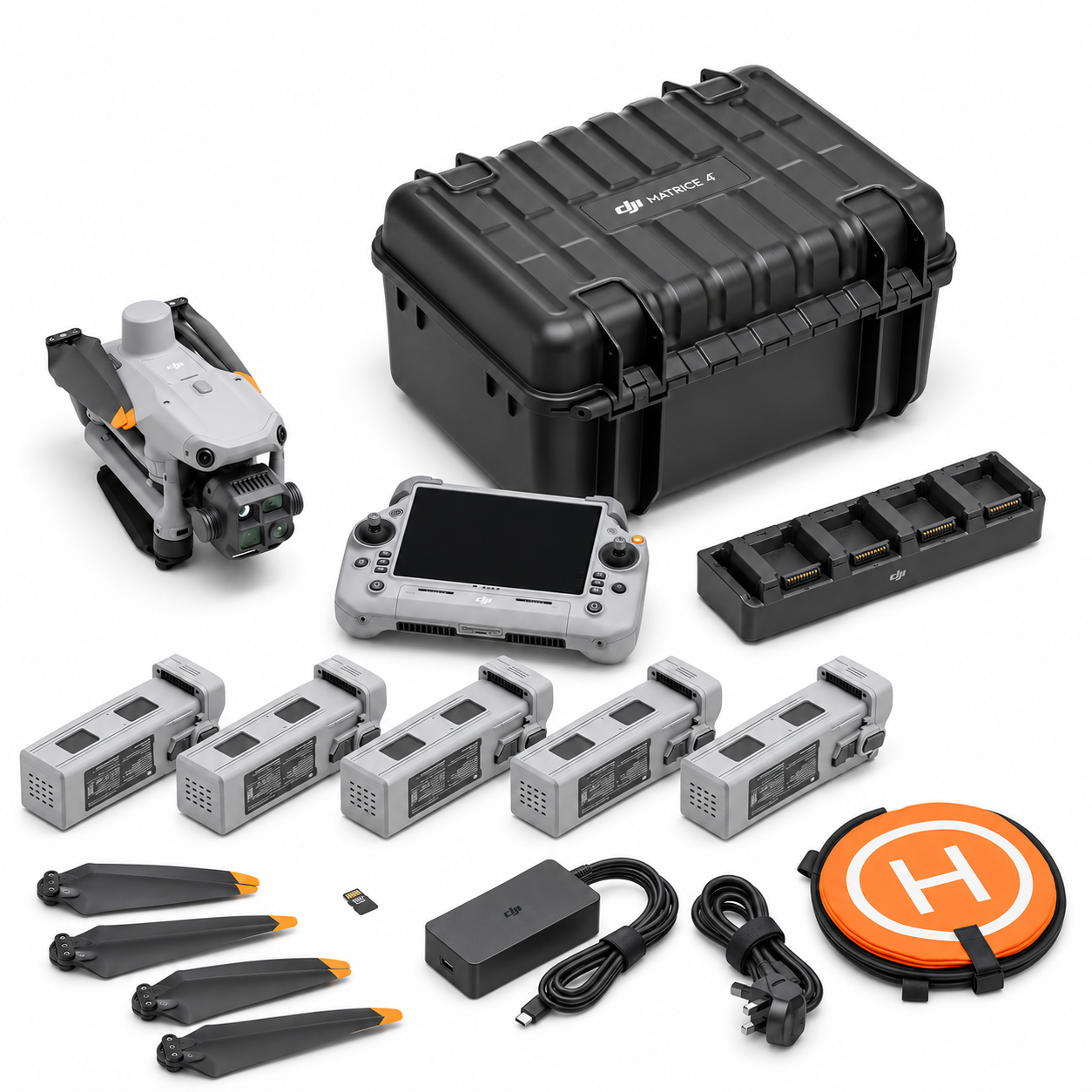
The BL-01 configuration contains Matrice 4T, five total flight batteries, its listed controller and charging equipment, reporting templates, training and introductory support. No processing licence is included. The customer still needs a suitable processing and review arrangement for the intended handover.
BL-01 supplies the aircraft, capture and reporting templates, training and support. Software, physical testing and a signed professional investigation can be specified separately where the brief requires them. Ask for separate quotation lines so the equipment handover and the building assessment each have a clear owner. If the task actually needs a commercial measured survey or roof map, reconsider the route rather than extending the residential scope by implication.
Questions for a residential enquiry
Can it see through the roof? Do not promise hidden-layer diagnosis from an exterior observation. Should I climb up to mark a place? Arrange access through competent professionals; HSA warns about fragile coverings and rooflights. [3] Will photographs prove an upgrade worked? Agree an appropriate before/after method and professional assessment.
Can every home use the same plan? Layout, access and concern matter. What if findings are inconclusive? Preserve that result and let the reviewer specify further evidence. Is a report template a certification? No. Discuss exactly who signs any professional statement, what they inspected and which limitations apply before relying on it.
Prepare a useful enquiry
Send the layout, concern, known repairs and intended reviewer when discussing BL-01 with Irish Drone. Say whether you want equipment and training, a separately arranged professional investigation or both. Agree deliverables, responsibilities and exclusions in writing.
Use the building-package guide if dimensions or repeat mapping are the real requirement. For a first investigation, a clear question and usable originals are stronger acceptance criteria than a promise that an aircraft will discover every hidden issue. Request a representative handover before committing to a larger programme across several dwellings.
Explore the equipment packages on Irish Drone
Package illustrations show the listed configurations. Battery quantities are whole-package totals.
Official manuals and setup guidance

Continue with the guide for your work

Documentation and evidence
Sources for the cited guidance
- Historic England thermographyRead source ↗
Reviewed 3 November 2026.
- SEAI BER assessmentRead source ↗
Reviewed 3 November 2026.
- HSA fragile-roof alertRead source ↗
Reviewed 3 November 2026.
Compare equipment packages
Explore Residential & Commercial Buildings drone packages →
To discuss equipment for residential thermal observation, contact Irish Drone with the building context, inspection question and intended review.




Pingback: Commercial Roof Surveys: Specify the Visual Evidence Before the Drone
Pingback: Which Drone Package Fits Your Building and Roof Inspection?
Pingback: Thermal Roof Mapping: When a Map Helps and Photographs Are Better