
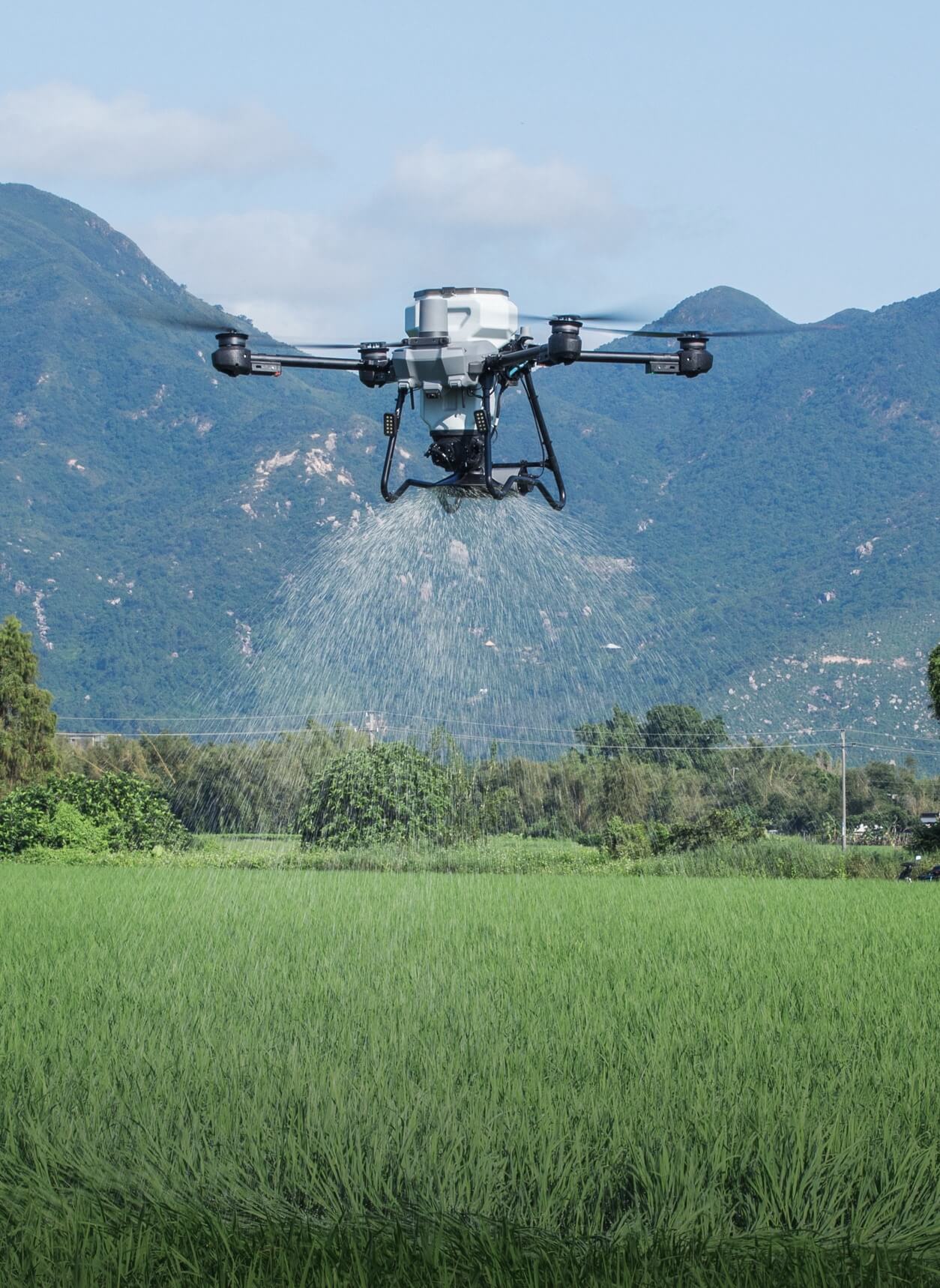
Start with the work that needs doing, then test whether the aircraft, crew and ground equipment can support it.
Start with the task, then compare packages
Need crop imagery or thermal farm observations rather than material application? Start with our crop-monitoring and farm-inspection guide. The shortlist below concerns application and agricultural lifting setups.
On smaller screens, scroll the table sideways to compare all four columns.
| Your task | Starting candidates | Check before choosing | Existing package options |
|---|---|---|---|
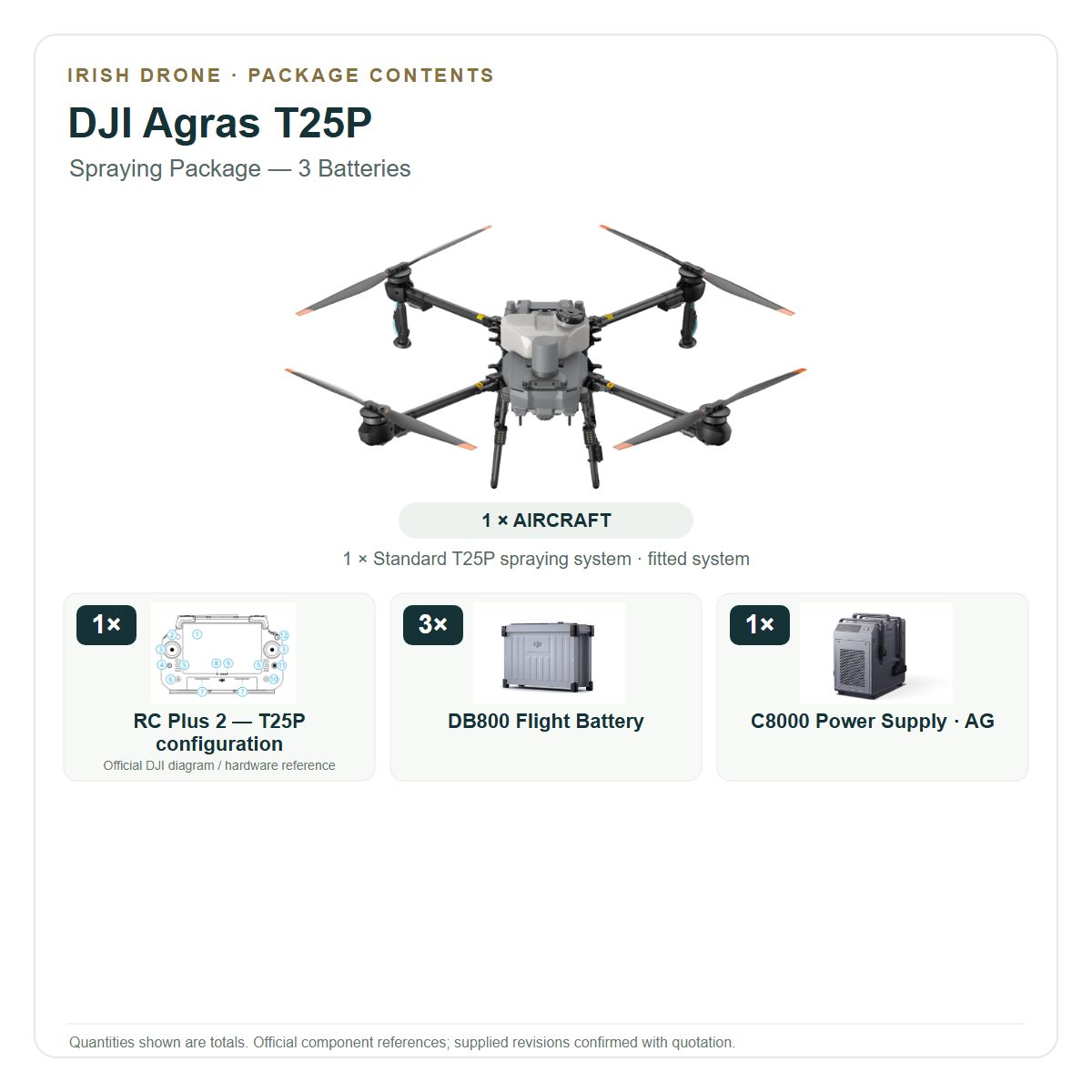
| A compact spraying setup moved between accessible fields | DJI Agras T25P DJI Agras T25 | Check transport and field access, the application material and the exact model’s battery/charger combination. Do not choose from farm area alone. | T25P three-battery spraying package T25 three-battery spraying package |
| Repeated spraying visits with organised ground support | DJI Agras T50 DJI Agras T55 | Compare the installed spraying system, refill routine, crew roles and the power actually available for charging. Confirm model-specific equipment rather than assuming cross-compatibility. | T50 three-battery spraying package T55 three-battery spraying package |
| A contractor round requiring separate spraying and granular-spreading jobs | DJI Agras T70P DJI Agras T100 | Verify the system fitted for each job, material properties, metering and replenishment. Confirm the permissions for the intended material and operation; the systems are not one combined application mode. | T70P spray, spread and lift package T100 spraying and spreading package |
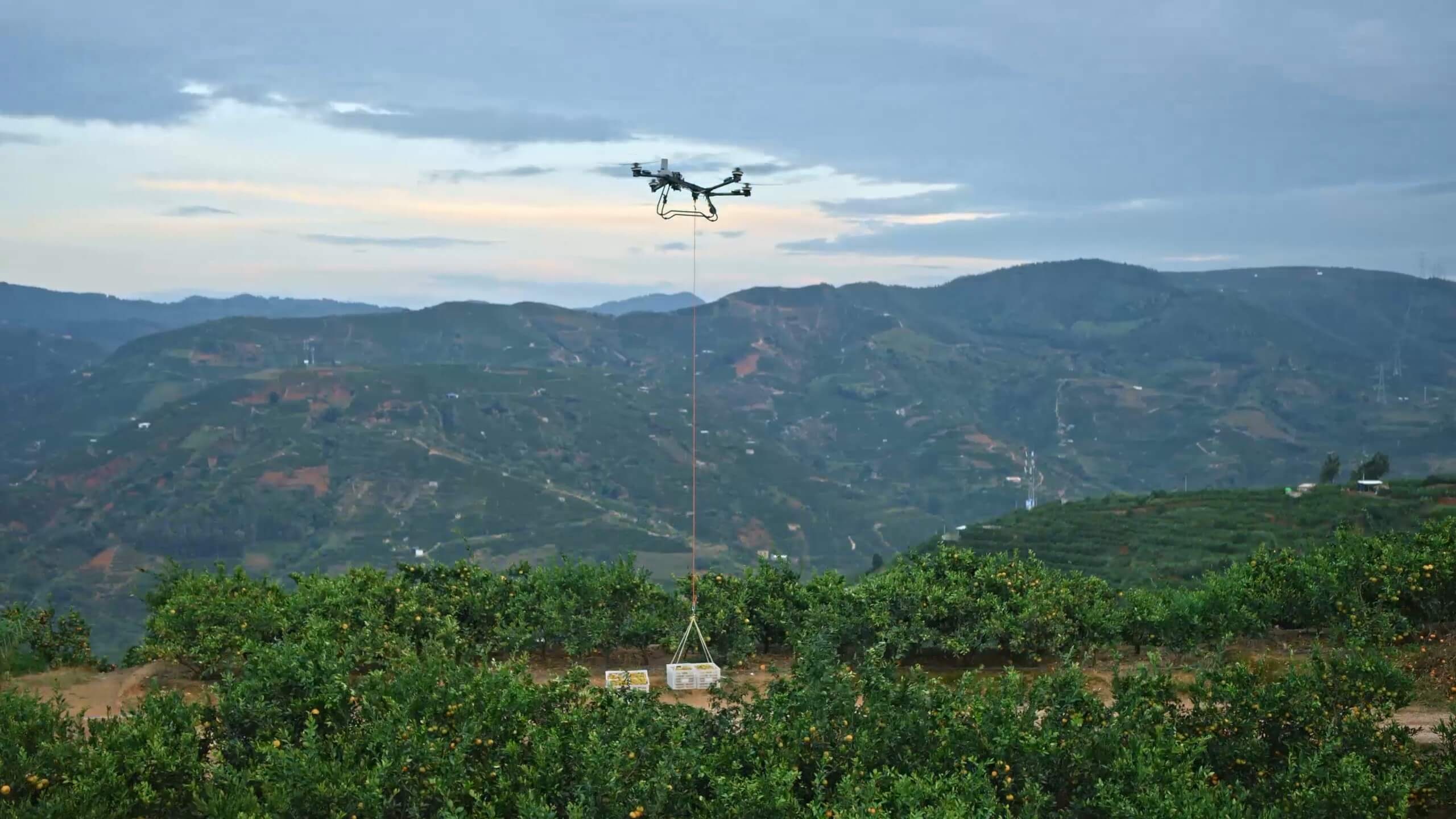
| Moving farm materials to a separate work point | DJI T200 Regional configuration enquiry | Assess the complete load, attachment, route and receiving area. Confirm the regional configuration, conformity documentation and operating case. T200 is a lifting option, not a spraying or spreading aircraft. | T200 two-battery lifting configuration T200 four-battery lifting configuration |
These are candidates to compare, not farm-size rules. Plan the Irish operating route and any material-specific permission separately from the equipment choice.
Write the job brief before choosing a model
An Agras shortlist starts with a specific application task. A farm wanting crop observations has a different requirement from a contractor planning granular distribution or an operator considering agricultural lifting. An impressive payload figure does not resolve that distinction. Describe the material, intended treatment or delivery, crop stage, field shape, access and people likely to be nearby. Put the operating permission question alongside the technical question from the beginning.
Record who prepares the job, who approves the agronomic instruction, who handles replenishment and who accepts the result. A farmer buying for a few recurring jobs may value compact transport and a straightforward ground routine. A contractor serving several holdings must also manage changing materials, mobilisation, records and client expectations. Neither business case can be settled from aircraft capacity alone. Our existing farm-inspection content covers observation; this guide concerns selecting an application aircraft and its working setup.
Read capacity as several separate limits
Compare tank volume, material mass, take-off limits and the installed system separately. The T25P specifications distinguish a 20 L spraying configuration from a 30 L spreading tank limited to 25 kg of material. A hopper filled by volume can reach a mass limit before it looks full. The operator must follow the applicable aircraft recommendation rather than treating every litre as one kilogram.
For a first comparison, DJI lists 40 L spraying for T50, 50 L for T55, 70 L for T70P and 100 L for T100. Those are useful configuration descriptors, not a ranking of practical output or suitability. Ground handling, refill access, application requirements and flight constraints can outweigh the difference. Keep the two nozzle/four nozzle and battery variants in the comparison sheet where they affect limits. Never compare the headline of one variant with the working equipment of another and call the result a complete package comparison.

When the T25P deserves a close look
Consider the DJI Agras T25P where a compact working setup fits the actual job and the required material per cycle is compatible with its limits. The useful question is whether the aircraft can be transported, unfolded, checked and replenished at the available locations without compromising the operating area. Walk the proposed parking place and field access before deciding that a smaller aircraft automatically makes the operation simple.
A practical demonstration should include handling the aircraft and battery, checking the controller view, bringing the material to the loading point and completing the post-job routine. Ask for the exact battery, charger, application module and supporting parts in the quotation. The T25P three-battery spraying package is a configuration discussion point, not proof that three batteries remove every charging delay. Cooling, input power and the operating rhythm still need to be demonstrated with the proposed equipment.
Compare T55 with the role of an existing T50
The T55 merits assessment where its working systems and support requirements fit the job brief. DJI documents DB1050 and DB1580 configurations with different aircraft limits; a comparison must identify which one is offered. Its official specifications also identify the model-specific application systems and C7000 charging arrangement. Do not accept an unspecified battery family or a familiar charger name as a complete equipment description.
T50 remains a useful reference for businesses that already own its batteries, equipment or procedures. It should not become a default best-new-buy recommendation merely because a previous-generation package appears cheaper. Check documentation, parts, service arrangements and the compatibility of the exact equipment being retained. If the existing fleet cannot share the items that matter, an apparent saving may disappear. Conversely, a sound existing T50 workflow may be more relevant than a speculative change made solely to obtain a larger tank.

Give T70P and T100 a ground-system test
Assess larger aircraft where the material requirement and site organisation can use their capacity. The T70P specification distinguishes battery-dependent configurations; the T100 specification separates standard and dual-battery spraying equipment. These details should appear in the supplier’s comparison, together with the actual battery count and power supply. An aircraft name without its configuration is not enough for a purchasing decision.
Plan a demonstration that exposes the likely bottleneck: replenishment, transport between fields, preparation of the next load or the charging supply. Observe a whole operating cycle rather than an isolated pass. Ask how the team handles a delayed refill, an unusable landing location or a rejected material batch. A larger tank can reduce one kind of interruption while making another part of the workflow harder. That trade-off should be visible before committing to a complete system.
Illustrative example: a fragmented contractor round
Consider a hypothetical contractor serving a dairy holding with small irregular paddocks and a separate arable client with broader fields. This is a planning example, not an Irish Drone field trial. The contractor first separates jobs by material, access and permission, then records the proposed vehicle position, replenishment point and route between holdings. The same aircraft is not assumed to be the best answer for both clients.
The shortlist might retain a compact application setup for the restricted sites and a T55 or larger system for evaluation on the broader work. The next decision is a witnessed logistics exercise with the shortlisted configuration. If moving water, changing material or relocating the vehicle dominates the day, buying the largest aircraft has not solved the limiting problem. The contractor can then quote mobilisation, preparation and application as distinct activities, with clear exclusions, rather than promising a universal number of hectares per hour.

Keep technical selection and Irish permission aligned
Ask whether the intended operation is actually permissible before treating a shortlist as a purchase plan. IAA agricultural guidance distinguishes observation from application, and agricultural permissions remain separate from aviation authorisation. These aircraft should not be assumed eligible for Open-category work simply from a single weight threshold. Material release and the complete operational risk also matter; some operations may require a more demanding route.
Use the current IAA process with a competent operating team and consult the separate SORA and pesticide-application guides linked with this article. Do not interpret a supplier’s catalogue listing, training offer or demonstration as an authorisation. The T200 FAQ identifies an agricultural lifting reference, not a substitute spraying aircraft. Its EU conformity and Irish availability remain unconfirmed. The shortlist should state which facts are verified, which depend on configuration and which are still prerequisites for a lawful operation.
Turn the shortlist into a decision record
Finish with a written comparison of the shortlisted systems against the same job. Include the exact aircraft variant, application module, battery family and quantities, power supply, controller, transport arrangements and commissioning evidence. List optional equipment separately. Ask the supplier to identify the relevant manual revisions and resolve every ambiguous part number rather than leaving those questions until delivery.
Agree what would justify moving forward: acceptable handling at the actual access point, repeatable replenishment, a verified working-system test and a credible permission route. Also record what would stop the purchase, such as an unsupported material, unsuitable power supply or unresolved documentation. This makes a configuration discussion with Irish Drone much more useful. Bring the job brief and the unresolved decisions; choose the package that can be checked against them, with the final quotation and operating responsibilities clearly defined.
Frequently asked questions
Is the largest Agras automatically best for a contractor?
No. Compare the complete operating cycle, field access, material requirements and permissions; headline capacity alone does not establish practical output.
Can the T200 be shortlisted for spraying?
No. DJI’s current T200 FAQ says it does not support spraying or spreading; it is an agricultural lifting reference.
Explore the aircraft and packages
Follow the product page for the exact configuration and included equipment. Equipment selection and operating authorisation are separate parts of the project.

Talk to Irish Drone about your project
Send us the site, task, load or application material, intended operating pattern and available charging supply. We can help scope a suitable aircraft and package and discuss the preparation needed for an Irish operation.
Contact usPlan the next part of your operation


Official sources and technical guidance
These links support specific facts in the guide. Check the current revision and operating conditions when preparing a real project.
DJI’s Chinese-market T200 and FC200 references may require China Mainland to be selected in the official site’s region settings; the default region can display a not-found page. Their regional technical data does not establish an Irish configuration or operating approval.


Pingback: Agriculture Drones Ireland: Mavic 3M or Matrice 4T?
Pingback: Agras Package Buying & Commissioning Checklist | Ireland
Pingback: Agras Contractor Logistics | Refills, Water & Materials