

BUILDINGS & ROOFING · THERMAL MAPPING
Compare a thermal map with individual roof photographs, specify the original files and agree how gaps and uncertain observations will be reported.
Evidence reviewed 3 November 2026 · Ireland
The practical answer
A thermal roof map can organise a suitable dataset; it is not a universal method for façades, leaks or hidden insulation. Define the investigation and verification plan first. BL-03/05 include standalone M4TD and Flagship, but the licence does not make every capture route suitable.
Ask what the map contributes
A map helps when the reviewer needs a coherent roof reference to organise comparison and follow-up. It may add little when the concern is a small vertical detail better recorded with located photographs. Ask the building professional which representation makes the next decision easier.
For a hypothetical flat-roof estate, request a zone reference, thermal observations and locations for competent verification. Do not label the exercise a leak-source guarantee. Keep roof construction, desired output and follow-up responsibilities explicit. A well-organised map can improve communication while the cause of an observation remains unresolved. Describe that distinction to procurement before selecting software or an aircraft.
Before capture, have the reviewer mark which parts of a trial roof they expect to compare and which need another method. Preserve the reasoning with the brief. A later recipient should understand why one area has mapped evidence while another has a photograph or an explicit exception, rather than treating every blank space as sound.
Separate moisture investigation from appearance
ASTM roof-moisture scope includes verification and excludes determining the cause or entry point of moisture. [1] Reading the public scope does not establish that a package or visit complies with the full standard. The practitioner must decide what method applies to the actual roof.
Provide build-up information, coverings, drains, repairs and relevant history. Ask the reviewer to define conditions and further tests. Do not instruct an owner to cut, probe or walk a roof to confirm a colourful area. Competent professionals separately arrange physical verification. The handover should identify suspected, verified and inconclusive findings, rather than replacing those distinctions with a single defect label.
Confirm a supported thermal route
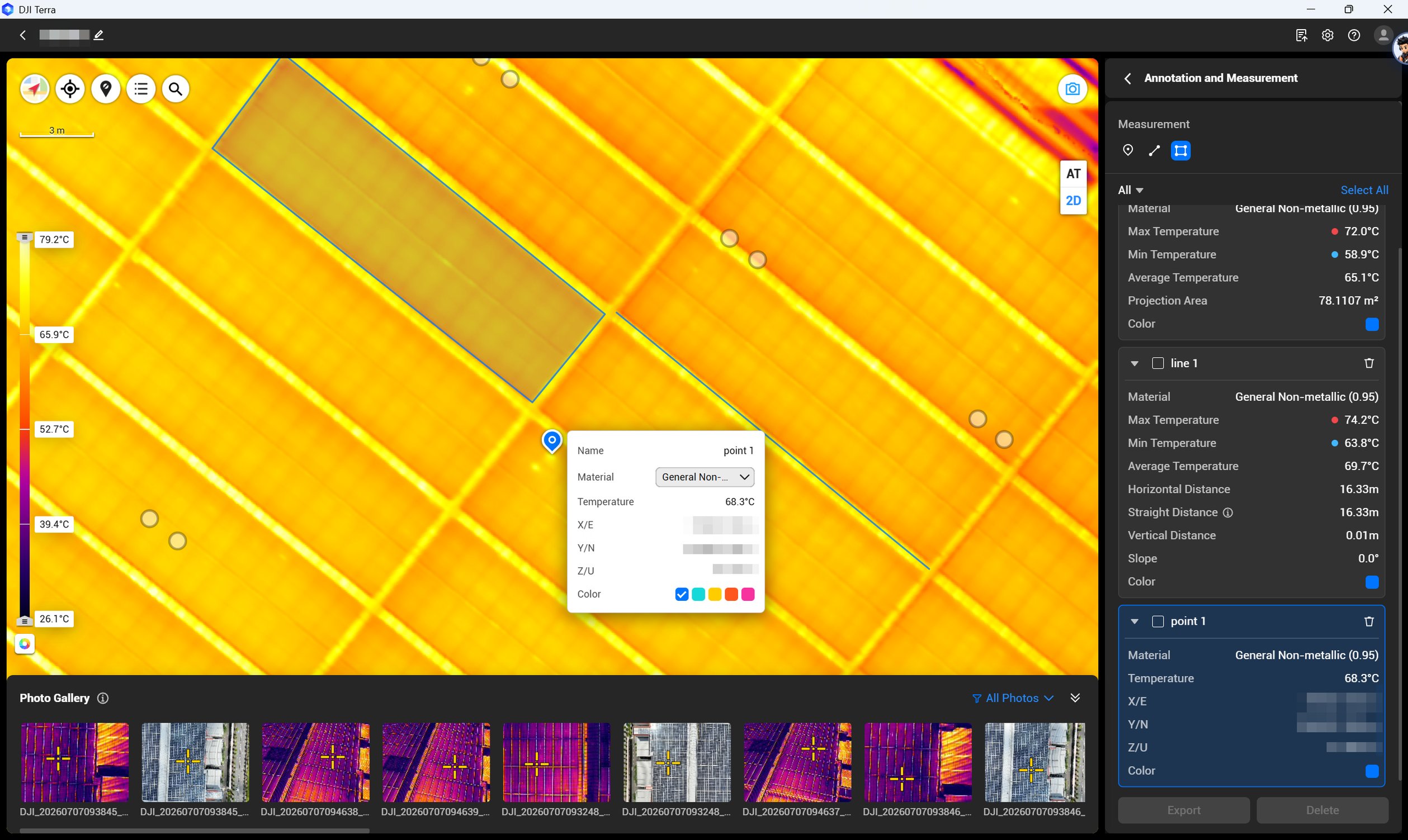
Terra supports M4TD paired visible/infrared reconstruction for two-dimensional thermal outputs. [2] This is separate from promising that a façade orbit or arbitrary inspection photographs will create a thermal building model. The written package also describes façade work through photographs and templates.
Before booking, have the processor check formats, modes, complete paired input, route suitability and settings against current documentation. Do not copy an old tutorial without checking the installed version. If the job does not fit reconstruction, agree located-image review instead. A small representative dataset should demonstrate the intended handover, not merely show that a thermal picture opens on a computer.
Review assumptions against originals
Ask the analyst to record settings and explain whether the representation suits the materials and investigation. Keep visible references alongside thermal observations. Review mapped measurements against source frames before accepting them. This is an acceptance recommendation, not a new temperature-accuracy promise.
Use a register with roof zone, original file, mapped location, observation and uncertainty. Mark seams, boundaries, reflective surfaces and obscured areas for investigation rather than automatic interpretation. Retain rejected-area information so another professional cannot mistake absent data for an inspected clear area. Explain which comparisons are meaningful and which have been ruled out.
Test the complete path on one roof zone
Choose ordinary roof surface and features likely to complicate the brief. Agree usable originals, consistent location references, a readable output and a verification list as acceptance criteria. Include a decision when conditions fail or coverage is incomplete.
Have the recipient review the pilot with operator and processor. Can they trace an observation to an original? Do context and references support follow-up planning? Is the status suspected, verified or inconclusive? Record capture, processing and review effort. Do not extrapolate one successful area into a whole-estate throughput promise or universal success rate. A rejected dataset can be an important result if it prevents misleading interpretation.
Understand the standalone configuration
BL-03 supplies M4TD, five total flight batteries, matching 240W charging equipment, twelve months of Flagship and listed training, support and dataset reviews. BL-05 adds Power 2000. Neither lists Dock 3, so neither automatically supplies permanent remote deployment.
Software entitlement and dataset acceptance are separate questions. A computer, additional application, signed building report, physical tests or repairs require explicit agreement. Do not infer them from a licence name or screenshot. Check the charging plan against the actual schedule, including safe battery changes and file review. Spare batteries support preparation; they do not establish valid capture conditions or uninterrupted inspection.

Questions to settle with the reviewer
Will mapping show the source of water ingress? Agree verification; do not assume it. Can façade photographs substitute for roof-map input? Check requirements and use a photograph-based record where appropriate. Does Flagship support every thermal camera? Confirm actual aircraft, files, modes and version.
Are five batteries additional? Five is the whole-package total. What does an inconclusive result say? State uncertainty and missing evidence with a responsible next step. Can software make a poor capture compliant? A licence is not evidence of method conformity. Define acceptance and the applicable professional process before the work.
Choose evidence and verification together
Discuss BL-03 or BL-05 with Irish Drone when you have a roof plan, question, processing route and reviewer. Keep field power within logistics and thermal interpretation within the investigation.
Read the visible-survey guide for measurements or residential records for a focused dwelling enquiry. A map is valuable when someone can use it responsibly. Preserve the decision path from original observation through review to any separately verified conclusion, rather than presenting software output as the final professional answer.
Explore the equipment packages on Irish Drone
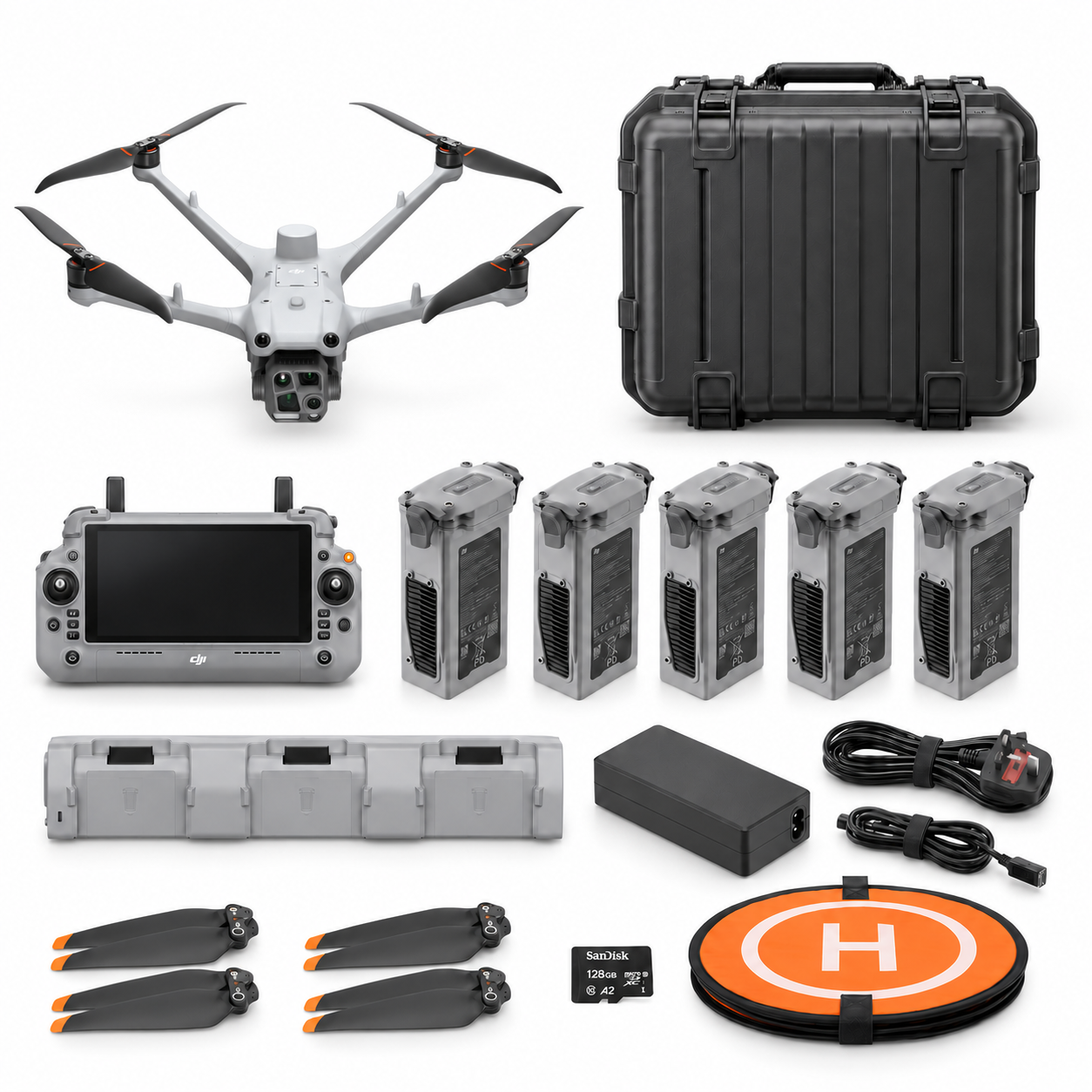

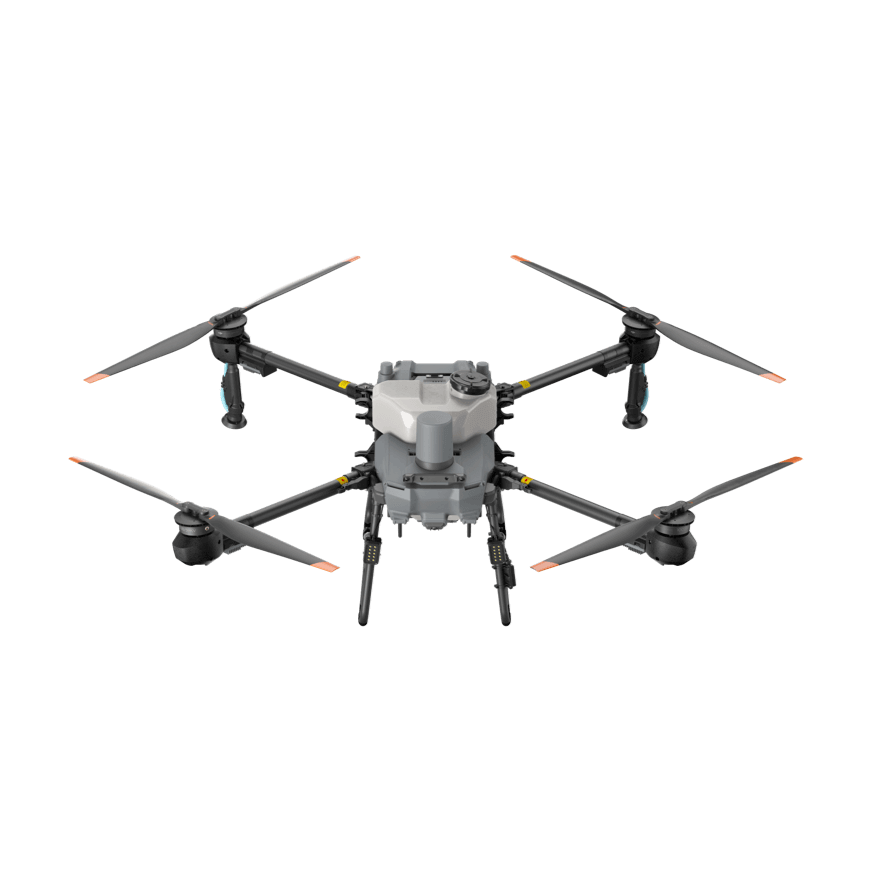
Package illustrations show the listed configurations. Battery quantities are whole-package totals.
Official manuals and setup guidance
Continue with the guide for your work

Documentation and evidence
Sources for the cited guidance
- ASTM roof-moisture scopeRead source ↗
Reviewed 3 November 2026.
- DJI Terra thermal FAQRead source ↗
Reviewed 3 November 2026.
Compare equipment packages
Explore Residential & Commercial Buildings drone packages →
To discuss equipment for thermal roof mapping, contact Irish Drone with the roof extent, intended output and review process.



Pingback: Commercial Roof Surveys: Specify the Visual Evidence Before the Drone
Pingback: Which Drone Package Fits Your Building and Roof Inspection?