
CONSTRUCTION · CONSTRUCTION DOCK PLANNING
Separate setup support from physical installation, confirm the cloud entitlement and assign owners for recurring tasks and exceptions.
Evidence reviewed 3 November 2026 · Ireland
The practical answer
Treat a construction dock as an operating system that must be commissioned for a changing site. Agree location, services, responsible people, capture tasks and exception handling before installation. CT-03 provides Dock 3 with M4TD; physical installation and civil works remain the customer’s responsibility.
Define the recurring task before selecting a location
Ask what recurring evidence the site needs and who will use it. A work-zone overview, a requested observation and a measured survey are different tasks. State the cadence, expected handover and conditions under which the task can be deferred. Use that brief to assess whether a fixed station fits the project.
Consider how long the proposed location will remain useful as the site develops. Ask the site team about future structures, access changes, crane operations and service alterations. A good proposal explains how those changes will be reviewed, rather than assuming the initial site layout remains valid throughout construction.
Keep the aircraft choice clear
Dock 3 supports Matrice 4D-series aircraft. [1] CT-03 supplies M4TD with the dock; it is a different configuration from the portable M4E packages. Compare it against the intended recurring evidence and commissioned operating method rather than treating each Matrice 4 model as interchangeable.
DJI cautions that RTK alone does not guarantee M4TD’s final mapping precision. [4] Where the project needs a measured surface or dimensional acceptance, ask its survey professional to specify the method and checks. A useful recurring visual record can have a clear purpose without being described as a survey-grade result.

Separate deployment support from physical installation
CT-03 includes complimentary system deployment and setup. The customer arranges and pays for physical installation and civil works, including the concrete base, and provides the required power supply and network connection. Agree those responsibilities before choosing an installation date.
Ask the responsible professionals to assess the proposed support, location and services against the current manufacturer documents and site requirements. Put access, protection, electrical work, network provision and future maintenance on a responsibility schedule. This is a commissioning overview; the installation team determines the detailed design and safe work method.
Use six commissioning questions
- Which recurring tasks and outputs will the system serve?
- Who approves the location and future-site assumptions?
- Who provides and signs off the physical installation and services?
- Who owns the operating arrangements and handles exceptions?
- How will the complete capture-to-handover route be demonstrated?
- What change triggers a new review before the next task?
Record an owner and acceptance evidence for each answer. A successful demonstration should include a completed task, an unavailable task and recovery of the resulting files. Ask the receiving team to confirm it can find and use the record. A system handover should establish working responsibilities as well as working equipment.
Keep routes subject to a changing-site review
Construction changes the environment in which the task was planned. Ask the site contact to communicate new structures, temporary works, lifting activity and access changes to the operator. Decide how those updates are checked before the next task is released and how a deferred task appears in the programme.
Keep aviation permissions and operator responsibilities with the appointed team. Installing a dock does not itself authorise BVLOS operation or flight over people. [3] The useful buying question is how the operator establishes and maintains the permitted method for this site, including communications and the decision to stop or change a task.
Agree the cloud entitlement and processing handover
FlightHub 2 supports Dock 3 within its device ecosystem. [2] CT-03 includes a twelve-month FlightHub 2 entitlement and Terra Flagship for one year. The exact current cloud plan, connected-device scope and quotas must be confirmed in the quotation rather than inferred from an older plan name.
Ask for a demonstration of task preparation, observation review and file handover under the proposed entitlement. Separately demonstrate any Terra processing the project requires. Agree where originals and accepted records will be retained, who can access them and how the customer receives an export it can keep. Software access and professional acceptance remain separate decisions.
Give routine checks and exceptions a named owner
Allocate responsibility for the station’s condition, service availability, task release, file receipt and maintenance escalation. Ask who responds when a task is unavailable and how the project team learns that the expected record was not captured. An exception needs a responsible person and a next action.
Plan a handover for staff changes and temporary absence. Keep current site contacts, system records and accepted operating documents accessible to the authorised team. Agree when the installation or task arrangement must be reassessed as construction progresses. These are useful commissioning questions even when the initial intention is only a modest progress archive.
The approved construction dock configuration
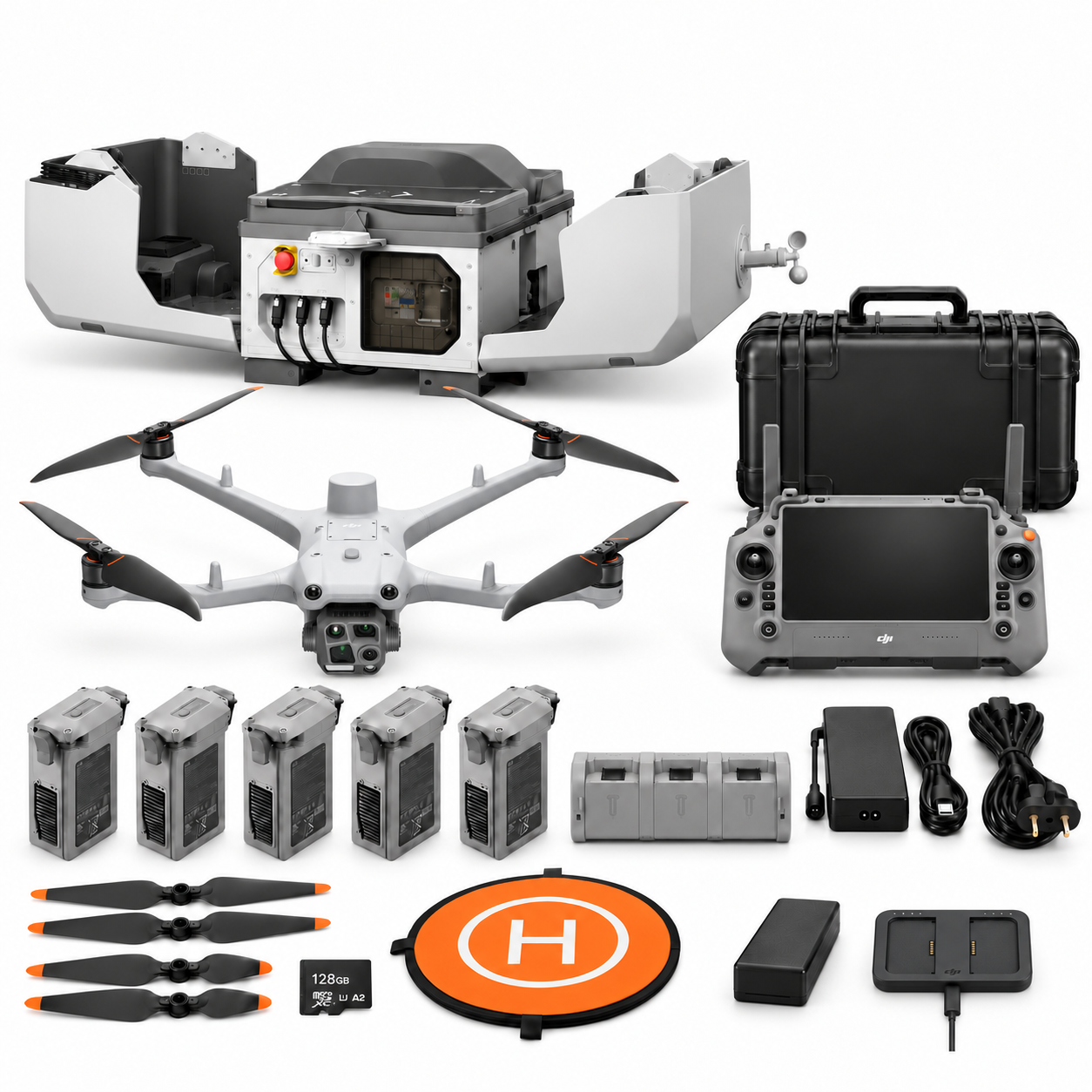
CT-03 includes M4TD, five flight batteries in total, Dock 3, controller-battery and charging accessories, training, support and two dataset quality reviews. It contains no Power 2000. Its five-battery package total is an inventory figure, not a promise of simultaneous dock use or uninterrupted flying.
Send Irish Drone the proposed tasks, site plan, services information, operating organisation and required handover. Ask for the commissioning demonstration and cloud entitlement to be written into the quotation. Compare the portable progress workflow if the project needs flexibility between locations, and the earthworks method for quantified survey work.
Questions before committing to a site station
Can the project simply install it and leave it running? Establish the commissioned operating arrangements, responsible team and exception process first. Is a vehicle supplied? CT-03 is the written construction dock configuration; related vehicle imagery is illustrative.
What makes the proposal ready to order? A defined task, assessed location, services responsibility schedule, confirmed entitlement and accepted handover demonstration. Use those decisions to compare the three construction package routes before committing to the fixed-station project.
See the software workflow
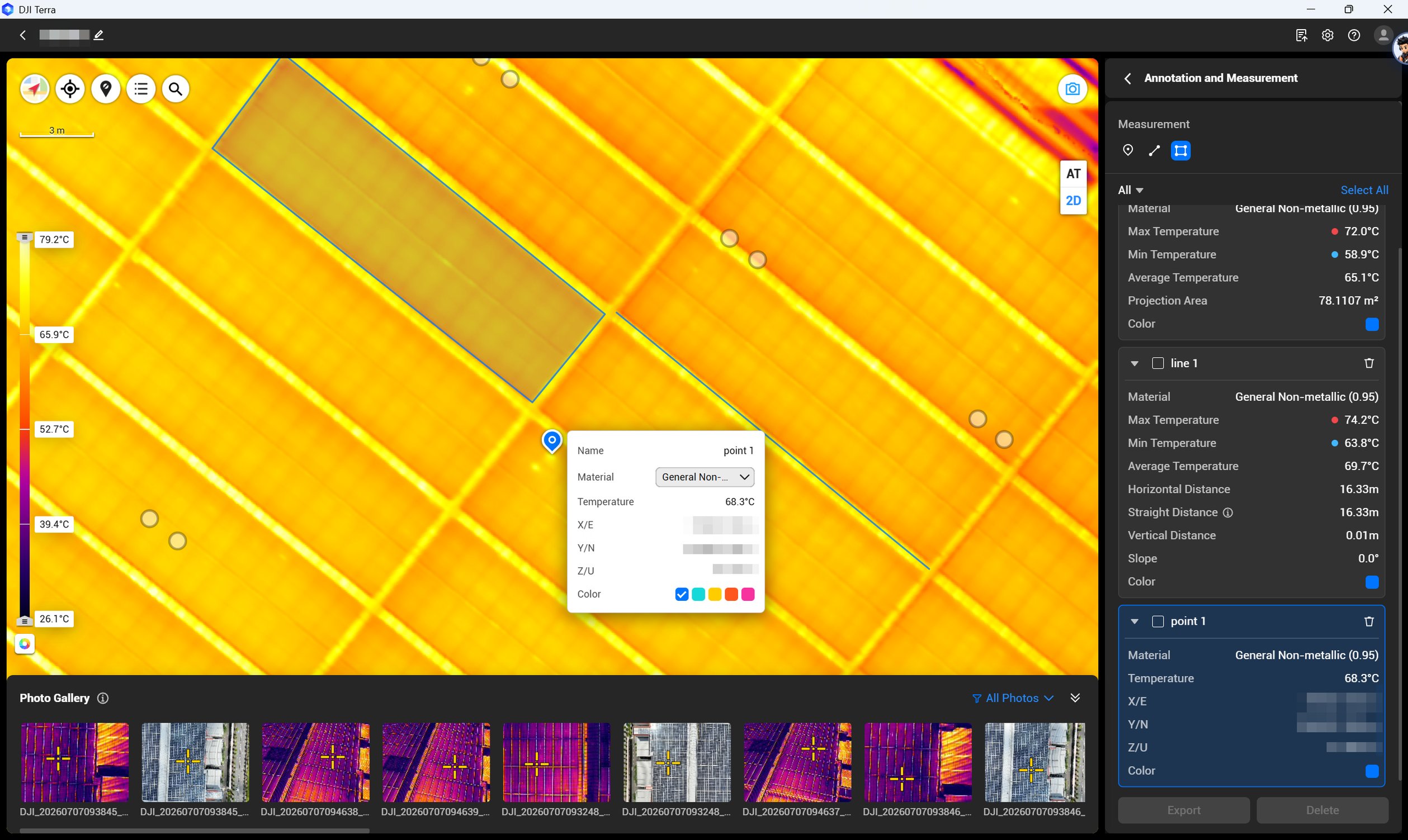
The software image is a manufacturer workflow reference. Check the written licence edition and the supported aircraft, file type and project method before choosing a processing route.
Explore the equipment packages on Irish Drone
Package illustrations show the listed configurations. Battery quantities are whole-package totals.
Official manuals and setup guidance

Continue with the guide for your work
Documentation and evidence
Sources for the cited guidance
- DJI Dock 3 FAQRead source ↗
Reviewed 3 November 2026.
- DJI FlightHub 2 FAQRead source ↗
Reviewed 3 November 2026.
- IAA: Open and Specific categoriesRead source ↗
Reviewed 3 November 2026.
- DJI Dock 3 support — mapping precisionRead source ↗
Reviewed 3 November 2026.
Compare equipment packages
Explore Construction & Earthworks drone packages →
To discuss equipment for a construction-site Dock setup, contact Irish Drone with the site, proposed capture tasks and available power supply.



Pingback: Choosing a Construction Drone Package: Progress, Earthworks or a Site Dock
Pingback: Earthworks Drone Surveys: Agree the Reference Before Calculating Volumes
Pingback: Construction Progress Drone Records That a Project Team Can Use