
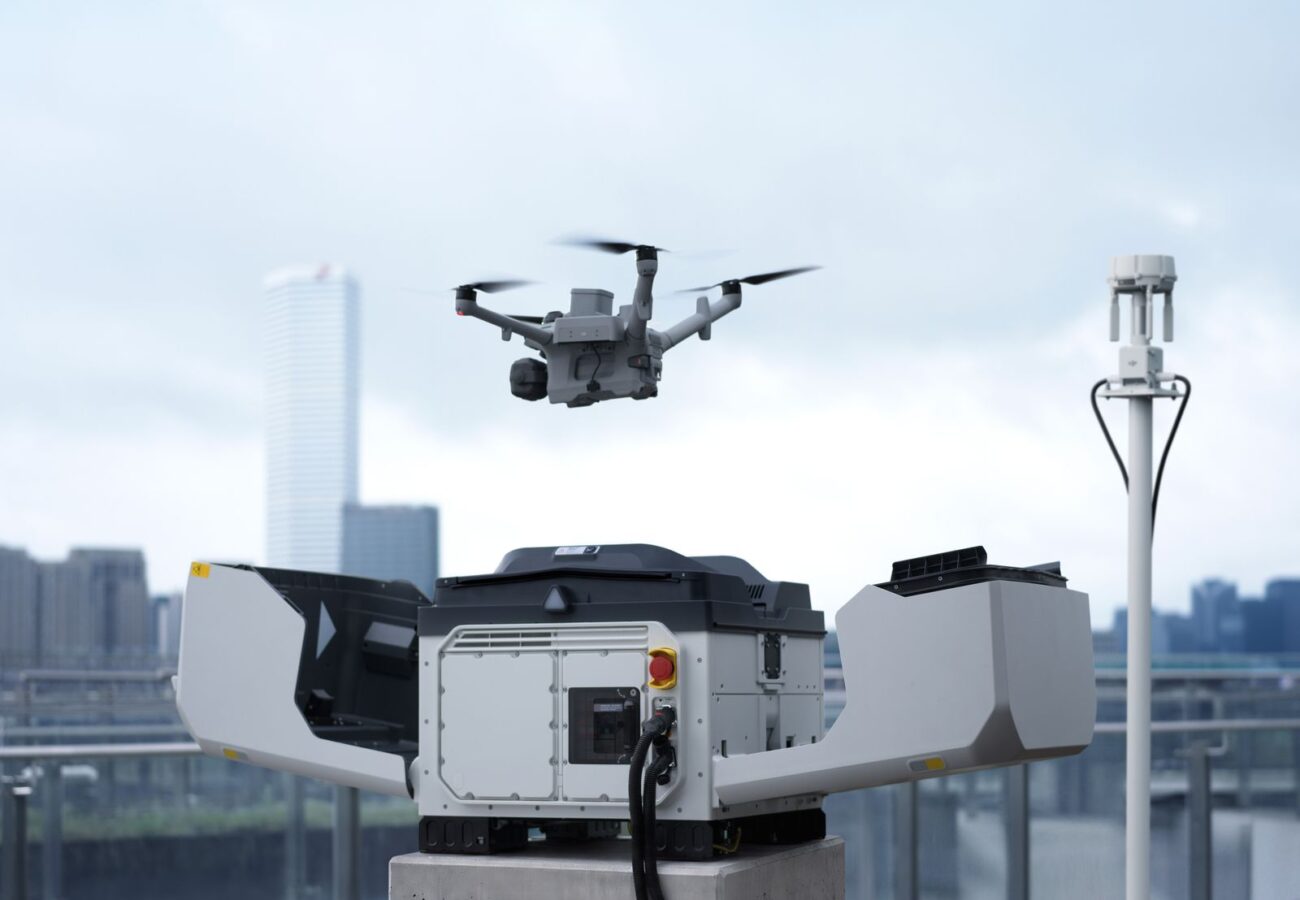
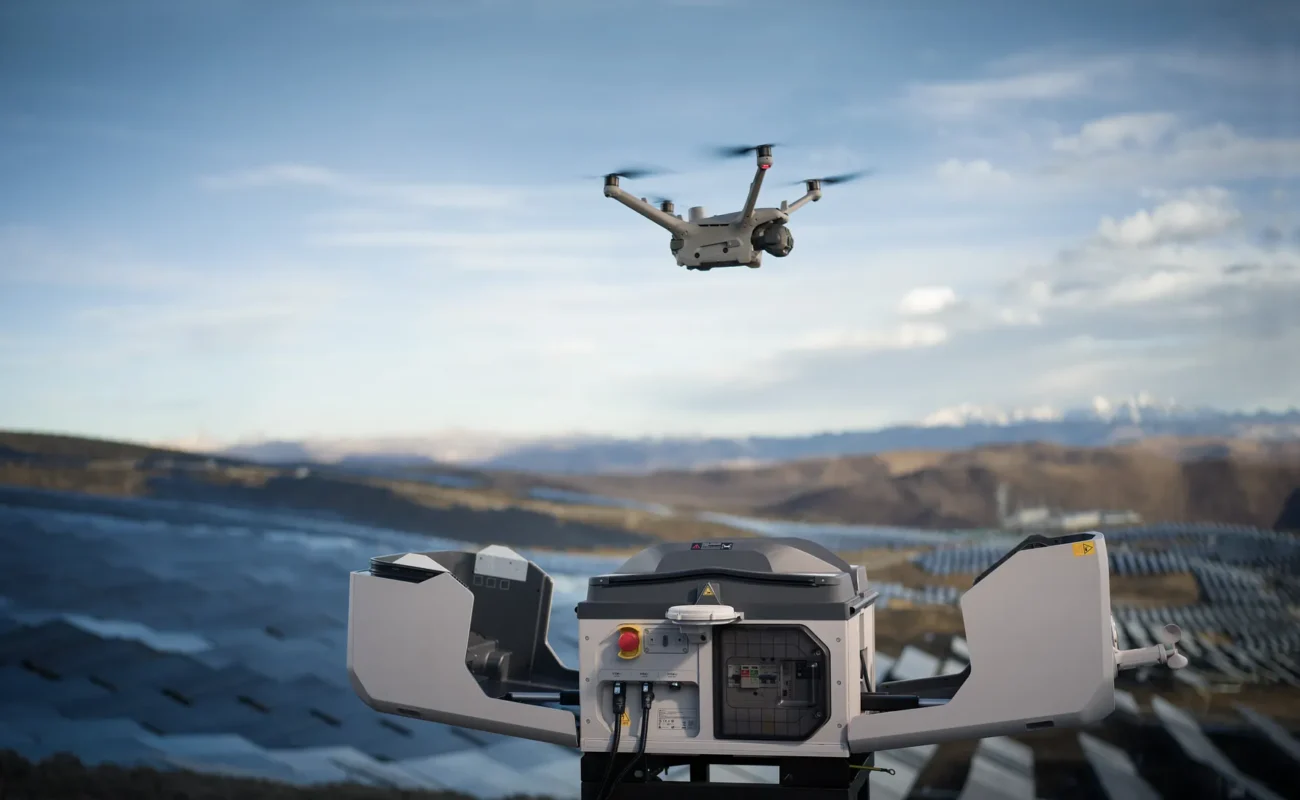
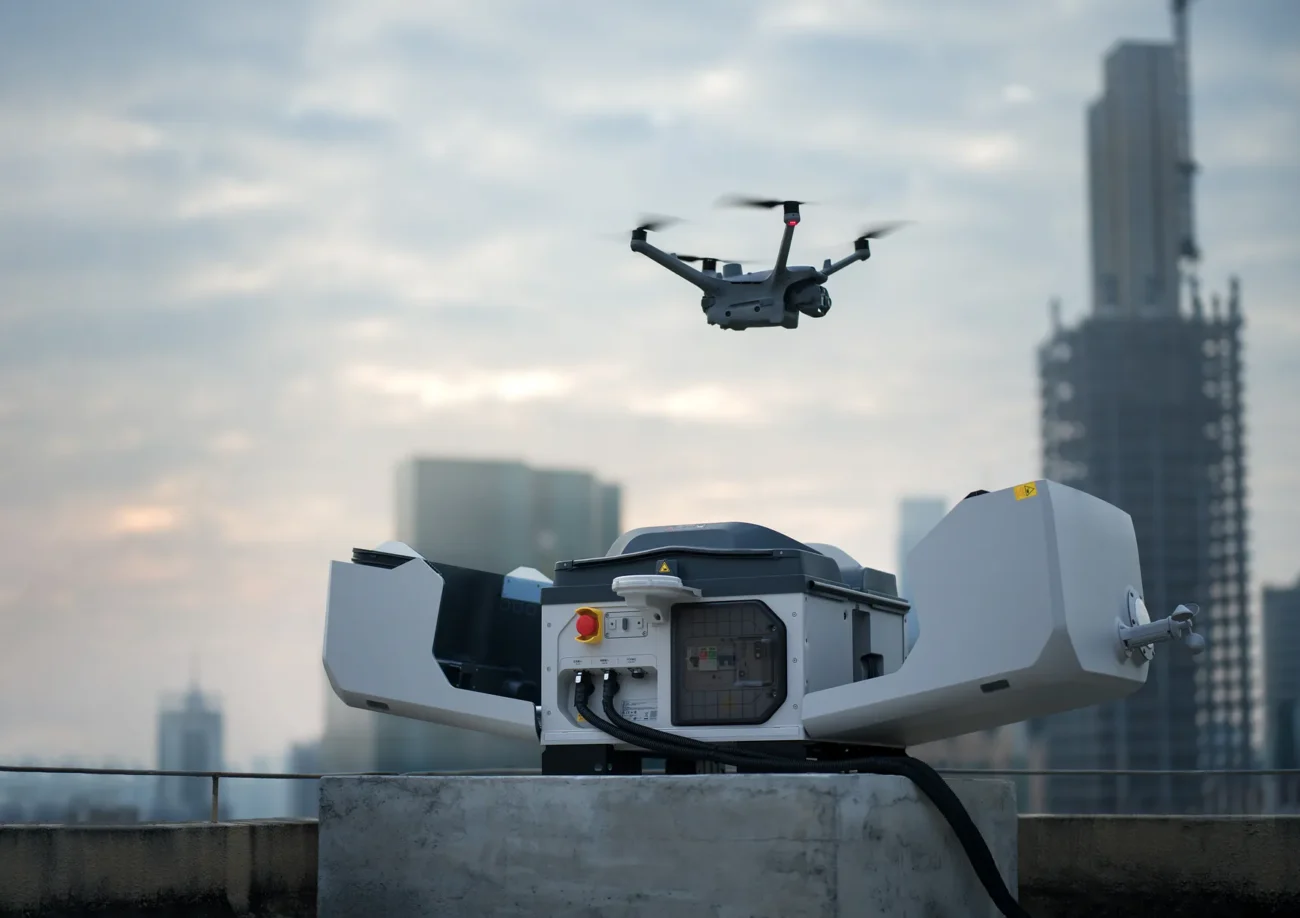
DJI Dock 4 changes what happens between flights. Dock 3 recharges the battery inside its aircraft after landing. Dock 4 can fit a charged battery to the Matrice 5TD while the previous one recharges in the dock. That difference is most valuable when another job arrives before the aircraft would otherwise be ready. For a site that runs a few scheduled flights with long gaps, the case for upgrading may come down to imaging, communications or the aircraft itself.
DJI introduced Dock 4 on 14 October 2026. Here is how it compares with Dock 3, what the 5TD brings to an inspection or response, and what to check before specifying either system in Ireland.
The first DJI Dock introduced automatic launch, recovery and charging in 2022. The lighter Dock 2 simplified installation and reached the global market in March 2024. Dock 3 expanded deployment options in February 2025, including vehicle mounting. Dock 4 addresses the gap between successive sorties.
Dock 4 and Dock 3 compared
| Feature | Dock 3 | Dock 4 |
|---|---|---|
| Compatible aircraft | Matrice 4D or 4TD | Matrice 5TD |
| Battery turnaround | Charges the battery in the aircraft | Automatic swap with a charged spare |
| DJI battery timing | 27 min to charge 15–95% at 25°C | Under 25 s to swap; under 45 s from landing to relaunch in DJI tests. A battery still takes 27 min to charge 15–95% at 25°C. |
| Maximum forward flight / hover | 54 / 47 min | 59 / 55 min |
| Native thermal resolution | 640 × 512 on the 4TD | 1,280 × 1,024 on the 5TD |
| Visible telephoto | 168 mm equivalent on the 4TD | 252 mm equivalent on the 5TD |
| Dock operating temperature | −30°C to 50°C | −40°C to 50°C |
| Aircraft operating temperature | −20°C to 50°C | −40°C to 50°C |
| Protection ratings | IP56 dock, IP55 aircraft | IP56 dock, IP55 aircraft |
| O4 Ground Station roaming | Automatic handover between the dock and one preselected station | Automatic handover among compatible stations in a configured network |
| Standalone handheld flight | Supported with DJI RC Plus 2 Enterprise | Matrice 5TD is operated through the dock system |
| Vehicle mounting | Supported with the required mounting setup | DJI lists support as expected in the first half of 2027 |
Flight figures are DJI maximums from controlled tests with different test speeds. Plan actual sorties around payload, conditions and return reserves. Sources: Dock 3 specifications, Dock 4 specifications and the Dock 4 FAQ.
What automatic battery swapping changes
Dock 4 uses a rotary mechanism to remove the depleted battery and install a charged one. DJI measures the swap from the moment the cover closes to completion of the exchange. Its separate under-45-second figure includes landing and the next take-off. Both are controlled-test figures that assume the system is ready to relaunch. The dock has four slots, with space for up to three batteries in the compartment so a slot remains free for the exchange. Up to two batteries can charge simultaneously.
Dock 3 · Charge in the aircraft
Land → Recharge the installed battery → Relaunch
Dock 4 · Fit a charged spare
Land → Swap in a charged battery → Relaunch
Consider two sites. A solar farm that schedules a morning and an afternoon inspection has several hours to recharge between flights. A utilities team that needs a second inspection soon after spotting an anomaly may have a very different wait on Dock 3. Check how often your aircraft is grounded while a job is waiting, then plan spare battery capacity and charging around that workload.
In a launch-period interview reported by Haibao News, a DJI representative said the rotary mechanism completed 20,000 consecutive cycles without failure. At an illustrative 20 swaps a day, that is 1,000 days of cycles. The reported test count gives a sense of scale. Field lifetime and service intervals depend on operating conditions, and DJI provides a separate maintenance schedule in its Dock 4 manuals.
DJI FlightHub 2 also supports task relay on compatible systems. Two aircraft can take turns at an observation area, with a replacement arriving before the first aircraft returns. Dock 3 supports this workflow, and Dock 4 can shorten the time the returning aircraft spends at its base. Sustained coverage depends on travel time, overlap at handover, batteries, weather, communications and the operating approval. A single aircraft still has to leave the observation area to land.
What changes in the Matrice 5TD
The 5TD has a native 1,280 × 1,024 thermal sensor, four times the pixel count of the 4TD’s 640 × 512 sensor. Its 2,560 × 2,048 UHR mode is enhanced output. More native pixels can help distinguish adjacent features in an inspection image. Temperature accuracy still depends on the measurement conditions, and DJI lists the same high-gain accuracy specification for the two aircraft. Check close-range work separately: DJI lists a 10 m minimum thermal focus distance on the 5TD versus 5 m on the 4TD.
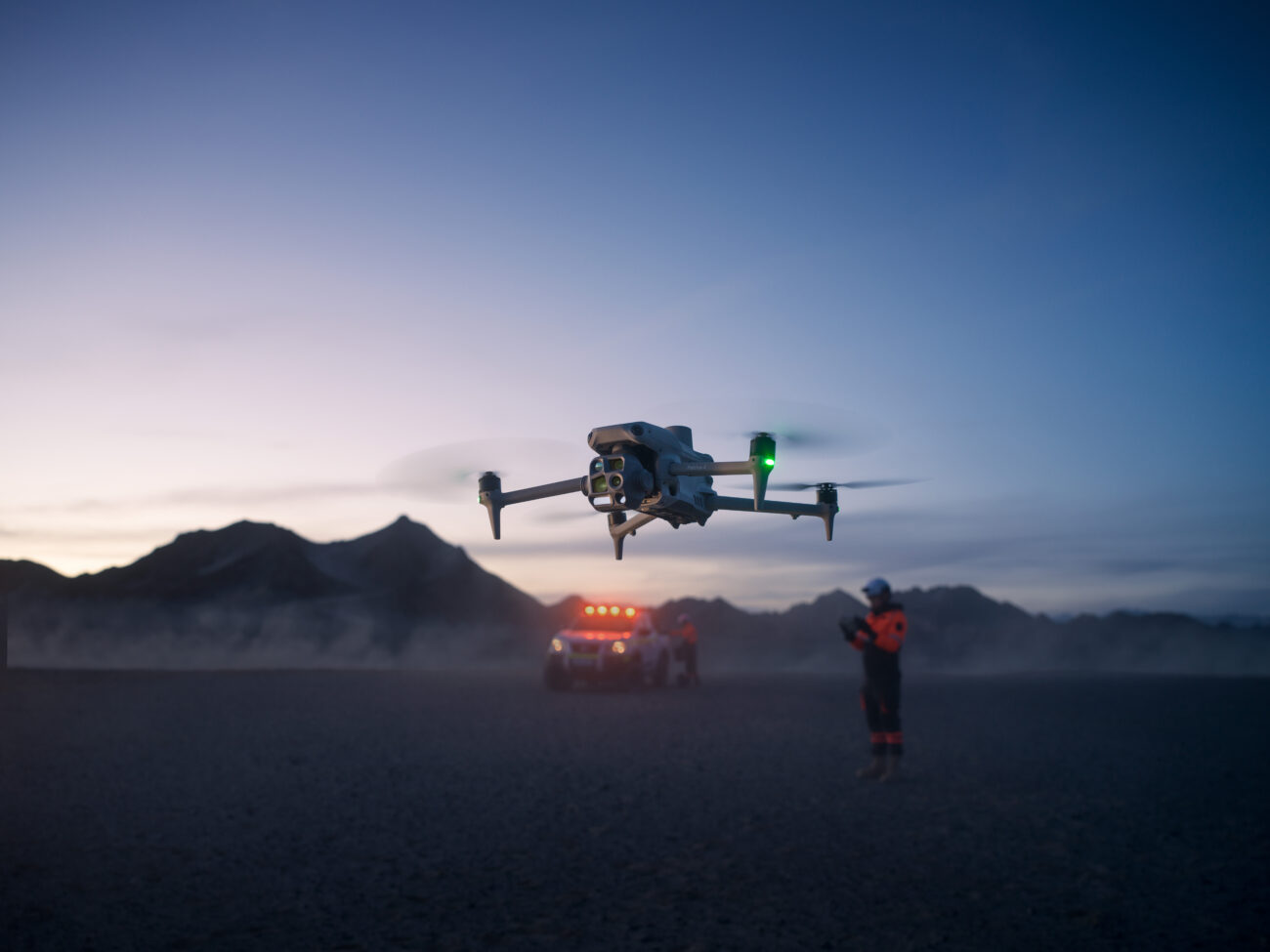
The 252 mm equivalent telephoto lens gives a narrower view than the 4TD’s 168 mm equivalent lens. That can help an operator frame a small component from more practical stand-off distance. The 5TD also integrates rotating LiDAR, millimetre-wave radar and vision sensing, and DJI lists on-board recognition for 17 object types. The aircraft’s sensing LiDAR supports flight awareness. Mapping deliverables should be evaluated separately.
The 4D remains relevant for established photogrammetry workflows. It offers a Four Thirds sensor, mechanical shutter and DNG capture. If your processing workflow relies on those features, compare the actual survey output and accuracy before moving to the 5TD’s electronic shutter and JPEG workflow. Review the 4D-series specifications and DJI’s 5TD mapping test conditions.
From seeing the scene to speaking to people on site
On the Matrice 4TD, the AS1 speaker can sit on top of the AL1 spotlight. The 5TD separates the payloads: the AS2D speaker is on the aircraft’s left and directs sound downwards. The AL2D spotlight mounts on the right and follows the camera gimbal. Both generations’ spotlights can tilt down to −90°, while the AL2D extends upward tilt from the AL1’s +35° to +90°. The 5TD supports up to three compatible payloads across the side and top mounts, within a total 450 g limit.
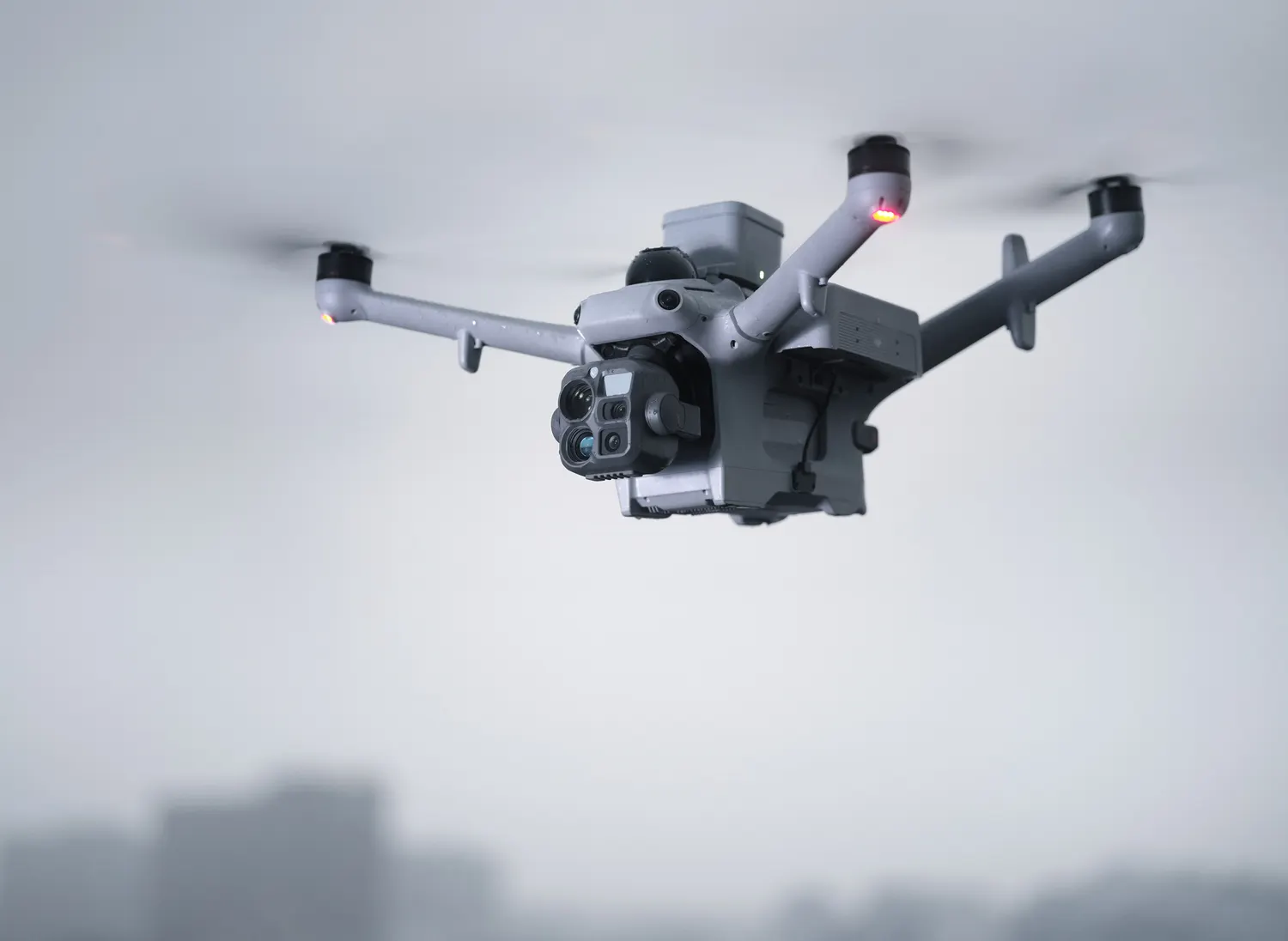
- AS2D speaker. Operators can broadcast live, record and play back a message, import an audio file or use text-to-speech. DJI rates the speaker at 120.5 dB at 1 m and quotes an effective range of up to 400 m under its test conditions. AI voice options depend on the FlightHub 2 configuration.
- AL2D spotlight. Spot, flood, combined and automatic lighting modes suit different distances and areas. DJI reports up to 2.6 times the previous generation’s brightness in its comparison. Vision obstacle sensing pauses while the light is on, while LiDAR and radar sensing remain available where supported.
- AP1 parachute. The top-mounted unit weighs 107 g excluding the bracket. DJI reports a stabilised descent below 6 m/s in controlled testing and specifies a 35 m minimum effective deployment altitude under its test conditions.
DJI’s official AS2D tutorial shows the remote operator plugging a USB handheld microphone into a computer around 02:33, setting push-to-talk around 02:35 and speaking live around 02:41. The operator maps the microphone button to FlightHub 2’s broadcast shortcut. The ground-side audio reaches people at the site through the aircraft’s speaker. See the DJI accessory guide for available modes and specifications.
Cold-weather operation and O4 coverage
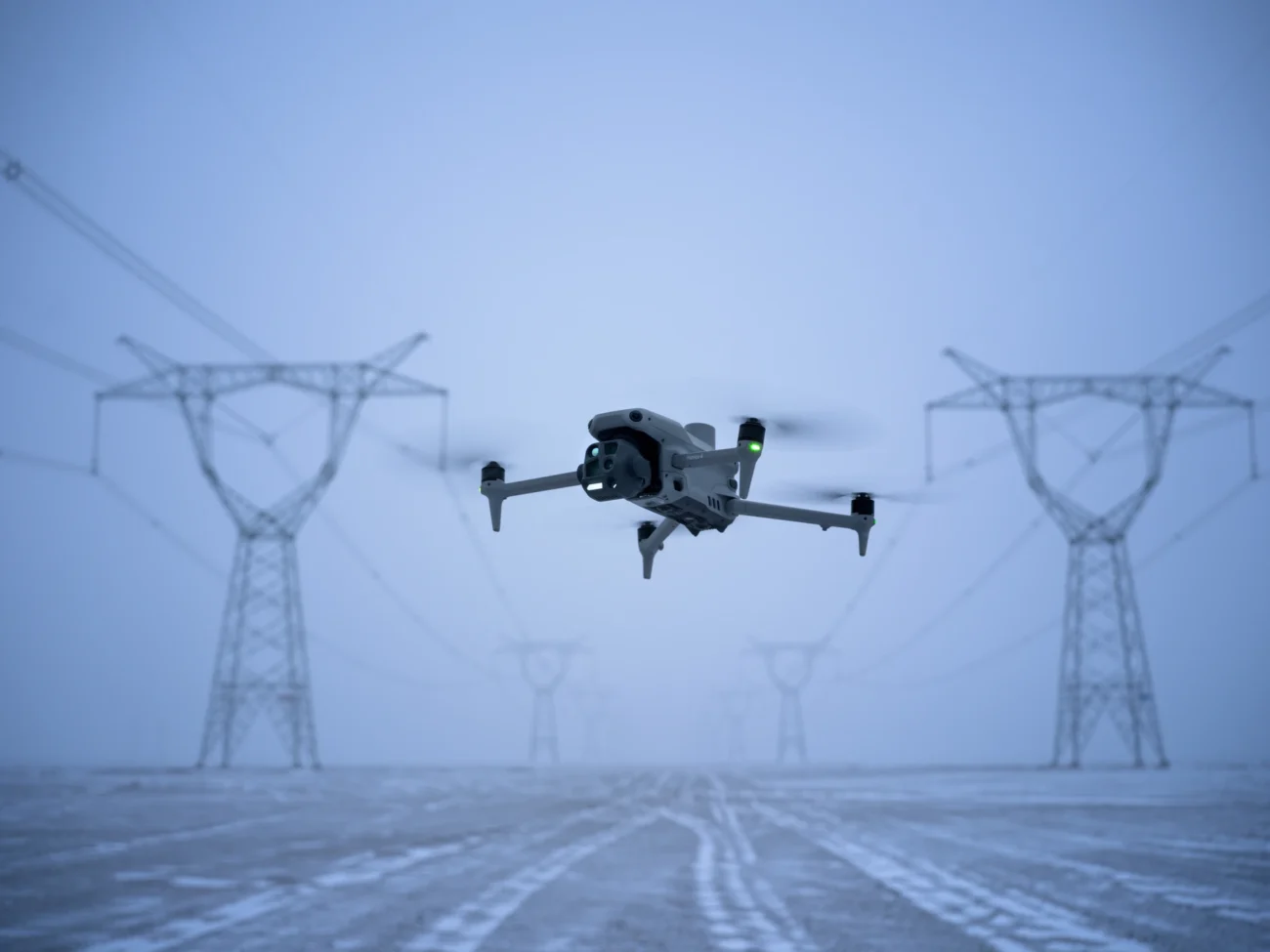
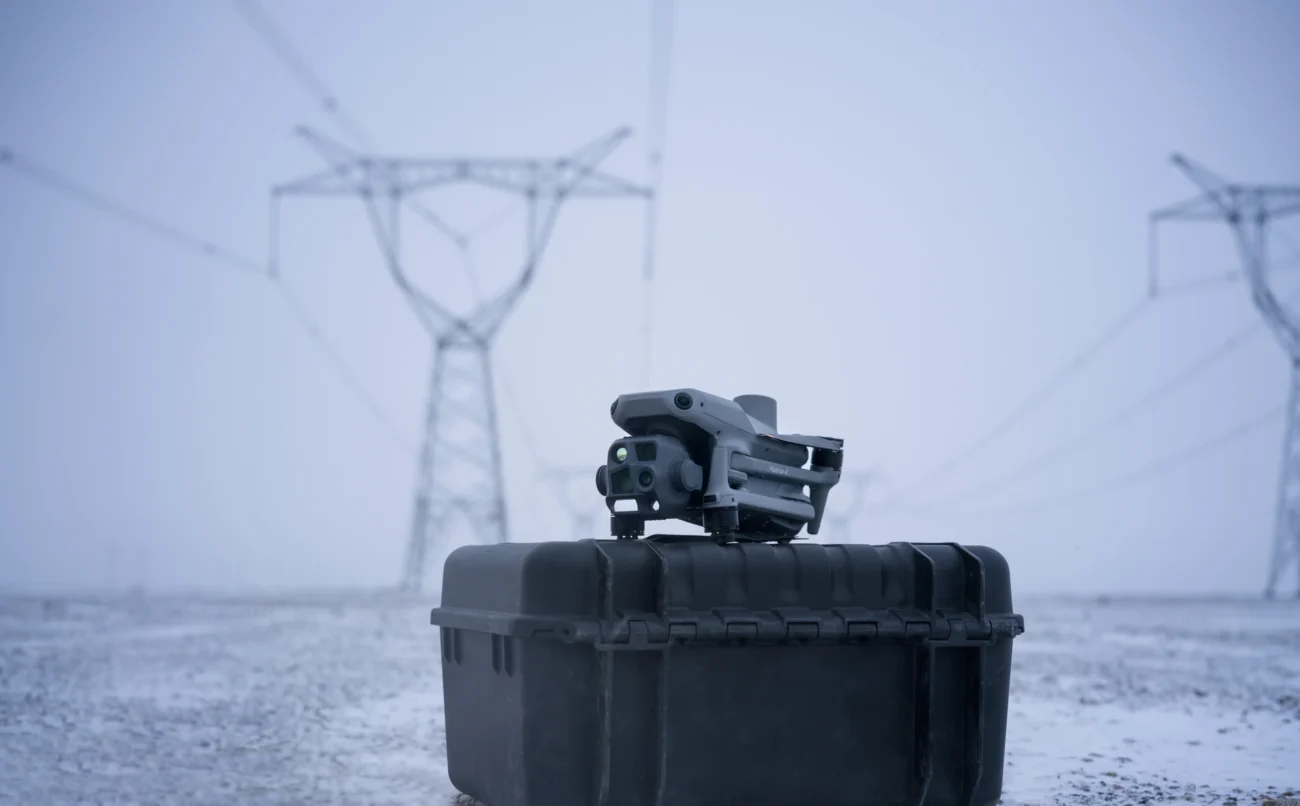
DJI rates both Dock 4 and the 5TD down to −40°C. The Dock 3 limits are −30°C for the dock and −20°C for the aircraft. The distinction matters when a dock can remain powered but its aircraft is outside the rated conditions. For an Irish deployment, check the actual exposure at the site, including wind, salt, water ingress around services, and access for maintenance.
DJI has demonstrated the Dock 4 lid opening after ice formed and previously showed a similar test on Dock 3. A lid opening in a demonstration and the aircraft’s operating limits are separate considerations when planning winter flights.
DJI Dock 4 uses a separately positioned O4 Ground Station for communications and RTK. This lets a site place the station where it has a clearer view than the dock itself. Dock 3 can hand over between its dock and an O4 station chosen before flight. Dock 4 adds automatic handover among suitably configured stations. Think of how a phone changes base stations on a journey, within a network designed for the drone. The practical benefit is coverage through a site with obstructions or several work areas. Check network connections, overlapping coverage, compatible firmware and RTK configuration in the O4 Ground Station documentation and FlightHub 2 guide.
Which dock fits your site?
- Prioritise Dock 4 if recurring waits between flights are holding up work, or if the 5TD’s native thermal resolution, telephoto camera or separated payload mounts address a task you already run.
- Keep Dock 3 in the comparison if your inspection schedule leaves time to recharge, you rely on the Matrice 4D for mapping, or your deployment needs supported vehicle mounting or standalone controller flight today.
- For a new site, compare the installed systems. The dock, aircraft, ground station, mount, network, software, spare batteries and maintenance all belong in the decision. DJI lists maximum input power of 2 kW for Dock 4 and 800 W for Dock 3, which matters when discussing site provision.
For beyond visual line of sight (BVLOS) work, and other flights outside the Open category, check the applicable Specific category pathway and site airspace before deployment. A C5 or C6 configuration can form part of the case for a particular operation. The relevant operating authorisation, eligible standard scenario declaration or LUC privileges apply separately. See the Irish Aviation Authority’s operational authorisation guidance and EASA’s standard scenarios.
Planning a deployment in Ireland? View DJI Dock 4 with Matrice 5TD or contact Irish Drone to discuss the site, aircraft and accessories your operation needs.
Cover and aircraft photography: DJI Europe media kit.
Leave a comment