
UTILITIES · THERMAL WORKFLOW
A useful thermal inspection ends with a traceable maintenance record, not a folder of striking colour images.
Evidence reviewed 3 November 2026 · Ireland
The practical answer
For UT-01 or UT-04, agree the asset identifiers, required views, context fields and reviewer before capture. Retain original thermal and visible files, separate observations from conclusions, and record who decides the follow-up. A repeatable record makes later visits and maintenance checks easier to compare.
Decide who needs the record
Start with the person who receives a possible concern. A planner may need an asset reference and a clear next step. A thermography reviewer may need original files and capture context. A field technician may need a visible overview that distinguishes the item from neighbouring equipment. Ask each recipient what would make the record actionable.
Use those answers to design a short template before the first visit. Keep it consistent with the utility’s existing asset register where possible. This avoids creating a separate naming system that somebody must later reconcile manually and makes a trial easier to assess against normal maintenance practice.
Resolve asset identity before collecting detail
Agree the site name, asset hierarchy and component identifiers with the asset owner. Mark any uncertain identifiers for confirmation. A clear image attached to the wrong component can send a follow-up team to the wrong location, so identity deserves its own quality check.
Plan an overview-to-detail sequence. The overview establishes the location and surrounding equipment; the detail supports the specific observation. Preserve the relationship between those files in the index. If the site naming changes after capture, retain a cross-reference rather than silently renaming the evidence. This is especially helpful when a contractor and an in-house maintenance team use different systems.
Record the context needed for interpretation
ASNT’s electrical thermography discussion identifies reflections, load and ambient conditions as interpretation factors. [1] Translate that into a capture brief agreed with the qualified reviewer, with fields appropriate to the asset and the proposed inspection. Use the asset owner’s available operating information instead of guessing equipment conditions from an image.
Keep the field form usable. A short set of reliable entries is more valuable than a long list filled with defaults. Record unavailable information as unavailable and explain how it affects review. The purpose is to let a reviewer understand what was observed under the actual circumstances and decide whether further evidence is needed.
Separate the observation from the maintenance decision
| Record layer | Useful content |
|---|---|
| Identity | Site, asset reference, date and linked files |
| Observation | What the imagery shows, with capture context |
| Review | Reviewer, interpretation and any uncertainty |
| Action | Responsible owner, follow-up and closure evidence |
Use wording that matches the evidence. An apparent temperature pattern can be a reason for qualified review without being a confirmed electrical defect. Give the reviewer room to request another observation or an alternative inspection. This keeps the record useful even where the initial image cannot settle the question.
Keep a clean route back to the original files
Preserve source files separately from annotated report images. Give every report entry a stable link or filename reference that the recipient can open using the agreed tools. Check the handover on the receiving computer during the pilot rather than assuming the supplier’s export will behave identically everywhere.
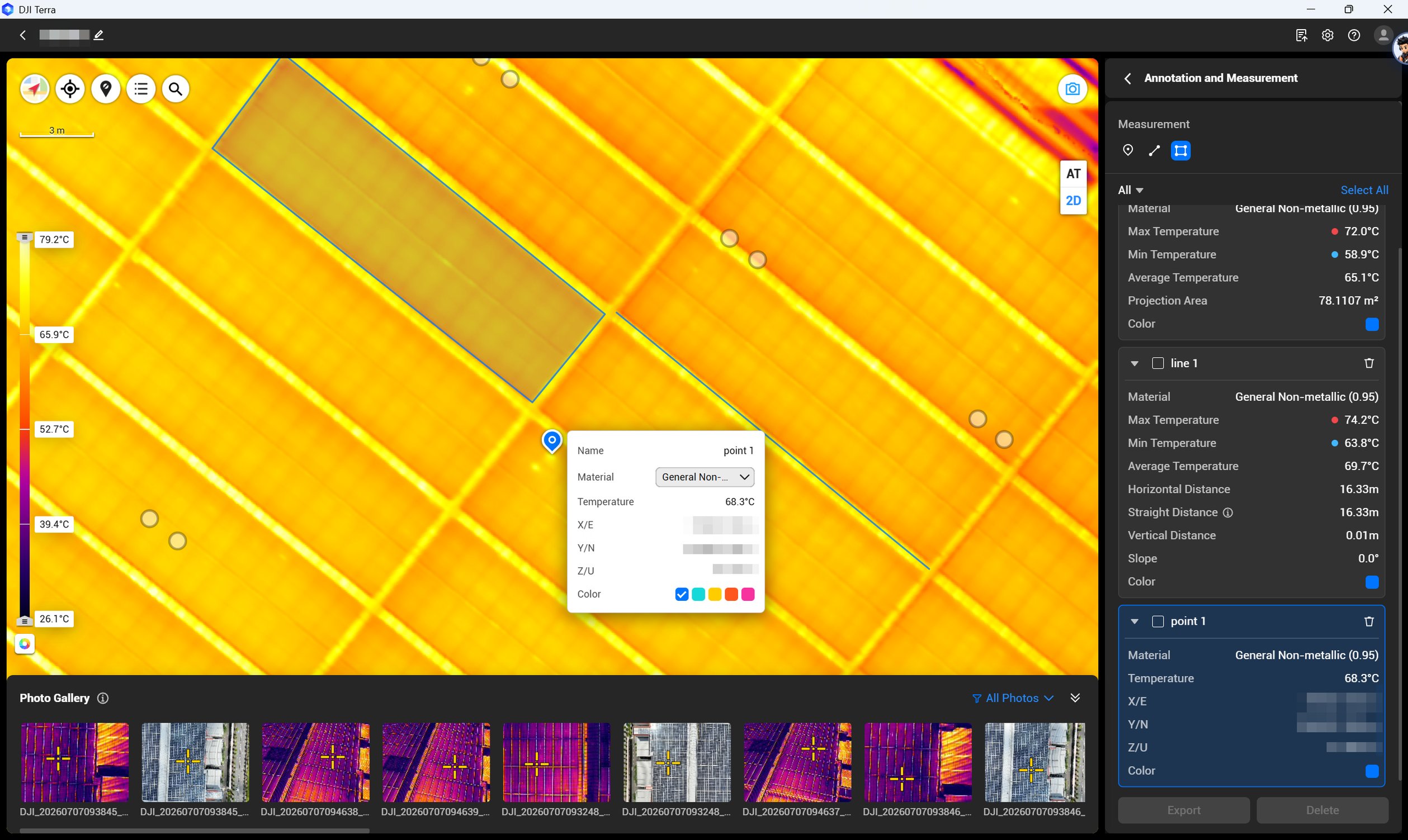
Where processing is proposed, test the intended files, software version and output on a representative sample. UT-01 and UT-04 include Terra Flagship for twelve months in the approved contents. That licence entry is a starting point for workflow verification; the acceptance test should show the actual capture-to-review route the customer intends to use.
Build a short capture, review and return loop
Before leaving the approved operating location, check that the planned asset list has been addressed and the files are available. Log obscured or omitted views explicitly. An honest gap list lets the reviewer distinguish an incomplete observation from an apparently normal asset.
Then send the agreed pilot sample for review. Ask whether the asset can be located, the observation can be understood and the follow-up can be assigned. Use the response to refine the next visit. On repeat work, retain the previous record and its closure status so the team can see whether it is checking the same issue or recording a new one.
An illustrative brief for a first visit
A utility team could select a small, approved asset group for a first M4T visit. Its maintenance coordinator supplies the identifiers and appoints a qualified thermal reviewer. The capture team delivers an overview, relevant detail files, context entries and an exception list for each agreed item. The reviewer returns accepted records and requests for clarification.
The pilot succeeds when the maintenance team can trace each record to the correct asset and assign a sensible next step. Set the response time and acceptance criteria in the brief. Afterward, revise the template once and keep that version under control for the next visit. This is a planning example, not a claimed customer result.
Questions about the thermal record
Should the report show only the most dramatic image?
Choose the views that identify the asset and support review. An overview and a less dramatic but interpretable detail may be more useful than an isolated colour image.
Who decides whether repair is required?
The utility’s designated competent reviewer and maintenance process should own that decision. Agree the escalation route before capture.
How should a changed operating condition be handled?
Keep the condition information with the new observation and ask the reviewer whether comparison is meaningful. A changed image is not automatically a changed component condition.
Does the included dataset review cover diagnosis?
The package service is a scoped dataset-quality review. On-site inspection, repair, signed certification and diagnosis are outside that listed service.
Choose the field kit around the record workflow
UT-01 supplies the M4T thermal route with five total flight batteries and the listed training, support and software. UT-04 is the corresponding Power 2000 option. Assess portable power against travel, available charging and the team’s working pattern.
Bring a sample asset template to Irish Drone and ask to follow one proposed observation through capture, file handling and handover. For corridor geometry or recurring fixed-site work, return to the utility selection guide so the equipment choice matches the task.
Explore the equipment packages on Irish Drone
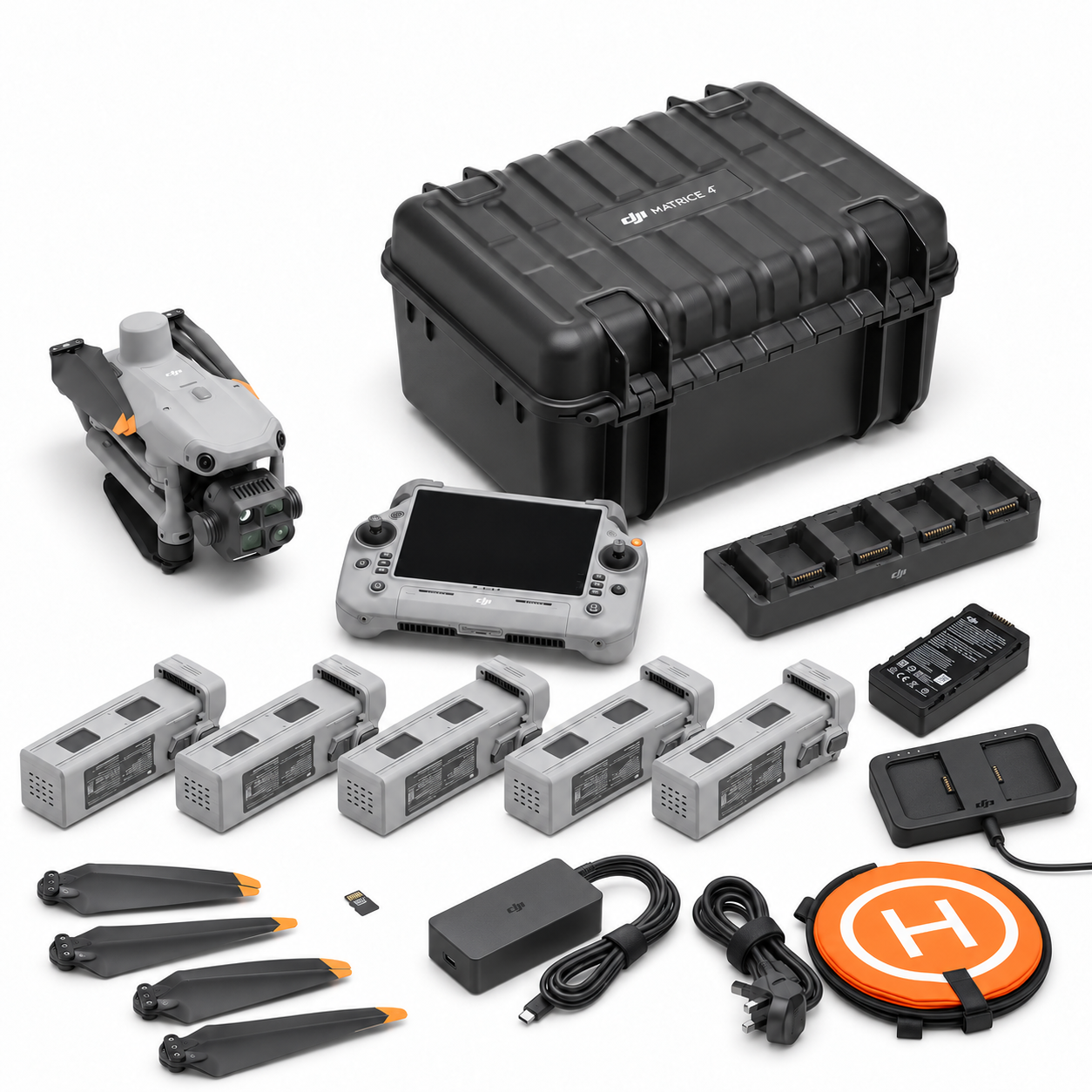

Package illustrations show the listed configurations. Battery quantities are whole-package totals.
Official manuals and setup guidance

Continue with the guide for your work

Documentation and evidence
Sources for the cited guidance
- Infrared Thermography in Electrical MaintenanceRead source ↗
Reviewed 3 November 2026.
Compare equipment packages
Explore Power & Utilities drone packages →
To discuss equipment for utility thermal records, contact Irish Drone with the asset identifiers, capture context and maintenance handover.




Pingback: Utility Dock 3 Pilot: Fixed-Site Acceptance Checklist
Pingback: Utility Corridor LiDAR Handover: M400 L3 Planning Guide
Pingback: Utility Drone Packages Ireland: Choose by Maintenance Task