

INDUSTRIAL INSPECTION · LARGE-FACILITY CAMPAIGNS
Use representative trials, area release and staged review to turn several flight sessions into a coherent facility register.
Evidence reviewed 3 November 2026 · Ireland
The practical answer
A large-facility campaign needs an asset scope, controlled work areas and a review process that survives several flight sessions. Specify coverage and exceptions first, then evaluate M400 with H30T against the payload, team and handover requirements.
Break the facility into decisions and work areas
A large site is rarely one inspection task. A maintenance team may need equipment observations, a structural engineer may request external detail and a facilities team may want an updated register. Separate those workstreams before discussing coverage, then identify the person who will accept each result.
Divide the site into named work areas using the customer’s plan and asset register. For each area, list targets, evidence, operating context, access contact and acceptance owner. Keep a distinction between the survey boundary and the list of commissioned items. This prevents a broad site photograph from being mistaken for component-level inspection.
Test the difficult area early
Choose a representative area for a trial rather than starting with the easiest open space. Include targets with restricted viewpoints, complex backgrounds or uncertain identification. Ask receiving reviewers to assess the indexed output before the whole campaign proceeds. Give them time to open originals as well as the presentation.
Record what the trial changes: an extra overview, a revised component code, a clearer operating note or an alternative method. Convert those decisions into the brief. An agreed example dataset can make later sessions more consistent and give a newly assigned reviewer an acceptance reference without requiring them to reconstruct earlier conversations.
Define work release and stop decisions
HSA permit guidance includes authorisation, precautions and safe handback. [1] Ask the facility coordinator how those responsibilities apply to each flight area, including interfaces with maintenance, production and contractors.
Use a daily area-release discussion covering intended targets, changed activities, site restrictions and communications. Identify who can suspend the work and the process for restarting it. Keep the schedule flexible enough to record a deferred area without encouraging an improvised route around an unresolved restriction. Put the release status alongside the capture status.
Design sessions around evidence continuity
Give each session a work-area identifier and keep files, capture notes and completion status together. Where a target is revisited, preserve the link to the earlier observation. Brief the team on how to mark interrupted sequences so a partially captured asset does not appear complete.
Plan battery handling, charging, transport and the review workstation alongside flying. A session includes a file check and updated coverage sheet before moving on. Ask what happens if a battery, memory card, workstation or weather window becomes unavailable. A realistic fallback is more useful than assuming continuous capture throughout a full shift.
Read the industrial M400 package accurately
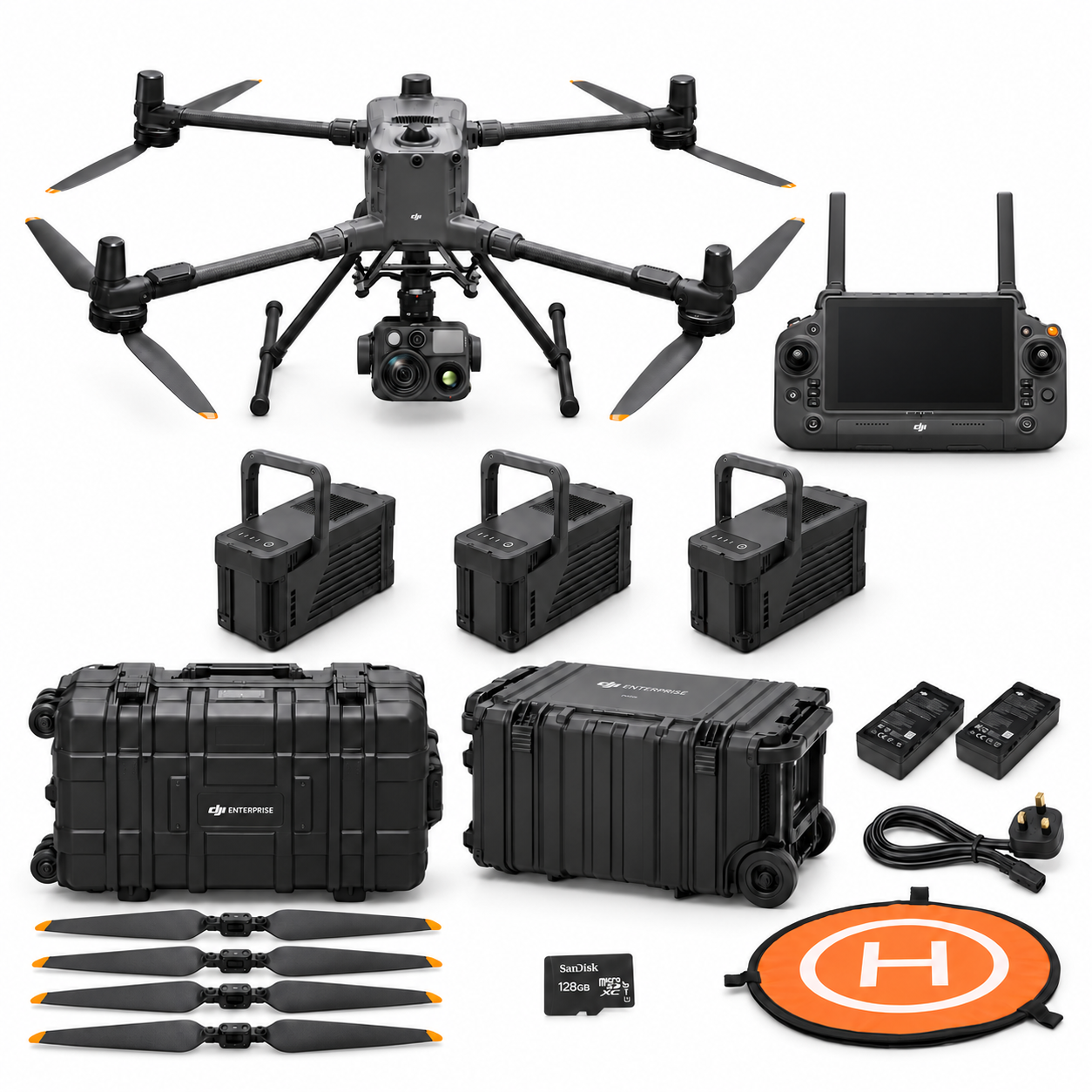
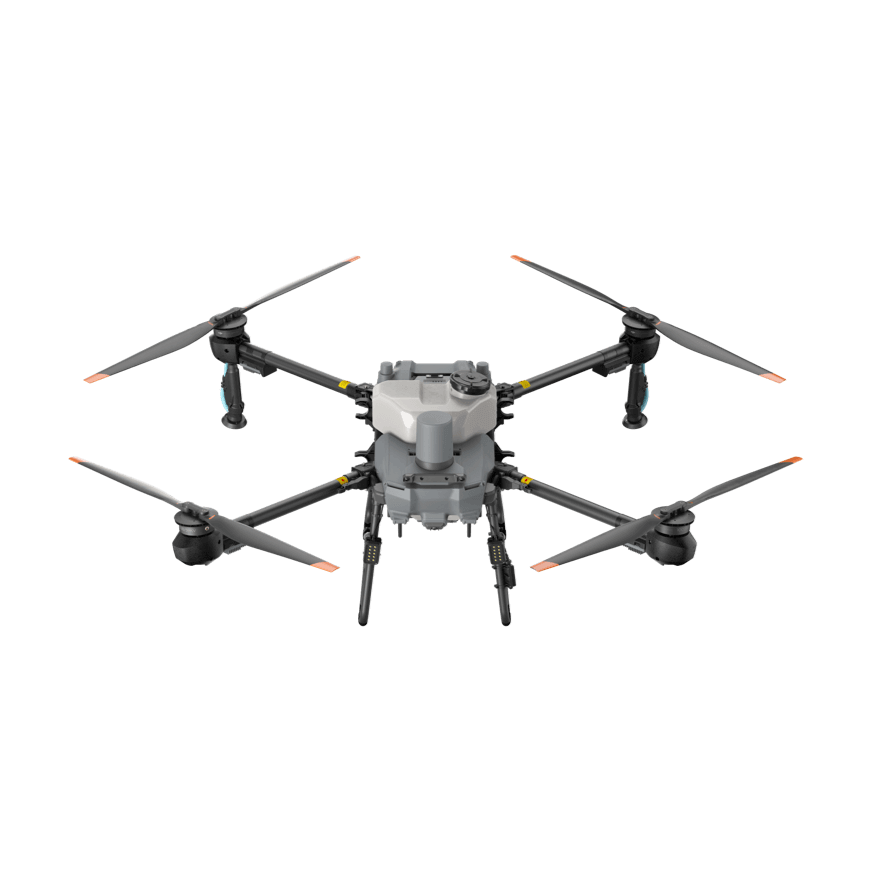
IN-02 contains M400 with H30T, three TB100 flight batteries in total, BS100, two WB37 controller batteries, Terra Flagship for one year, team training and support. IN-05 adds Power 2000. These approved industrial configurations have three flight batteries, rather than the five supplied in some other M400 kits.
Check charging with the actual equipment and available site supply during handover. Ask the team to demonstrate a capture-to-register exercise, including a deferred target and a reviewed observation. Use it to allocate piloting, site coordination, file management and technical review roles. Confirm who takes over each role if the normal person becomes unavailable.

Use review gates instead of a final data dump
Agree a small first delivery, an interim coverage check and a final handover. At the first gate, approve identification and file organisation. At the interim gate, examine representative image quality and exceptions. At the final gate, reconcile the commissioned asset list against the register and agree which records remain open.
Keep observations, exceptions and engineering decisions distinct but linked. A concern may move between statuses as information arrives. Preserve the reason for each change and the responsible reviewer. This gives the owner a maintenance history rather than a folder that must be reinterpreted from the beginning whenever a different engineer joins the project.
Agree access, retention and future comparisons
Ask the owner to identify sensitive plant information and authorised recipients before sharing begins. Decide where originals, annotations and accepted reports will live, and how file links remain usable after staff changes. Define an export handover the customer can retain independently of a temporary review account.
For recurring visits, store accepted asset identifiers, useful viewpoints and operating context. A future team should understand what was observed and what remained uncertain. Use a change log when equipment has been replaced or access has altered so a difference between visits is not automatically interpreted as deterioration. Preserve both versions of an amended record.
Make an unfinished area visible in the handover
For example, if work in one process area prevents the planned view, retain its commissioned asset list with a deferred status and the reason. Deliver the accepted areas on their own merits. Ask the coordinator to agree a new access decision before rescheduling the remaining work. This gives the owner a usable interim record and a specific completion question, rather than an apparently finished campaign with an unexplained gap.
Questions to resolve with the inspection team
Does a complete site map mean complete inspection? Reconcile component coverage against the commissioned asset list. Can portable power remove every charging constraint? Demonstrate the charging plan with the actual equipment, available supply and intended working pattern.
Send Irish Drone a marked work-area plan, representative targets, proposed team and example final register. Review the package and training against that evidence specification. For smaller portable visits, compare the M4T and visible-record alternatives. For a component-led thermal task, agree the observation workflow with its technical reviewer.
See the software workflow
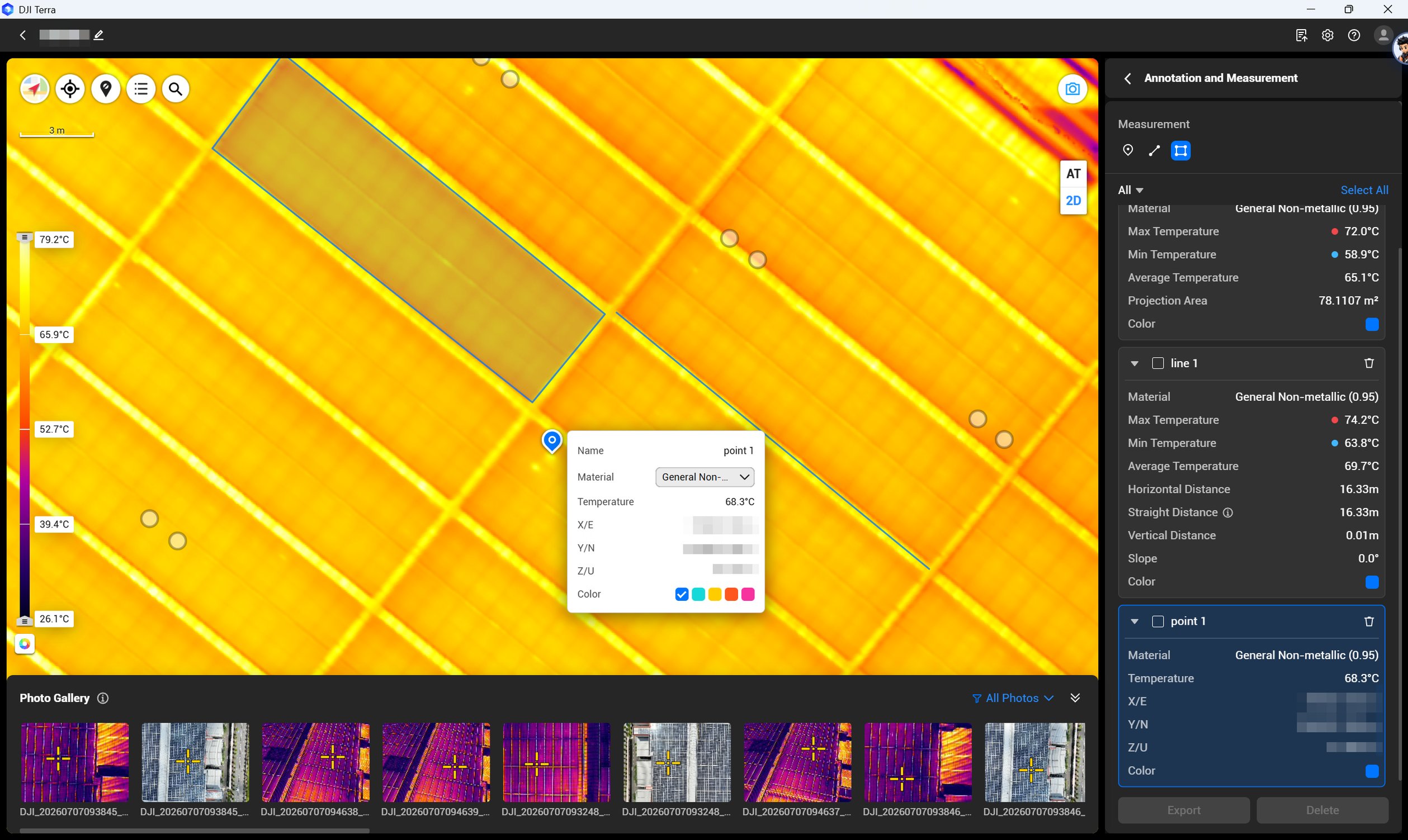
The software image is a manufacturer workflow reference. Check the written licence edition and the supported aircraft, file type and project method before choosing a processing route.
Explore the equipment packages on Irish Drone

Package illustrations show the listed configurations. Battery quantities are whole-package totals.
Official manuals and setup guidance

Continue with the guide for your work

Documentation and evidence
Sources for the cited guidance
- HSA: Work permits and isolation of equipmentRead source ↗
Reviewed 3 November 2026.
Compare equipment packages
Explore Industrial & Telecom Assets drone packages →
To discuss equipment for a facility inspection campaign, contact Irish Drone with the site extent, access arrangements and review workflow.



Pingback: Industrial Thermal Records: Evidence a Reviewer Can Use
Pingback: Telecom Tower Drone Surveys: Build a Traceable Visual Asset Register
Pingback: Choosing an Industrial Inspection Drone Around the Asset Decision