

AGRICULTURE & FARMING · FARM THERMAL OBSERVATION
A practical guide to locating visible stock, following fence-line clues and observing farm assets, with animal welfare, a small on-farm trial and ground follow-up built into the workflow.
Evidence reviewed 3 November 2026 · Ireland
The practical answer
The Matrice 4T can be assessed as an observation tool for livestock locations, fence-line clues and external farm assets. Its value depends on visibility, thermal contrast, animal response and what happens after a sighting. Keep routine stock care and professional follow-up in place, and test a defined task on your farm before relying on a larger programme.
Start with a question the camera can help answer
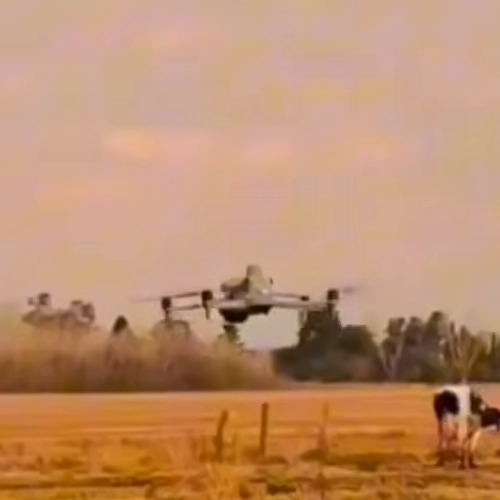
Where is the animal last seen in the lower paddock? Is a group gathering beside an unexpected boundary gap? Which roof section needs a closer inspection? These are useful starting questions for a farm trial.
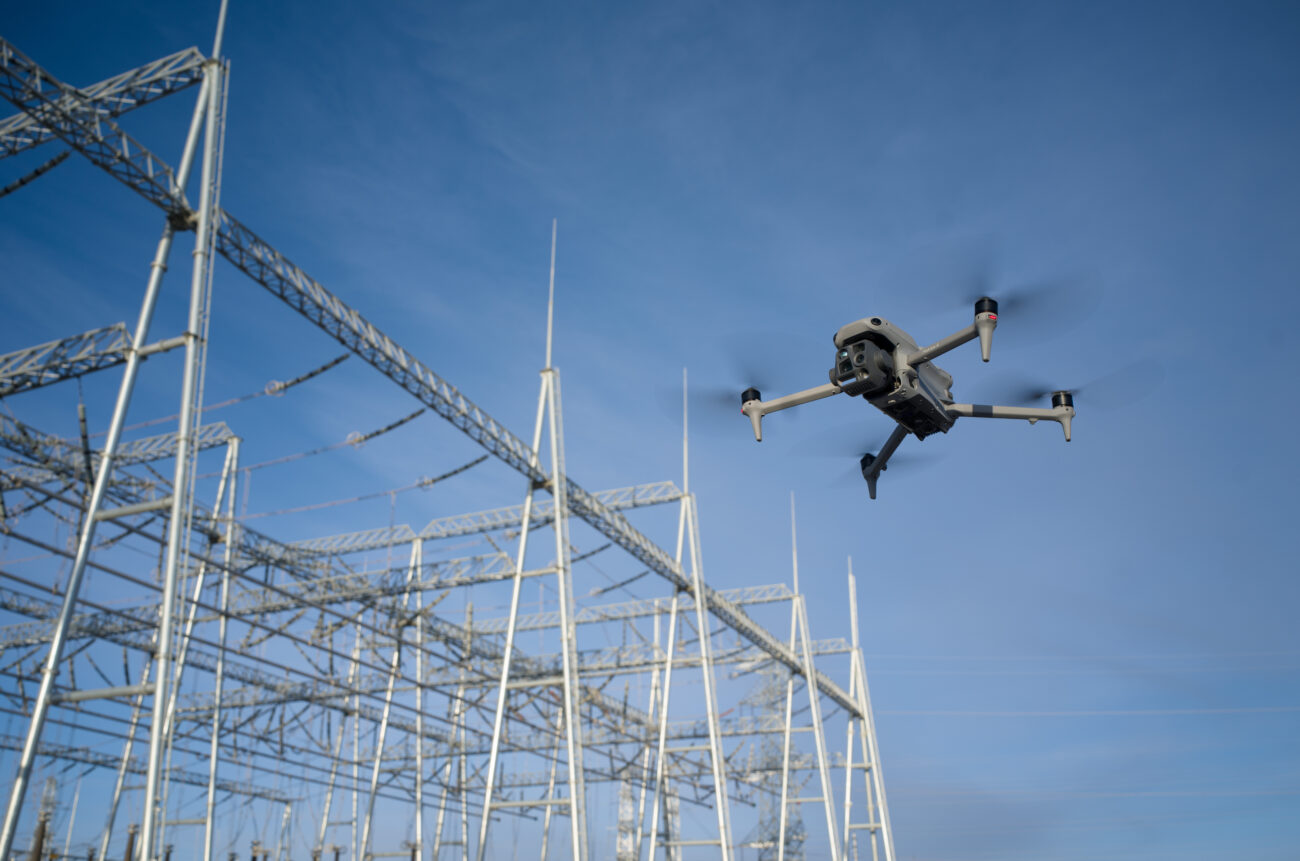
The Matrice 4T combines thermal imaging with visible-light cameras. [1] Use a possible heat signature to direct attention, then examine the visible context and arrange a ground check. Agree who will respond before taking off.
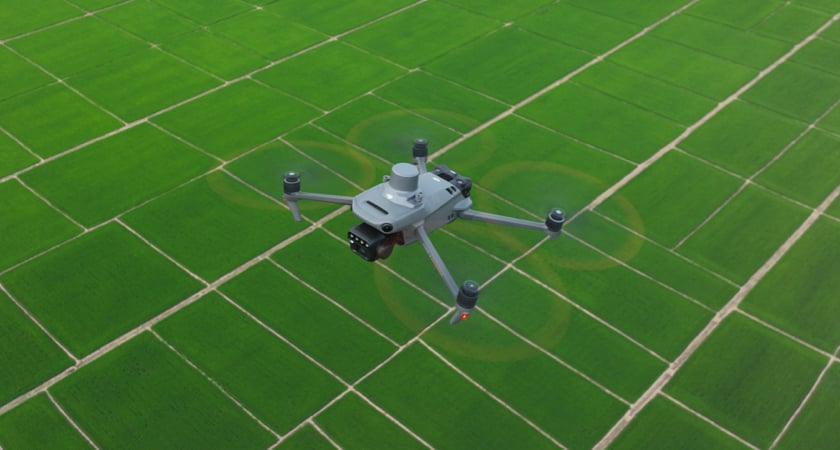
This guide focuses on livestock observation, searches near fences and external farm-asset checks. Crop mapping is a separate workflow with different evidence requirements.
Look for stock and fence-line clues, then confirm them
A search might follow the last known location, accessible field edges and open areas around a hedge. An animal visible beside a fence may help a stockperson decide where to go. Visible imagery may also reveal an open gate or obvious damage; it cannot establish that every wire and connection is sound.
Thermal visibility depends on contrast and an unobstructed view. Vegetation can conceal animals, while warm surroundings can make them difficult to distinguish. Burke and colleagues explain these problems in original thermal-observation research; their wildlife study does not validate M4T livestock performance. [4]
In Utah State University field work, thermal drones helped teams locate cattle, but warm rocks and vegetation also complicated interpretation. The project used Autel aircraft, so its results are contextual evidence rather than a Matrice 4T benchmark. [5]
Mark a suspected location and the areas you could not see. An empty screen is insufficient evidence that an animal is absent.

Use building and equipment images to prioritise a closer check
From a suitable outdoor position, visible images may help document a suspect gutter, roof section or external equipment housing. A thermal difference can give a maintenance contractor something specific to investigate. Its cause still needs assessment alongside operating conditions, sunlight, materials and previous records. [4]
Keep the agreed scope external and accessible. Do not turn an observation flight into an improvised indoor inspection or open electrical equipment to improve the view. Irish HSA farm guidance calls for regular electrical checks by a competent electrician. Drone images do not replace that work. [8]
Make the animals’ response part of the decision
A preliminary University of Kentucky study reported little change in heart rate and movement under its particular flight protocol with a small group of heifers. That finding cannot establish that another herd, sheep flock or aircraft will cause no disturbance. [7]
For a first trial, have an experienced stockperson watch the animals rather than the screen. Start conservatively and stop if the activity appears to cause agitation, persistent bunching, escape attempts or disruption of normal behaviour. Do not keep approaching to obtain a better photograph.
AG-03 includes an AS1 speaker. Keep speaker use separate from the observation trial and assess any proposed use with the stockperson. Its inclusion is not a guarantee of safe or effective livestock movement.
Run a small, recorded trial on your own farm
Test a defined task before planning a whole-farm routine. A useful trial should reveal missed sightings and practical difficulties as clearly as successful images.
- Choose the question. Select one familiar paddock or external asset and decide what a useful result would look like. Avoid creating an emergency or deliberately disturbing animals for a demonstration.
- Plan the operation. Agree the flight area, people’s roles, obstacles, recovery position and response route. For Open-category operations, IAA guidance requires visual line of sight and checking geographical restrictions. [9]
- Check conditions. DJI states that the Matrice 4 Series is not waterproof. [1] Use the current instructions and actual conditions to decide whether to proceed; the availability of a thermal camera does not make a flight suitable in poor weather.
- Establish ground information. Ask a stockperson to confirm known animal locations or the asset’s condition independently. Compare the aerial review with that information afterwards.
- Record uncertainty. Note obstructed areas, ambiguous signatures, animal response, time spent and battery changes. Keep the original images rather than only a coloured screenshot.
- Decide what changes. Adjust the route or abandon tasks that cannot provide useful evidence without disruption. Agree who checks each outstanding observation on the ground.
Review observations without replacing routine care
For each useful sighting, retain the date, field or asset reference, original file and a short description of what is visible. Separate a confirmed sighting from a possible one, and keep unobserved areas on the record. A ground follow-up should close the action rather than simply add another image.
Automated counting research is not an out-of-the-box accuracy promise. A Wageningen study trained and evaluated its own tracking model using data from two farms; its reported results cannot be transferred to the supplied aircraft on your holding. [6]
Teagasc recommends regular health monitoring and a herd-health plan developed with the veterinary practitioner. [2] DAFM guidance also retains competent stockmanship, suitable inspection and prompt care at the centre of animal welfare. [3] Keep normal physical checks in place and obtain veterinary advice when an animal’s condition calls for it. Do not delay assistance while seeking more footage.
What the AG-03 package supplies
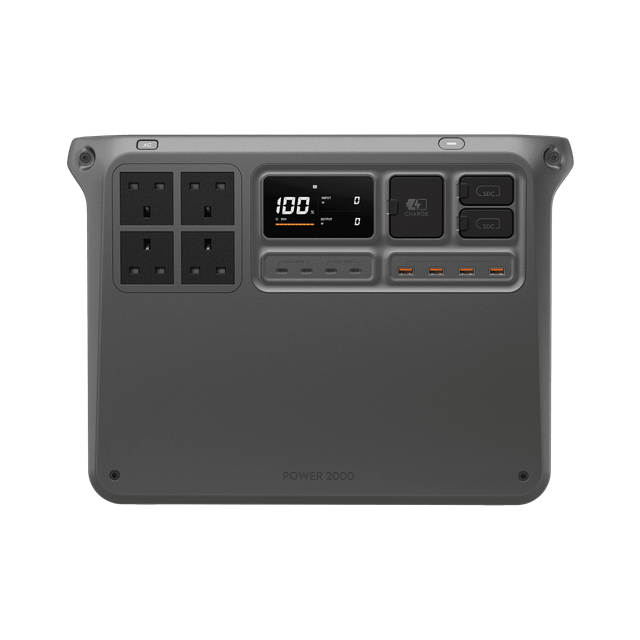
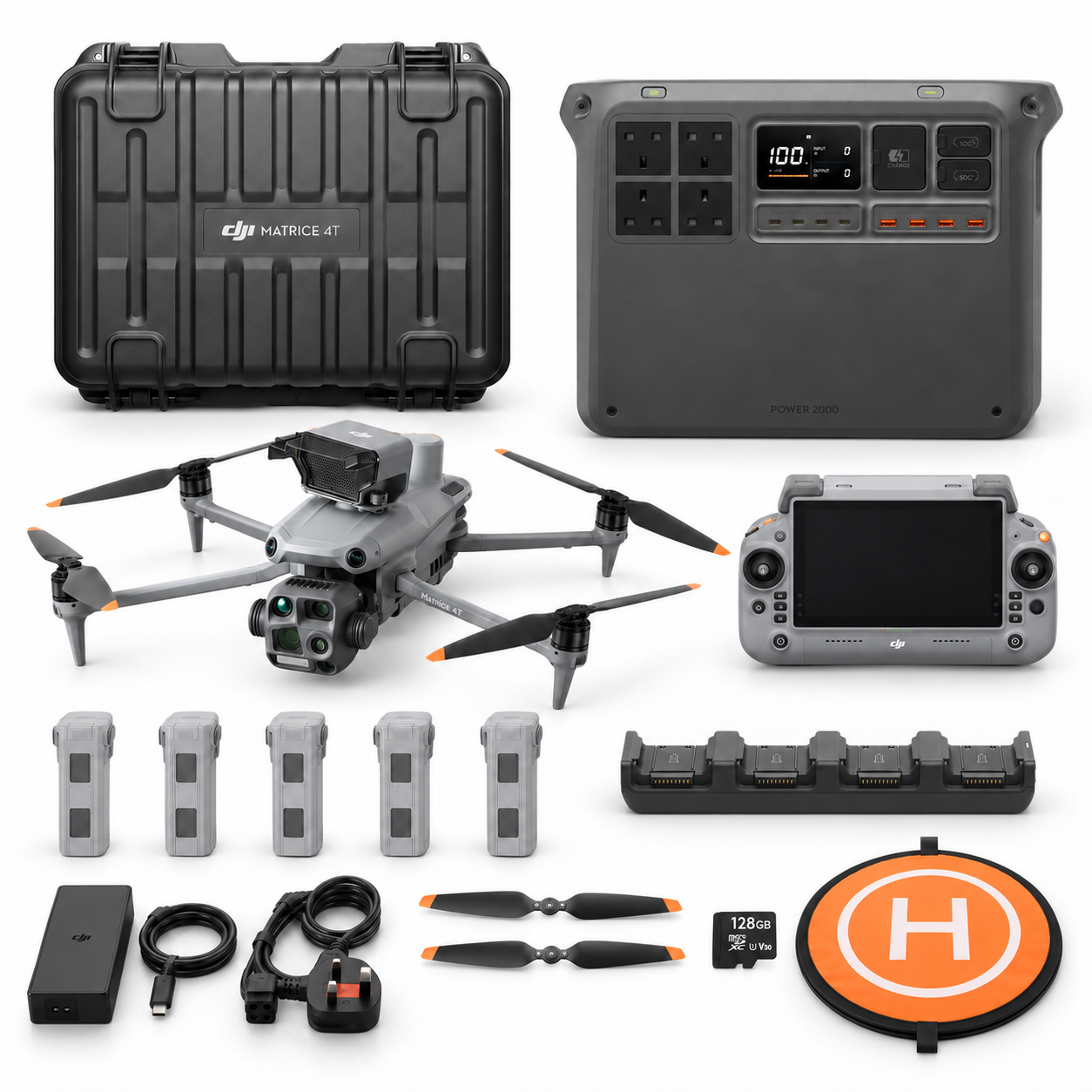
The current Matrice 4T Livestock & Farm Patrol Package + DJI Power 2000 (AG-03) includes five flight batteries in total, DJI Power 2000, AS1 speaker and the listed controller, charging equipment and accessories.
It includes four hours of application-workflow training for up to two people, six months of introductory email support and one application dataset-quality review, with scope and appointments agreed. The review is not a diagnosis or an on-site inspection. No image-processing software licence is included.
Plan charging with the supplied compatible equipment. Portable power and spare batteries support preparation; they do not guarantee uninterrupted coverage.
Questions to settle before buying
Can it replace walking the stock?
Keep the normal stock-care routine. Use an aerial observation to help direct a visit, not to certify an animal’s health, water access or welfare from a distant image.
Will it find an animal hidden by a hedge?
Do not assume it will. Record obstructed areas as unobserved and use an appropriate ground search. Repeated absence of a visible signature is not confirmation that the area is empty.
Can I rely on an exact automatic headcount?
Validate any counting workflow against known numbers and your own conditions. Review overlapping animals, repeat sightings and unseen areas before using a result for a management decision.
Does a hot animal or machine mean a fault?
A temperature pattern needs context. Refer animal concerns to the stockperson and veterinary practitioner, and equipment concerns to a competent maintenance professional.
Discuss the job before choosing the package
Tell Irish Drone about your fields, stock and intended checks. We can discuss the AG-03 configuration and a realistic training scope around the evidence you need.
Explore the agriculture packages on Irish Drone
Official manuals and setup guidance
Continue with the guide for your farm

Documentation and evidence
Use the current instructions for the selected equipment and the requirements of your actual operation.
Technical sources and scope
- DJI Matrice 4 Series FAQ
Capability conditions only; no farm detection, counting or diagnosis promise. Reviewed 3 November 2026.
- Good farm management practices
Farm-care guidance, not endorsement of drones or this package. Reviewed 3 November 2026.
- Explanatory Handbook for Conditionality Requirements 2023–2027, SMR 11
Contextual care requirements; this article is not an exhaustive statement of current conditionality or legal duties. Reviewed 3 November 2026.
- Optimising observing strategies for monitoring animals using drone-mounted thermal infrared cameras
Wildlife methods and physics; no cattle/M4T performance or vegetation-penetration claim. Reviewed 3 November 2026.
- Using Thermal Camera Drones in Beef Cattle Roundup
Regional field demonstration with Autel, not current M4T validation, Irish operations, universal search speed or ROI. Reviewed 3 November 2026.
- Monitoring mammalian herbivores via convolutional neural networks implemented on thermal UAV imagery
Abstract-only review. No counting accuracy figure or farm-software entitlement transferred. Reviewed 3 November 2026.
- A preliminary study of the physiological and behavioral response of beef cattle to unmanned aerial vehicles (UAVs)
Preliminary, cattle-specific protocol; not a universal no-stress claim or M4T welfare validation. Reviewed 3 November 2026.
- Fire, Electricity & Chemicals: agriculture and forestry
Competence/maintenance guidance; no thermal fault-detection or electrical certification claimed. Reviewed 3 November 2026.
- Up to what distance and height can I operate my drone?
Only a short planning reminder, not a full operating-category assessment. Reviewed 3 November 2026.


Pingback: Mavic 3M RTK: AG-01 or D-RTK 3 AG-02? | Irish Drone
Pingback: Mavic 3M Crop Monitoring: Capture, Process & Field-Check
Pingback: Agriculture Drones Ireland: Mavic 3M or Matrice 4T?