
SOLAR & PHOTOVOLTAICS · FIXED & VEHICLE DEPLOYMENT
Choose a repeat-inspection setup around the sites you manage, the team that will operate it and the evidence your maintenance team can use.
Evidence reviewed 3 November 2026 · Ireland
The practical answer
Shortlist a fixed dock when repeat capture at one prepared solar site is the priority. Evaluate a vehicle-mounted system when an operating team needs to move the base between assessed sites and work from a parked location. For occasional visits, compare that extra installation and operating workload with a portable Matrice 4T team. These are procurement recommendations for the confirmed Irish Drone range; the operating design still needs project-specific assessment.
Start with the deployment question
Write down where the base will be on a typical working day. A solar portfolio can mean one connected plant, several separate parcels, or a route of customer sites. Those arrangements create different access and handover tasks even if their combined electrical capacity is similar.
DJI describes both fixed and vehicle-mounted deployment for Dock 3. Our recommendation is to choose between them around repeatability at an assessed location and the work of moving the base. [1]
| Your operating pattern | First route to evaluate | Evidence to request |
|---|---|---|
| Frequent revisits to one prepared plant | Fixed Dock 3 + Matrice 4TD configuration | A site assessment and a supervised repeat-mission trial |
| One team moving between several locations | Engineered vehicle-mounted Dock 3 configuration | Vehicle design, a relocation demonstration and a site-by-site operating plan |
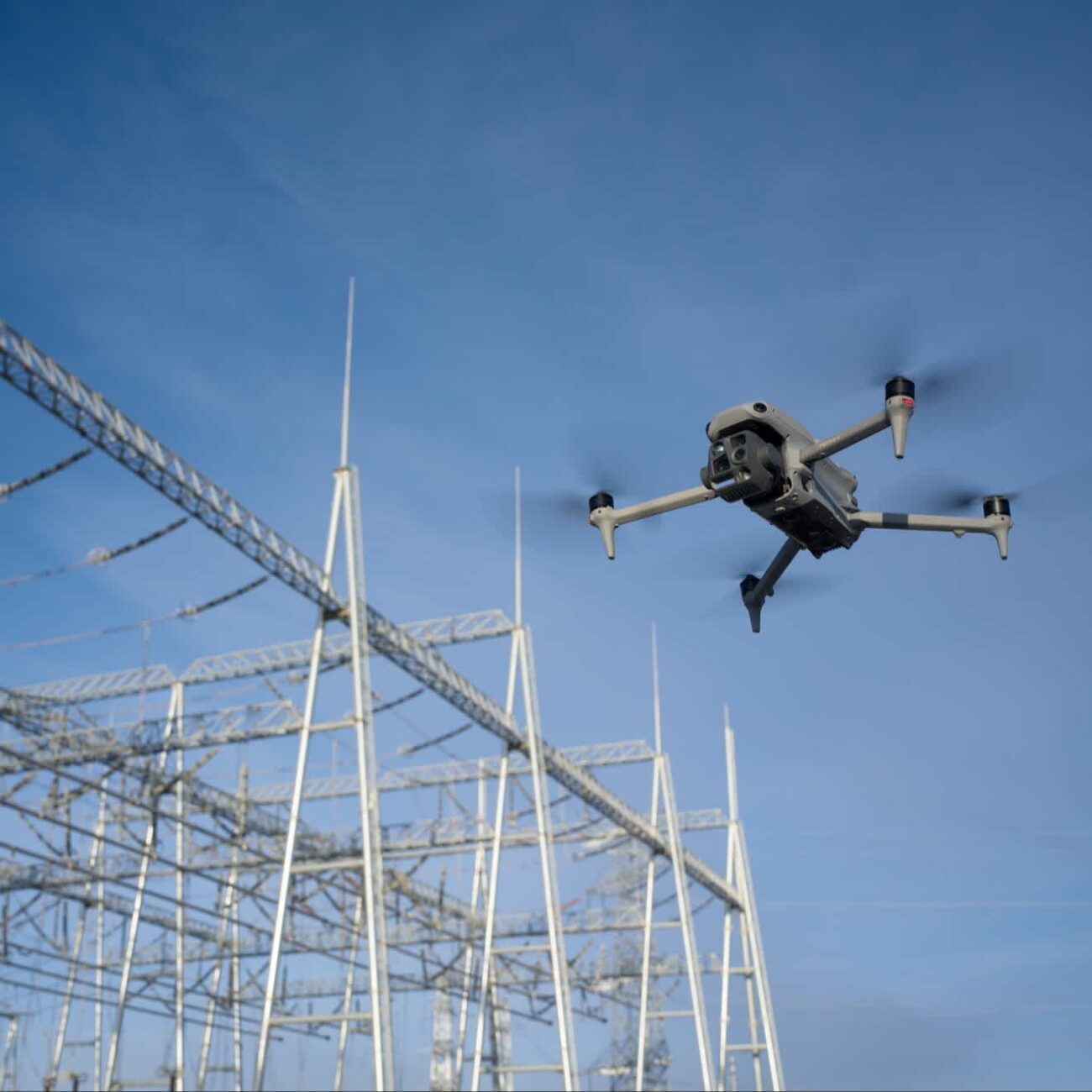
| Occasional visits with changing customer access | Portable Matrice 4T team | A sample capture and a realistic visit schedule |
| A brief demanding different thermal evidence | Revisit the aircraft and payload choice | A representative dataset reviewed against the brief |
The table is an editorial shortlisting tool. Before ordering a dock, ask whether its deployment arrangement helps your actual maintenance programme.
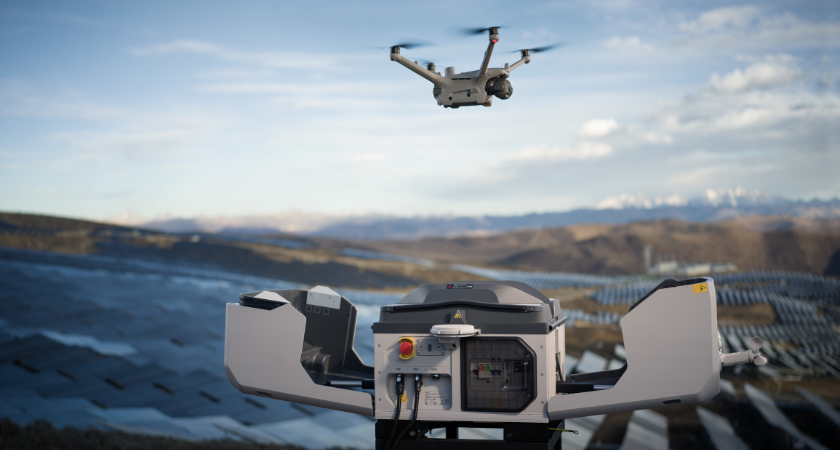
When a fixed solar-site installation makes sense
Build the case around a recurring question: which blocks must be observed, how often, and who acts on a change? Give the review team a defined asset list and a clear reason for each revisit. A standing weekly appointment is useful only if someone can interpret the returned evidence and close the resulting actions.
For a fixed proposal, ask the supplier and operator to mark the intended base, survey area, access arrangements and recovery responsibilities on the same site drawing. Then walk the handover through an ordinary working day: staff arriving, maintenance vehicles entering, an interrupted task and a return visit after a repair.
Compare the complete arrangement with the existing visiting-team workflow. Include time for checking the equipment, reviewing files and maintaining the installation. This practical comparison is more useful than assuming that every repeat visit should be automated.
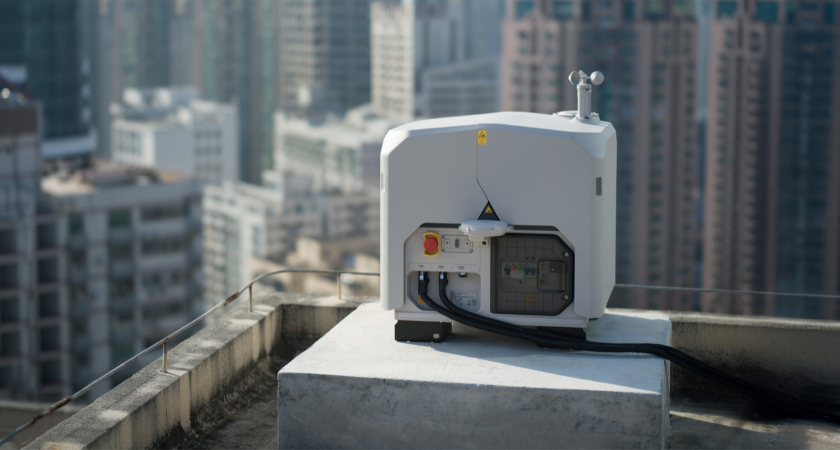
When a vehicle-mounted base deserves a closer look
A work-vehicle proposal is worth exploring when the same trained team regularly travels a defined inspection circuit. Prepare one example route with arrival times, access contacts, intended parking areas and the assets to inspect. Ask the proposed operator to explain which parts of that route are already feasible and which still need assessment.
Describe the relocation handover in the quotation: who checks the vehicle before travel, who accepts the next deployment location, and who releases the system for another task? The detailed manufacturer operating checks remain essential. The main selection guide explains the parked-operation and calibration requirements. Read the vehicle-operation overview →
Run the comparison against a portable team using the same route and deliverable. If customers change plans at short notice or visits are infrequent, the simpler visiting-team arrangement may fit better. A vehicle-mounted base earns its place by solving a defined operating problem.
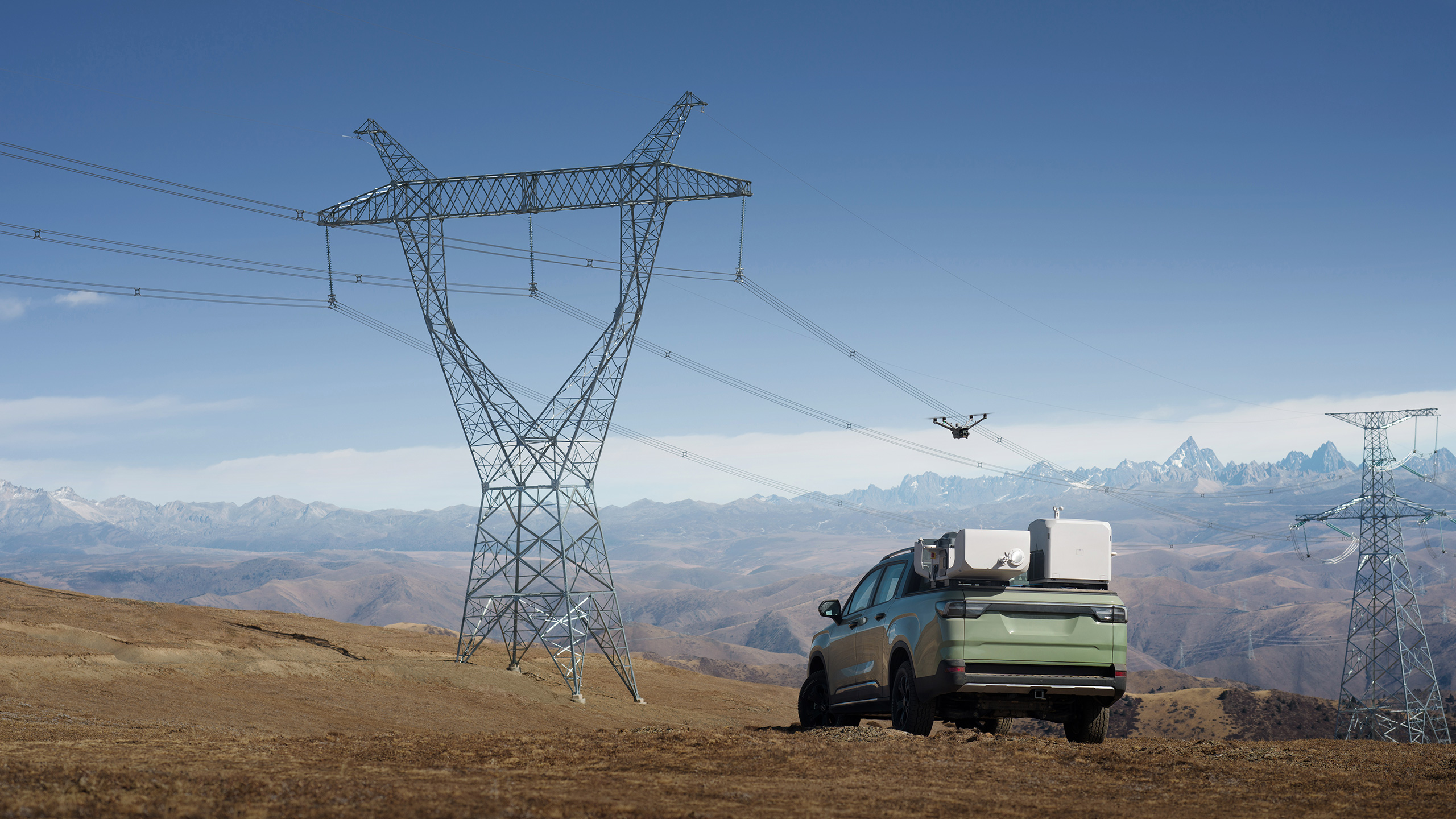
Separate the DJI accessory from the vehicle conversion
DJI documents a vehicle platform separately from its gimbal-mount accessory. That accessory alone does not approve a van roof. [2]
Ask for one responsibility schedule covering the vehicle, support structure, retention, weather sealing, electrical work, connectivity and final commissioning. Have the design and installation parties identify their own deliverables and exclusions. Use the exact vehicle specification and the manufacturer documents supplied with the equipment.
Set acceptance questions before work begins: can the installed system be accessed for maintenance, can covers and services be checked, and is there a documented handover for travel and deployment? These are procurement prompts for the appointed professionals, rather than a DIY installation procedure.
Our proposed solar vehicle configuration remains a separate enquiry concept. Vehicle conversion, structural work, foundations and installation services need their own written scope; this article does not create a new package entitlement.
Plan power, connectivity and the returned dataset together
Write an intended duty cycle into the brief: a sample working day, the number of visits, expected charging opportunities and what happens after a delayed task. Request a power and connectivity design for that pattern. A portable power station can be evaluated within that design, but this guide provides no measured DJI Power 2000 running time for a dock installation.
FlightHub 2 provides single-dock plan scheduling. Confirm the current software tier and resource allowances against the proposed service. [3]
Give returned files a named owner. At handover, demonstrate how that person finds the correct site, confirms the expected dataset has arrived and passes observations to maintenance. Agree how gaps are identified and how an incomplete visit is rescheduled. A management dashboard and a maintenance-ready conclusion are separate deliverables.
For thermal reconstruction and image-review options, use the software section of the main guide and check a representative dataset before buying a processing workflow. Compare the software roles →

Keep the inspection and security briefs clear
For the solar inspection brief, define the evidence needed to investigate and revisit a module or block. For a site-awareness brief, define the event to observe, the recipient and the response arrangement. Give each job its own acceptance criteria.
Compatible lighting and audio functions can support observation and communication. Confirm the exact hardware and firmware in the accessory controls documentation. [4]
If lighting or a speaker is included, have the operator demonstrate the fitted configuration and brief the team on its limitations. The main guide includes the AL1 obstacle-avoidance trade-offs. Review the accessory limitations →
A security feature in a brochure does not define who answers an alert. Agree that person, the response hours and the escalation route in the service brief. Avoid buying a monitoring promise that nobody has agreed to deliver.
Resolve operating and privacy responsibilities in Ireland
Agree the intended operating concept with the appointed operator before committing to a fixed or vehicle installation. The IAA publishes operational-authorisation guidance for advanced operations; purchasing the equipment does not provide the required permissions. [5]
Drone cameras can capture personal data. Use the Irish Data Protection Commission’s guidance when defining the monitoring purpose, access to recordings and retention arrangements. [6]
Keep a decision record with the quotation: site and vehicle scope, intended tasks, people responsible, prerequisites still to resolve and the evidence needed at handover. That record helps prevent a hardware order from becoming an undefined installation and operating commitment.
Prove the workflow with a supervised pilot project
Choose a manageable pilot that includes the real handovers. For a fixed proposal, include a repeat visit to the same selected assets. For a vehicle proposal, include relocation to another assessed location. Use the same reporting brief that the eventual service will follow.
- Set the acceptance brief. Name the assets, intended evidence, review owner and maintenance action.
- Demonstrate the deployment. Have the appointed professionals show the agreed installation and operating checks.
- Review the returned files. Confirm that the reviewer can identify the relevant asset and recognise a missing result.
- Revisit and close the action. Show how the next visit is requested and how the outcome is recorded.
Use the pilot to confirm the configuration and service scope. Record unresolved points before expanding the deployment. No universal site-capacity threshold replaces that exercise.
Questions to settle before ordering
Is a fixed dock automatically better for a large solar portfolio?
Assess each location and the repeat-capture task. The combined MW rating does not tell you whether one base is useful or whether a visiting team fits the work.
Should a van-mounted proposal include the vehicle conversion?
Ask for explicit supply and installation lines. Our enquiry concept needs a separately agreed vehicle design, installation scope and operating handover.
Does a Power 2000 option establish the operating duration?
Request a design and a measured duty-cycle demonstration for the complete proposed system. This article provides no dock running-time guarantee.
Which configuration can I discuss with Irish Drone?
Discuss the Dock 3 and Matrice 4TD route using your site or vehicle brief. Compare it with the portable and larger-payload solar options in the main guide.
Explore the equipment and package options


Official manuals for the selected route
Continue with the guide for your work

Documentation and evidence
Recommendations in this guide are editorial shortlisting advice. Check the current manufacturer instructions and the requirements of the actual operation.
Technical sources and scope
- DJI: Top 9 Features of Dock 3
Manufacturer documentation; exact configuration and current version apply. Reviewed 3 November 2026.
- DJI Dock 3 installation and setup documentation
Official guidance; apply it to the actual site and operating brief. Reviewed 3 November 2026.
- DJI FlightHub 2: Single-Dock Plans
Manufacturer documentation; exact configuration and current version apply. Reviewed 3 November 2026.
- DJI FlightHub 2: Virtual Cockpit
Manufacturer documentation; exact configuration and current version apply. Reviewed 3 November 2026.
- IAA: Guidance on Applications for Operational Authorisation, UAM012 issue6
Official guidance; apply it to the actual site and operating brief. Reviewed 3 November 2026.
- Data Protection Commission: Guidance on the use of drones
Official guidance; apply it to the actual site and operating brief. Reviewed 3 November 2026.
Compare equipment packages
Explore Solar PV & Solar Farms drone packages →
To discuss equipment for fixed or vehicle-mounted Dock equipment, contact Irish Drone with the solar site, installation context and proposed capture workflow.



Pingback: Rooftop Solar Inspection with Matrice 4T | Ireland