
SOLAR & PHOTOVOLTAICS · SOLAR FARMS
A procurement framework for deciding between attended thermal-inspection campaigns and a prepared repeat-capture installation.
Evidence reviewed 3 November 2026 · Ireland
The practical answer
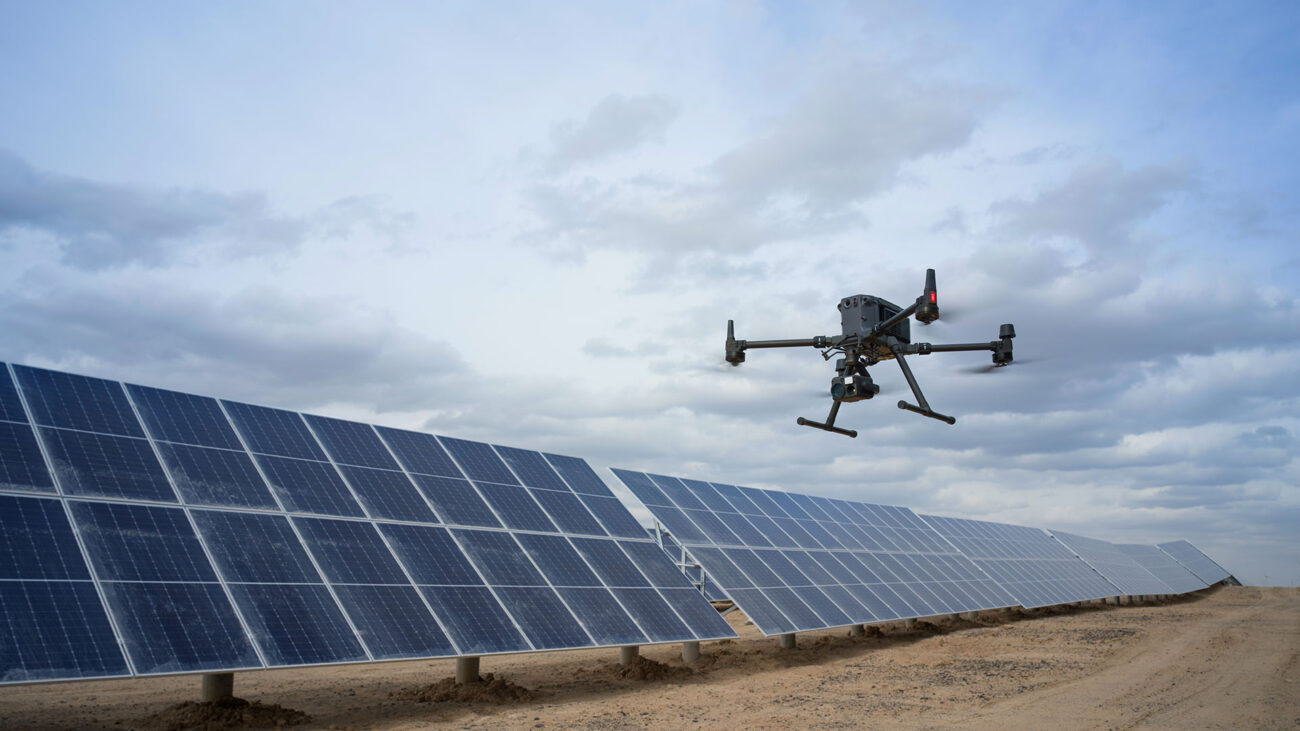
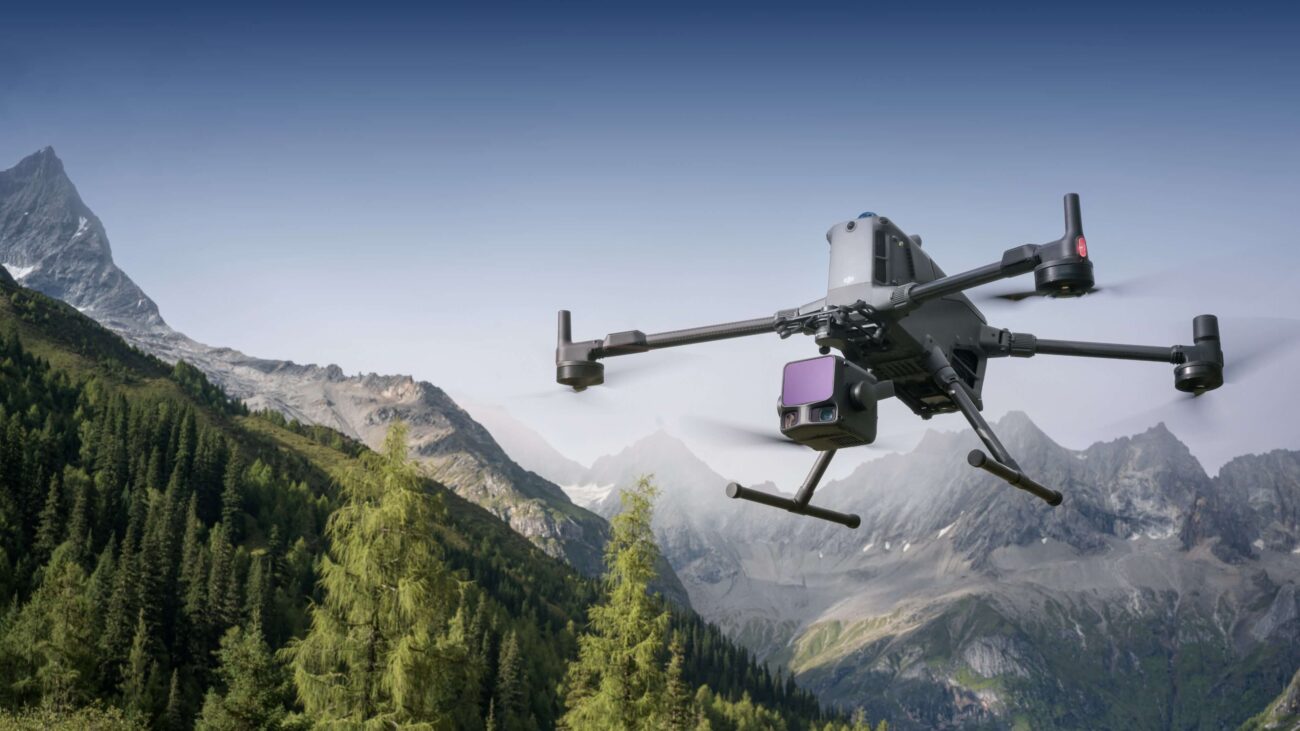
Choose the Matrice 400 with H30T when your inspection brief prioritises detailed thermal evidence and a team can attend, adapt the capture and investigate findings. Evaluate Dock 3 with Matrice 4TD when repeated observations of a prepared site justify permanent infrastructure and a managed remote-operation programme. Decide from the evidence and revisit plan, not the plant’s megawatt rating alone. This comparison covers confirmed Irish Drone configurations; it is not a field-test ranking.
Start with the maintenance decision
Give the procurement team a defined question: do you need a baseline condition survey, evidence after a repair, investigation of a suspect block, or a recurring view of change? These can demand different capture patterns and review effort on the same solar farm.
List the array blocks, tracker arrangements, access restrictions and assets that need separate attention. Agree how a finding will be tied to the site’s asset register and who can authorise follow-up work. A striking thermal image that nobody can relocate is a weak handover.
Use the comparison below as a buying framework. The operational recommendations are editorial guidance to test in a pilot, not measured Irish Drone performance results.
Compare the two operating models
| Decision | M400 + H30T | Dock 3 + M4TD |
|---|---|---|
| Main reason to evaluate | A staffed campaign that can adapt to findings. | A prepared base for repeat observations. |
| Native thermal sampling | 1280 × 1024 native. [1] | 640 × 512 native; enhanced output is separate. [2] |
| Procurement emphasis | Aircraft, payload, transport, charging and field-team workflow. | Site design, communications, operating arrangements and maintenance. |
| Evidence to request | Representative detail at a practical capture geometry. | Useful repeat datasets plus an exception-handling demonstration. |
| Common acceptance test | A reviewer can locate, inspect and route a finding to the right maintenance action. | |

When M400 + H30T fits the job
Put this route on the shortlist when engineers need to examine selected areas closely, adjust the plan during a visit, or collect additional context after reviewing an initial pass. A centralised plant can still contain awkward blocks, obstructions and different asset types; one uniform route may not answer every question.
Ask the pilot to show whether the required feature is resolved at a workable distance and viewing angle. Do not convert a larger native image into a promised increase in flight height, hectares per hour or fault-detection rate.
H30T’s High-Res gain setting excludes temperature measurement; use an appropriate measurement-capable mode when temperature data is required. [3]
Agree roles before the visit: flight responsibility, capture checks and technical review. Include setup, transport, charging, incomplete coverage and a possible return visit in the project plan. Buying a larger aircraft does not remove these tasks.

When a fixed Dock 3 installation fits
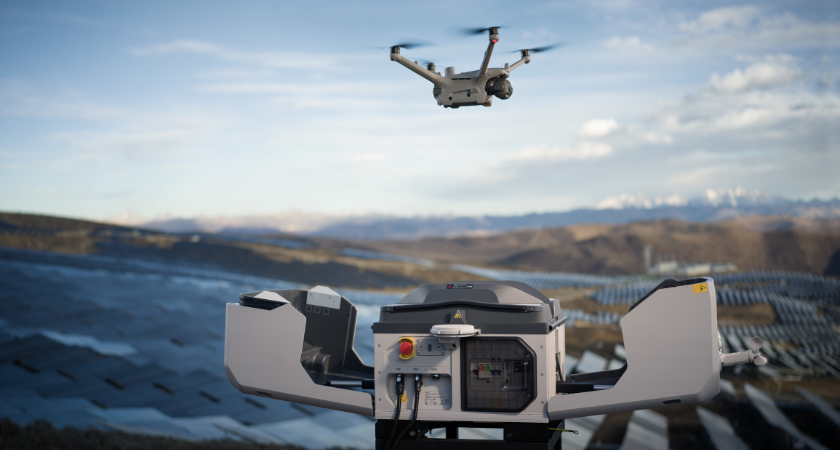
Consider a dock when recurring observations lead to decisions your O&M team will actually make. Name the event or interval, the assets covered, the person reviewing each result and what happens if the flight cannot run. Collecting more images without a review owner creates a backlog.
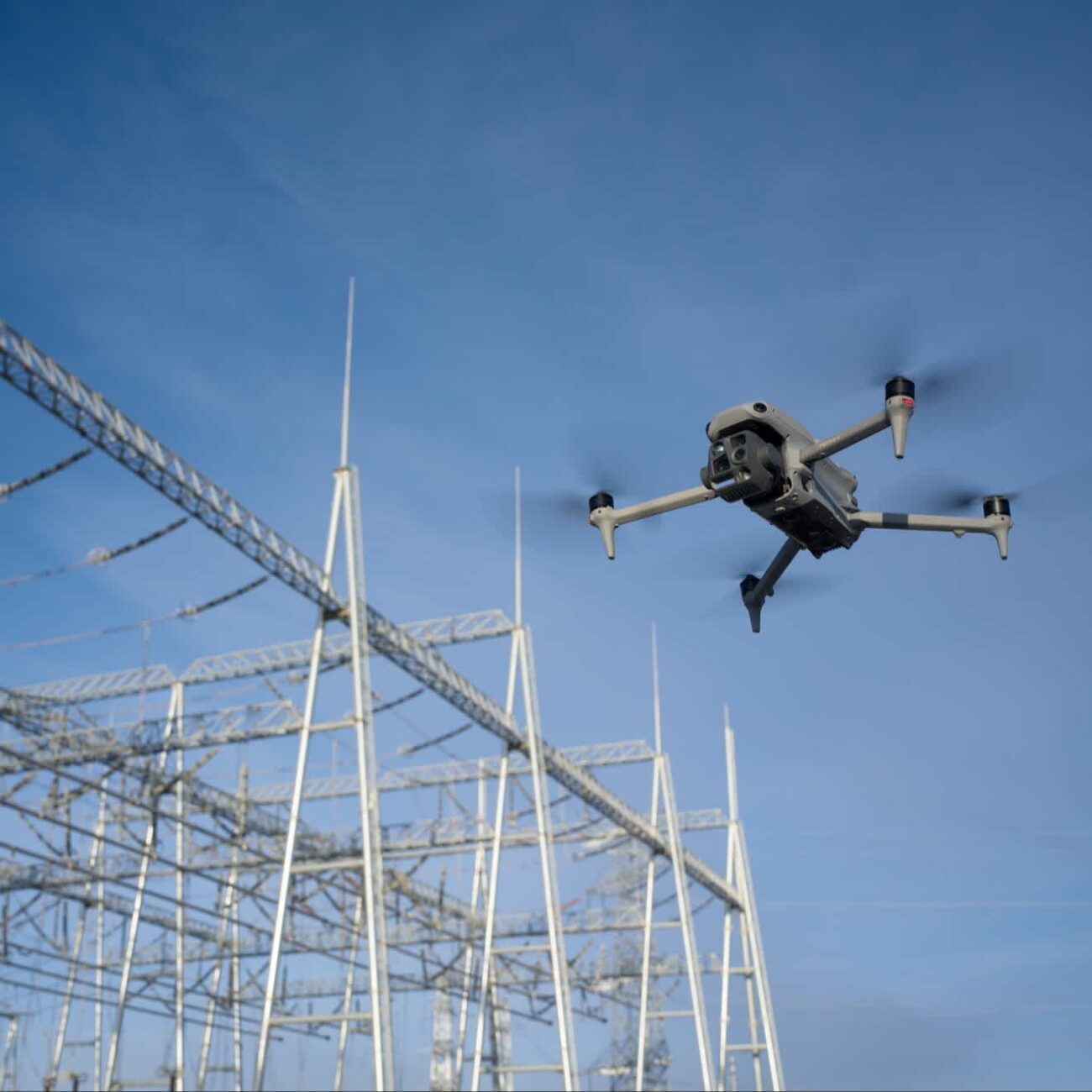
Dock 3 accepts Matrice 4D-series aircraft; stable power and connectivity are required. [4]
FlightHub 2 documents timed and recurring single-dock plans, execution status and media-upload status. [5] Use those records to establish whether a planned inspection produced a complete, reviewable dataset.
Include installation access, communications testing, maintenance visits and recovery arrangements in the scope. Check that the proposed location serves the required blocks before specifying a single permanent base. Equipment limits and acceptable thermography conditions both matter; a scheduled opportunity is not an instruction to fly regardless of conditions.
Write one capture, data and revisit plan
Capture: define acceptable evidence
IEC TS 62446-3 covers operating-PV thermography, including equipment, conditions, procedures, reporting and personnel. [7] Its public scope is not evidence that a particular equipment purchase is compliant.
In your brief, specify the detail the reviewer needs, required coverage, treatment of reflections and shading, and the conditions to record. Include a process for rejecting poor imagery while the team can still arrange a useful repeat. Keep module thermography separate from night-time security observation.
Data: make the handover usable
DJI’s 2026 Terra update reconstructs thermal maps using paired visible and thermal imagery. [6] Agree the actual processing route before capture. Preserve originals and associated context, define naming and asset references, and test the export with the person who will use it. Confirm software entitlement and computing needs rather than assuming a licence name specifies the whole deliverable.
Revisit: compare evidence, then act
Plan comparisons around sufficiently comparable capture conditions, not just matching dates in a calendar. Record changed tracker positions, maintenance activity and inaccessible areas so a reviewer can distinguish a changed scene from a changed asset. Keep an exception log and close the loop with the site’s investigation or maintenance process.

Pilot a representative block before scaling
IEA PVPS frames O&M around site-specific conditions and clearly allocated service responsibilities. [8] Translate that into an agreed pilot rather than accepting a generic demonstration flight.
- Select useful test areas. Include typical rows and a genuinely difficult area. Record why they represent the wider plant; avoid choosing only the easiest patch.
- Agree pass criteria first. Can the reviewer identify the intended asset, inspect the required detail and trace each image to its capture context? Establish how missing or unsuitable data will be handled.
- Test the complete handover. Open the originals, processed outputs and finding register in the customer’s workflow. Have the O&M lead explain what further evidence is needed before a maintenance decision.
- Test the repeat and the exception. Demonstrate a follow-up dataset and an agreed response to an incomplete mission or failed upload. Do not deliberately create unsafe flight conditions.
For procurement, record actual people, time, site work, software and ongoing support required. Compare the two routes on the accepted outputs and operating burden demonstrated, not an assumed return on investment.
Settle the Irish operating route early
Confirm the intended operation with the IAA before committing to remote deployment. EASA distinguishes declarations for eligible standard scenarios from operational authorisations for other Specific-category operations. [9] A dock purchase supplies neither. Establish who holds operating responsibility, can intervene, attends recovery and manages site access before the pilot is booked.
Questions for the procurement review
Does a bigger solar farm automatically need a dock?
No. Capacity does not specify how often evidence is needed, whether the site supports a permanent base or whether a reviewer can act on the results. Compare those needs with the practical burden of attended campaigns.
Can a dock replace detailed follow-up visits?
Not automatically. Repeated observations can identify where attention is needed, while a targeted visit may still be required to gather different evidence or investigate a finding. A combined programme is worth considering only when the pilot justifies both roles.
Does a thermal map confirm an electrical fault?
Treat an anomaly as a finding to investigate. Agree the technical review and any field or electrical confirmation required before repair or replacement. Do not procure an image-capture package on the assumption that it includes an engineering diagnosis.
Review the confirmed configurations
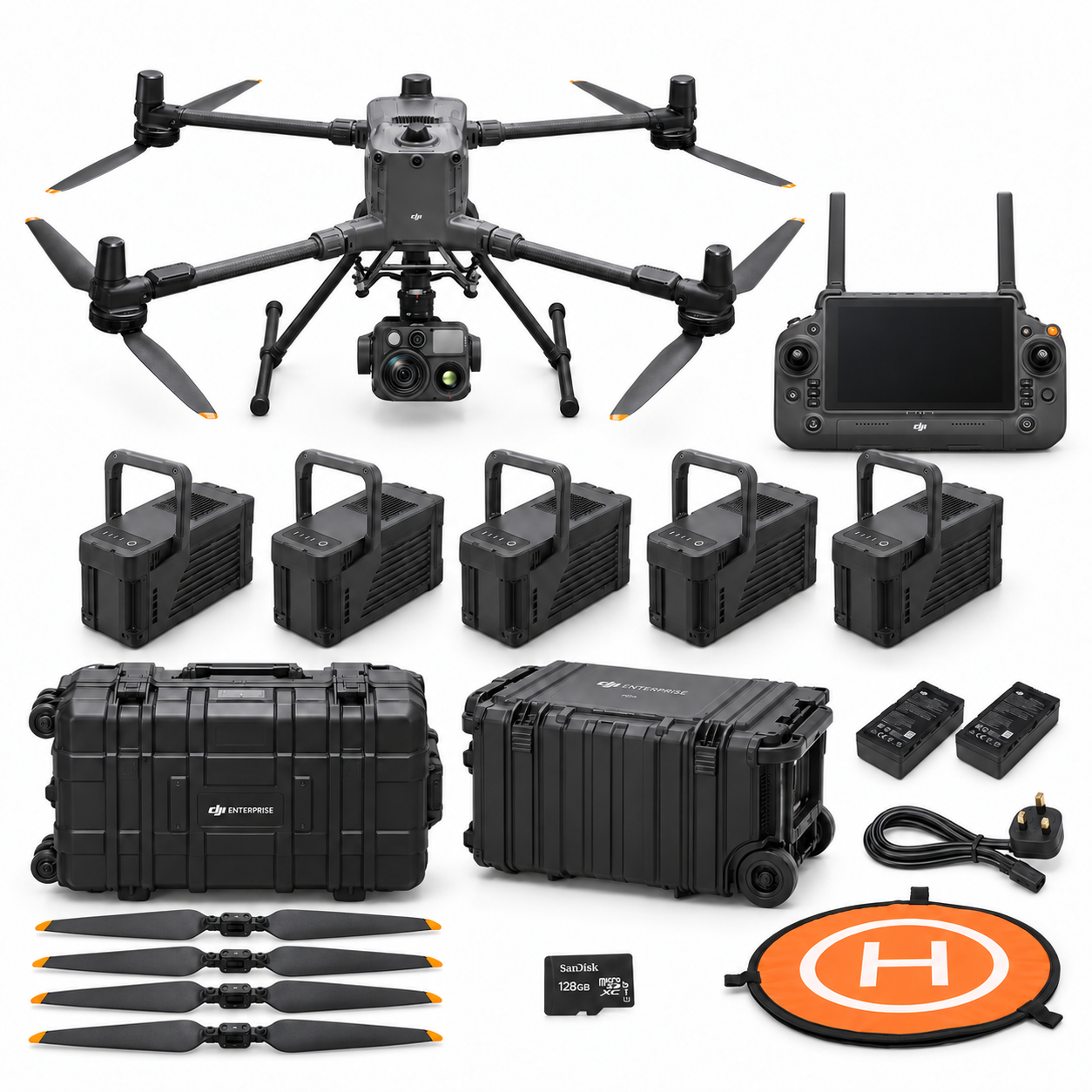
Compare the existing PV-03 M400 + H30T Solar Farm package and PV-06 version with DJI Power 2000. The power option changes field-power provision, not the inspection method or a guaranteed runtime.
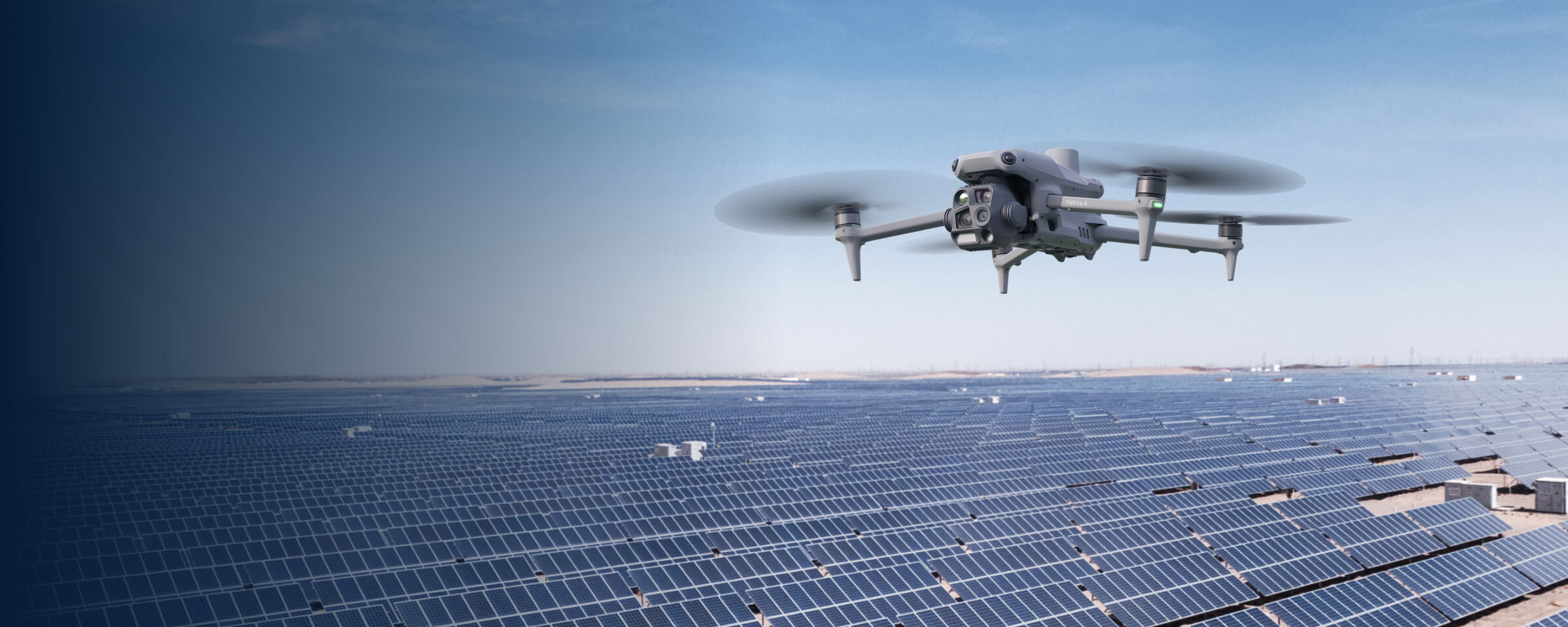
For a fixed installation, review Dock 3, Matrice 4TD and FlightHub 2, then agree a site-specific bill of materials and deployment scope. The proposed vehicle-mounted Solar package is not an existing product offer.
Send Irish Drone your site layout, required outputs and revisit plan to discuss a configuration. Keep hardware supply, installation work, operating arrangements and technical review explicit in the request.
Explore the equipment and package options

Official manuals for the selected route
Continue with the guide for your work
Documentation and evidence
Recommendations in this guide are editorial shortlisting advice. Check the current manufacturer instructions and the requirements of the actual operation.
Technical sources and scope
- DJI Zenmuse H30 Series specifications
Native thermal sampling; no field speed or diagnostic guarantee. Reviewed 3 November 2026.
- DJI Dock 3 specifications
Dock3/M4TD facts only; no newer-generation substitution. Reviewed 3 November 2026.
- Zenmuse H30 Series User Manual v1.0
Coverv1.0/2024.06; not used to establish laterM400 compatibility. Reviewed 3 November 2026.
- DJI Dock 3 FAQ
Only one compact sentence added; no broad autonomy promises. Reviewed 3 November 2026.
- FlightHub 2 Single-Dock Plans user manual
No assumption all newer AI features or unlimited quotas apply. Reviewed 3 November 2026.
- DJI Terra thermal update, July2026
One short sentence only; no TAT tutorial or automatic diagnosis. Reviewed 3 November 2026.
- IEC TS62446-3:2017 public scope
No claim of conformity, qualification or unseen numerical clauses. Reviewed 3 November 2026.
- IEA PVPS T13-25:2022 executive summary
Not a currentDJI benchmark; full report fetch timed out. Reviewed 3 November 2026.
- EASA Specific category FAQ
General route context; no project-specific permission or legal conclusion. Reviewed 3 November 2026.
- DJI Top9Features of Dock3: solar application image
4D-series identity only; no exact4TD/Irish-project/valid-snow-thermography claim. Reviewed 3 November 2026.
- DJI photovoltaic power-plant application
Manufacturer application visual, not an independent field trial. Reviewed 3 November 2026.


Pingback: Which Is the Best Drone for Solar PV Inspection in 2026?
Pingback: Rooftop Solar Inspection with Matrice 4T | Ireland
Pingback: Fixed vs Vehicle-Mounted Dock 3 for Solar Inspection