

The survey should connect a verified load, two controlled working areas and an agreed decision process. A map line alone cannot do that.

Create one controlled route record
Give the proposed cargo route an identifier and revision date. Record the loading point, receiving point, intended aircraft and working system, the consignment type and the people responsible for the information. Keep photographs and sketches tied to that record so that different teams do not arrive with different versions of the route.
Distinguish observations from assumptions. A confirmed overhead cable, a possible obstacle reported by a land manager and an area that could not be inspected should not appear as equally verified information. Record when observations were made and what must be checked again before work starts.
This is an operational planning record, not a claim that a particular mapping product has surveyed the site to an engineering accuracy. Where coordinates, elevations or dimensions matter to a decision, specify how reliable information will be obtained rather than adding unjustified precision to a sketch.
Assess the complete route and its alternatives
Trace the aircraft’s intended path and the space occupied by the cable and load. Identify obstacles at both ends and along the corridor, including small wires, vegetation, temporary structures and moving activities. Assess the loaded outward leg and the unloaded or differently loaded return separately.
The FC200 manual describes sensing blind areas and potential failures around small or sloping-wire obstacles. Route preparation therefore needs direct site evidence and an appropriate safety assessment; it cannot rely on the assumption that onboard obstacle sensing will identify everything.
Record the operational alternatives before they are needed: an unavailable receiving point, a route obstruction, changing conditions or a communication problem. Identify what information the pilot needs to select the accepted response. A drawn alternative is not useful unless the aircraft, energy reserve and authorised operating conditions support it.

Use a load sheet that follows the assembly
The load sheet should identify the prepared assembly, the person checking it and the receiving destination. Record actual mass, dimensions, packaging, attachment method and any cargo classification requiring review. Keep a photograph of the prepared item as a check against a different package being presented on the day.
Separate measured facts from supplier estimates. The complete assembly may include straps, hooks and packaging, with the exact manufacturer payload accounting also considered. The FC100 payload guidance illustrates why headline capacity cannot simply be allocated entirely to the loose goods.
Define the check that happens immediately before the lift. A load prepared correctly earlier can be altered by added tools, wet packaging or changed fittings. The record should allow the loading crew and pilot to recognise that change and stop, rather than silently accepting the earlier weight as still valid.
Treat the receiving point as a controlled resource
Name the receiving point in a way that cannot be confused with a nearby clearing or work area. Record its ground condition, approach constraints, load-stability requirements and the method for moving goods away after delivery. Include photographs from the receiver’s actual position rather than relying only on a distant overview.
Assign responsibility for declaring the point ready and for withdrawing that status. The receiver needs a clear route for reporting people, vehicles, wind changes or an obstruction. The pilot must have an agreed response that does not depend on the receiver accepting a delivery under pressure.
DJI’s air-unloading precaution requires waiting for the aircraft to leave before goods are collected. Develop the exact approach and release sequence from the relevant manual and accepted operating method; do not invent a universal approach distance or rotor-state rule for every FlyCart system.

Rehearse the meanings of the calls on the ground
Before an exercise, agree the words used for readiness, unavailable receiver, stop, release confirmed and aircraft clear. The team should know who makes each call and what the pilot or ground crew does next. Acknowledgement is useful only if its meaning is shared; casual conversation can conceal a different understanding of the task.
Illustrative briefing vocabulary: a receiving coordinator might report the named point “ready”, while any crew member may use the agreed stop call. This is an example of the communication problem to solve, not a supplied radio procedure or a substitute for the operator’s manual.
Check communications at the actual working positions, including the expected noise and terrain conditions. Define the response if a call is not heard or is ambiguous. Two controllers or an observer do not themselves establish a compliant flight arrangement; the operation must be assessed as a whole.
Tie the route record to the exact equipment
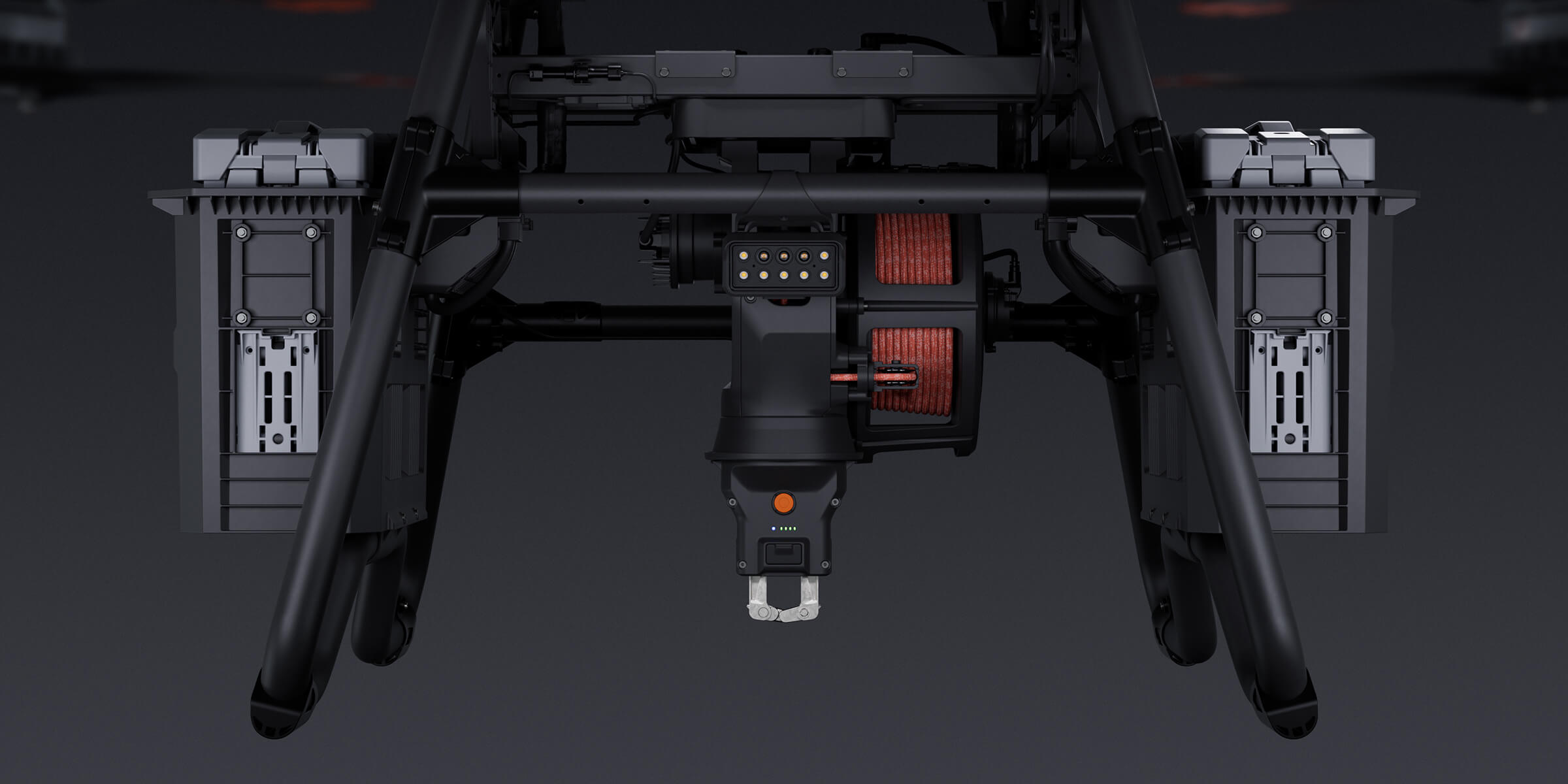
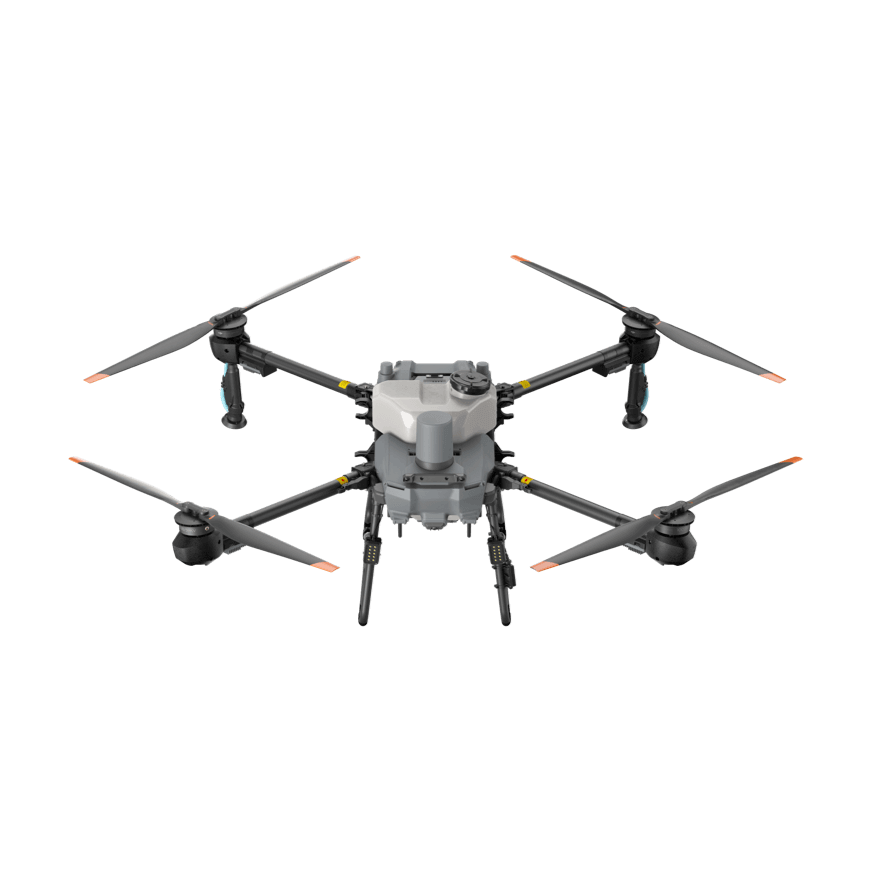
Record the aircraft, controller, payload-system and relevant firmware or document revisions proposed for the job. For FlyCart 100, a flagship winch and a fixed-cable dual-battery lifting system are different arrangements. A check sheet should identify the one actually fitted.
The FC100 winch product information identifies the correct aircraft compatibility and requires checks of hook operation and cable condition. Link those checks to the exact asset rather than copying a completed sheet from a different model.
The FC100 Two-Battery Winch Package and FC30 Two-Battery Winch Package use different battery and winch families. For the planned FC200 Four-Battery Winch Configuration, keep its DB2400 system and regional supply questions explicit. Similar package labels do not establish compatible parts.

Illustrative ground rehearsal: test a missing receiver
Illustrative planning exercise: a team rehearses the loading and receiving sequence without an aircraft in flight. Halfway through, the receiving coordinator reports that the point is unavailable. The team checks whether the message reaches the correct person, whether loading stops and whether the proposed flight response is understood.
The rehearsal exposes an ambiguous destination name: two nearby areas had both been described as “the upper point”. The route record and vocabulary are revised before any authorised flight exercise. This is a useful outcome even though no delivery has occurred.
A later flight exercise must still operate within its authorisation and accepted safety conditions. The EASA Specific-category guidance separates the operating case from the aircraft’s technical capabilities. Do not report a successful tabletop exercise as evidence of flight endurance, obstacle clearance or permission to use the route.
Hand over a decision package, not a bundle of photographs
The finished survey record should bring together the current route revision, load sheet, site photographs, receiving method, communication responsibilities, energy assumptions and outstanding questions. State who accepts the record and which changes require it to be revisited. A new load shape, receiving location or working-system configuration may alter the assessment.
The IAA guidance asks customers to verify the operator’s relevant authorisations, registration, remote-pilot competence and insurance. Keep those checks alongside the practical record without claiming that a completed survey produces an authorisation.
Use the record to request a configuration review and an appropriate commissioning plan. The useful next step is a shared review by the flight and ground teams, with unresolved matters visible. That gives a supplier something concrete to assess and gives the crew a method to stop when the real site no longer matches the agreed plan.
Retain the weighing method and date alongside the mass, and identify which photographs show the final prepared assembly. A clear photograph can establish identity and packaging condition, but it cannot prove weight. This distinction helps a later reviewer understand which entries were measured, which were reported and which still require checking.
Frequently asked questions
Is a route sketch a validated flight plan?
No. It records proposed and observed conditions. The operator must resolve the operational case, controls and relevant permissions.
Can a ground rehearsal prove the aircraft will finish the route?
No. It can test roles and communications, but it does not establish flight energy, obstacle clearance or aircraft performance.
Explore the aircraft and packages
Follow the product page for the exact configuration and included equipment. Equipment selection and operating authorisation are separate parts of the project.


Talk to Irish Drone about your project
Send us the site, task, load or application material, intended operating pattern and available charging supply. We can help scope a suitable aircraft and package and discuss the preparation needed for an Irish operation.
Contact usPlan the next part of your operation
Official sources and technical guidance
These links support specific facts in the guide. Check the current revision and operating conditions when preparing a real project.




Leave a comment