
A cargo flight is one step in a site lift. The useful workflow starts with the material request and ends with a confirmed, safely received consignment.
Start with a transport request that the site can control
Construction sites change faster than a saved flight route. A useful cargo-drone proposal therefore begins with a material request tied to a current work area: the item, its destination, who needs it and when that receiving area can be controlled. “Deliver materials to the site” is too broad to turn into a repeatable procedure.
Name a site coordinator who can obtain current information about cranes, mobile plant, deliveries, temporary works and other work groups. The aircraft operator retains responsibility for the flight; the site must provide the cooperation needed to keep the agreed working areas available. Neither party should assume that the other has checked every interface.
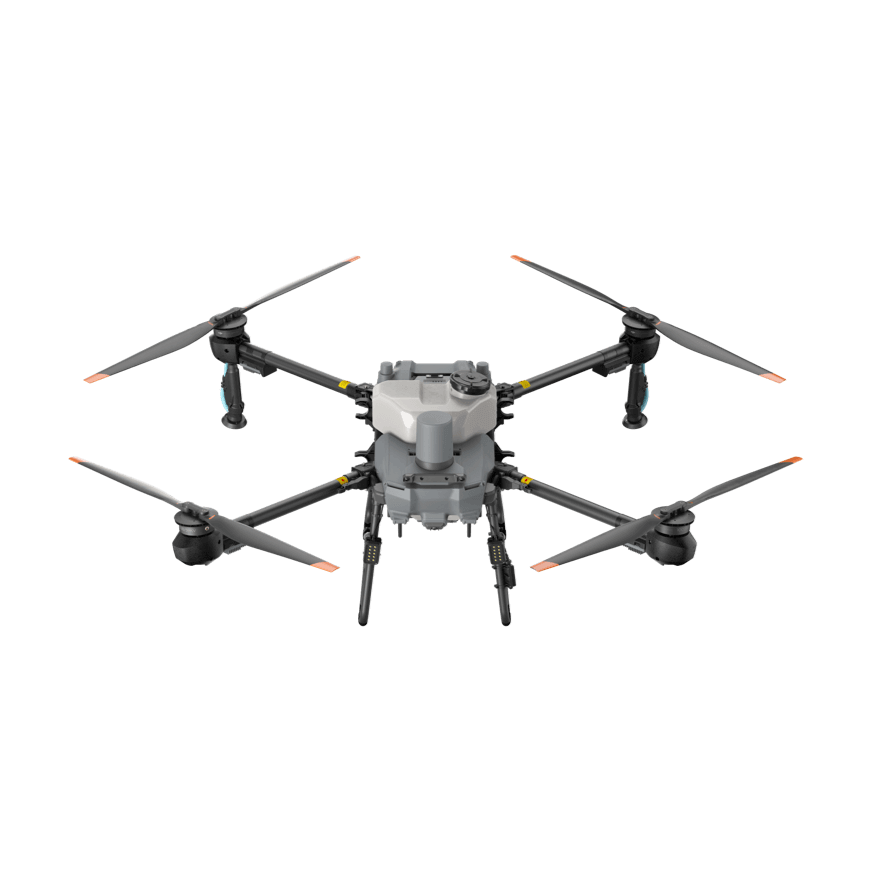
The heavy-lifting range supports several load classes. Select a configuration only after the site has explained the transport problem and the operator has identified the operating and authorisation requirements.
Give every proposed lift a consignment record
Prepare a short record identifying the item, measured lifted mass, dimensions, packaging, attachment points and destination. Include a photograph of the actual prepared assembly, not only a supplier’s image of the component. Where straps or fixtures form part of the applicable payload calculation, record them explicitly.
Check for sharp edges, loose wrapping, protruding pieces and contents that could shift. Decide how the receiving crew will handle the assembly after release. The load must remain suitable throughout pickup, transit, lowering and ground handling; a secure attachment alone does not establish that.
DJI’s FlyCart 100 payload FAQ explains why headline capacity cannot be treated as loose-material capacity without accounting for the specified hardware. Use the exact aircraft and working-system instructions, the application recommendation and the operator’s accepted limit before approving the consignment for the exercise.

Reserve a working window, not just a take-off point
Agree the loading area, receiving area and the volume connecting them with the people managing site activities. Assess the aircraft and suspended assembly together. Consider crane movements, lifting accessories, projecting scaffolds, power lines, vehicle crossings and routes that workers may use unexpectedly.
The control arrangement should state how work is paused or a flight is stopped if one of those interfaces changes. A drawing made during the initial site visit is not a continuing guarantee. Use a current briefing before the work window, and establish who can withdraw the receiving point from service.
Keep the proposed route away from unresolved interfaces rather than relying on onboard sensing to negotiate them. The FC100 specifications warn that sensing is supplementary and that moving objects, cargo and cable clearance remain important operational limitations. A new crane position may require a new decision, not merely a minor route adjustment.
Use a positive loading and release sequence
The loading procedure should identify who prepares the assembly, who checks it and who gives the final all-clear. Provide an unmistakable stop signal that can be used by anyone with a safety concern. Reconcile the consignment identifier and destination before the aircraft is committed to the lift.
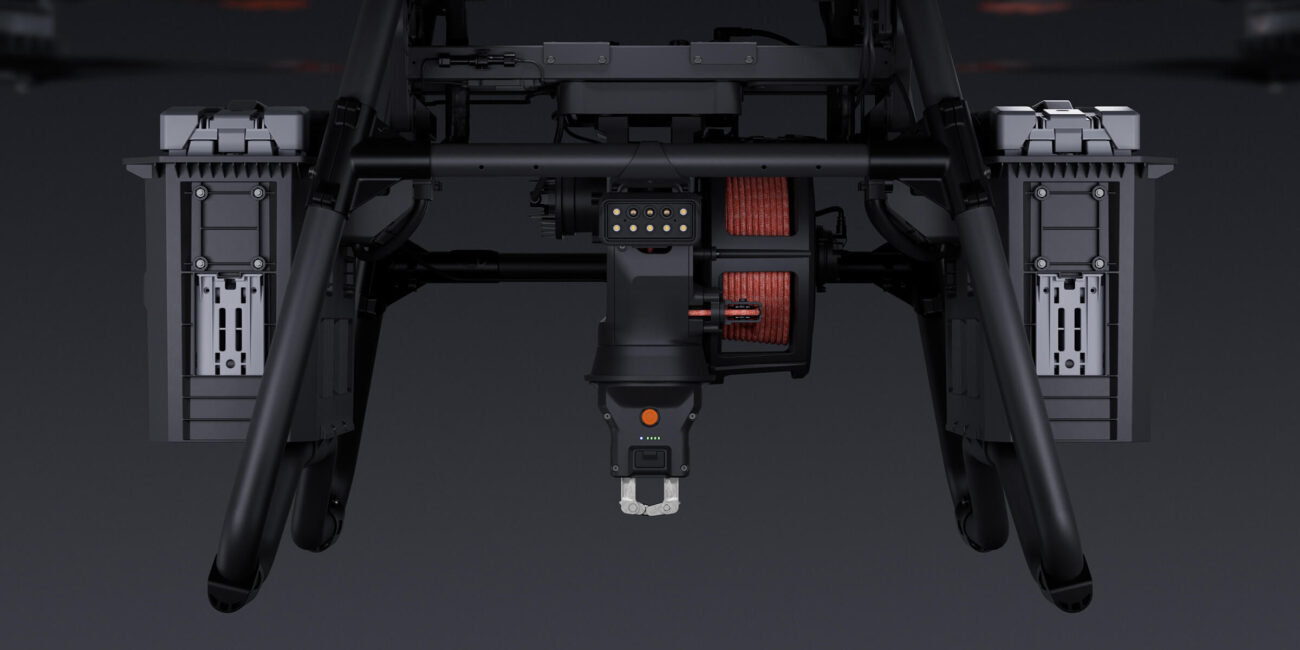
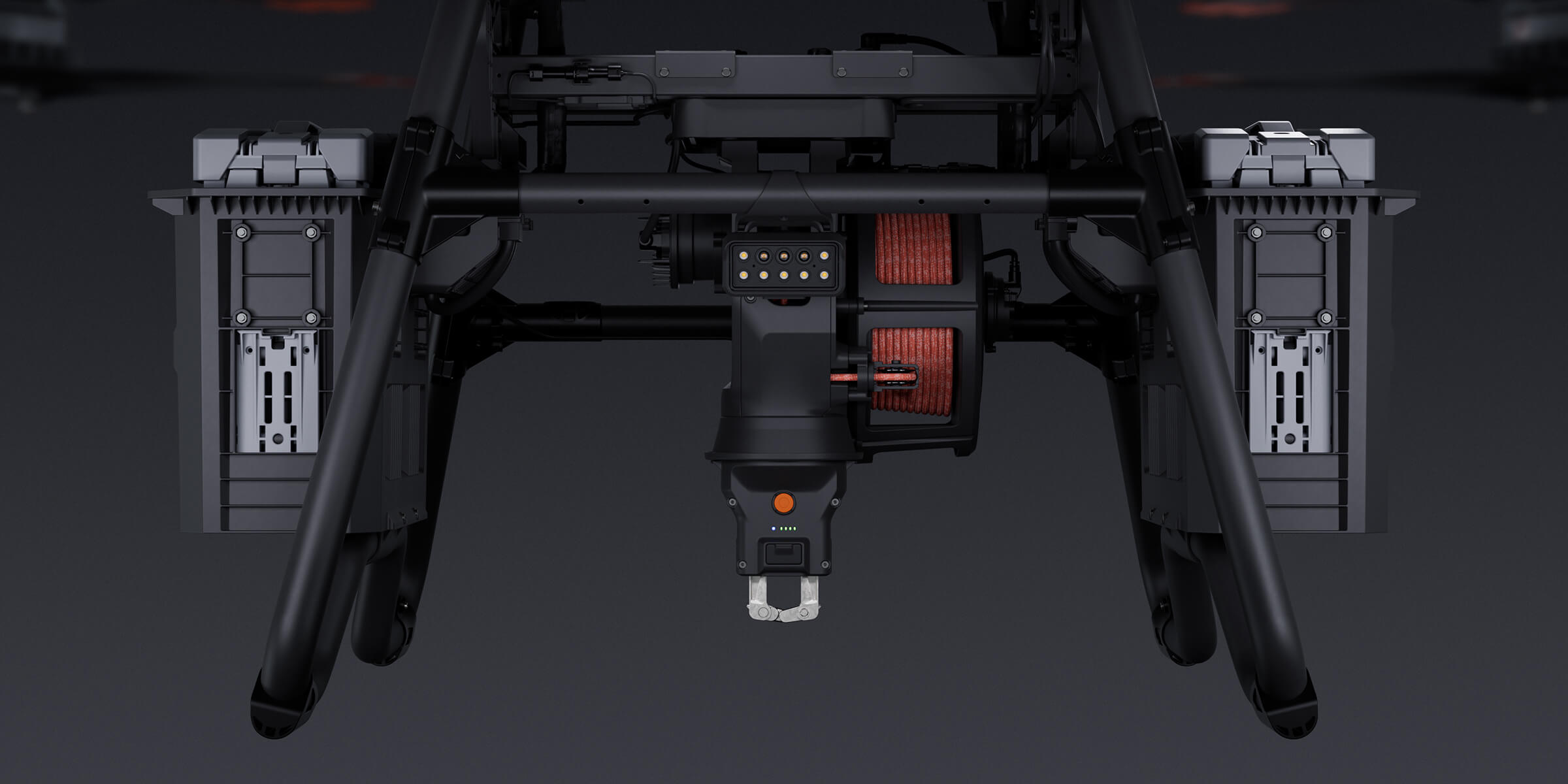
Inspection must include the working system itself. DJI’s FC100 flagship winch product information calls for checking the hook, cable condition and normal release/retrieval function, and states that the assembly is compatible with FC100 only. Do not transfer a check completed on another aircraft or a similarly named winch.
Keep personnel outside the agreed aircraft and load hazard areas during the operating sequence. An application weight reading can support the check; it does not excuse an unknown load, unsuitable attachment point or a member of the crew remaining in the wrong place.

Make the receiver’s decision explicit
The receiving team should confirm the intended point and its readiness before approach. If the area is occupied, a vehicle blocks the exit or the ground condition has changed, the receiver must be able to report that without feeling pressure to “make the delivery work”. The pilot needs an agreed response, such as a controlled return, that remains within the operating plan.
For lowering, define when touchdown is recognised, when release is confirmed and when the aircraft and cable have cleared. For landing delivery, define the safe approach and handling sequence from the exact manual. Do not let the receiver infer that it is safe simply because the item has touched the ground.
The manufacturer’s air-unloading precautions tell users to collect goods after the aircraft has left. Convert that principle into clear site communications and designated responsibilities, rather than a generic instruction shouted during the flight.
Specify the package around the agreed handling method
The FlyCart 30 Two-Battery Power Package and FlyCart 30 Two-Battery Winch Package represent different equipment lists. Both specify two DB2000 flight batteries and the FC30 charging configuration; the latter adds the model-specific winch. A site requiring powered lowering should not discover that distinction after mobilisation.
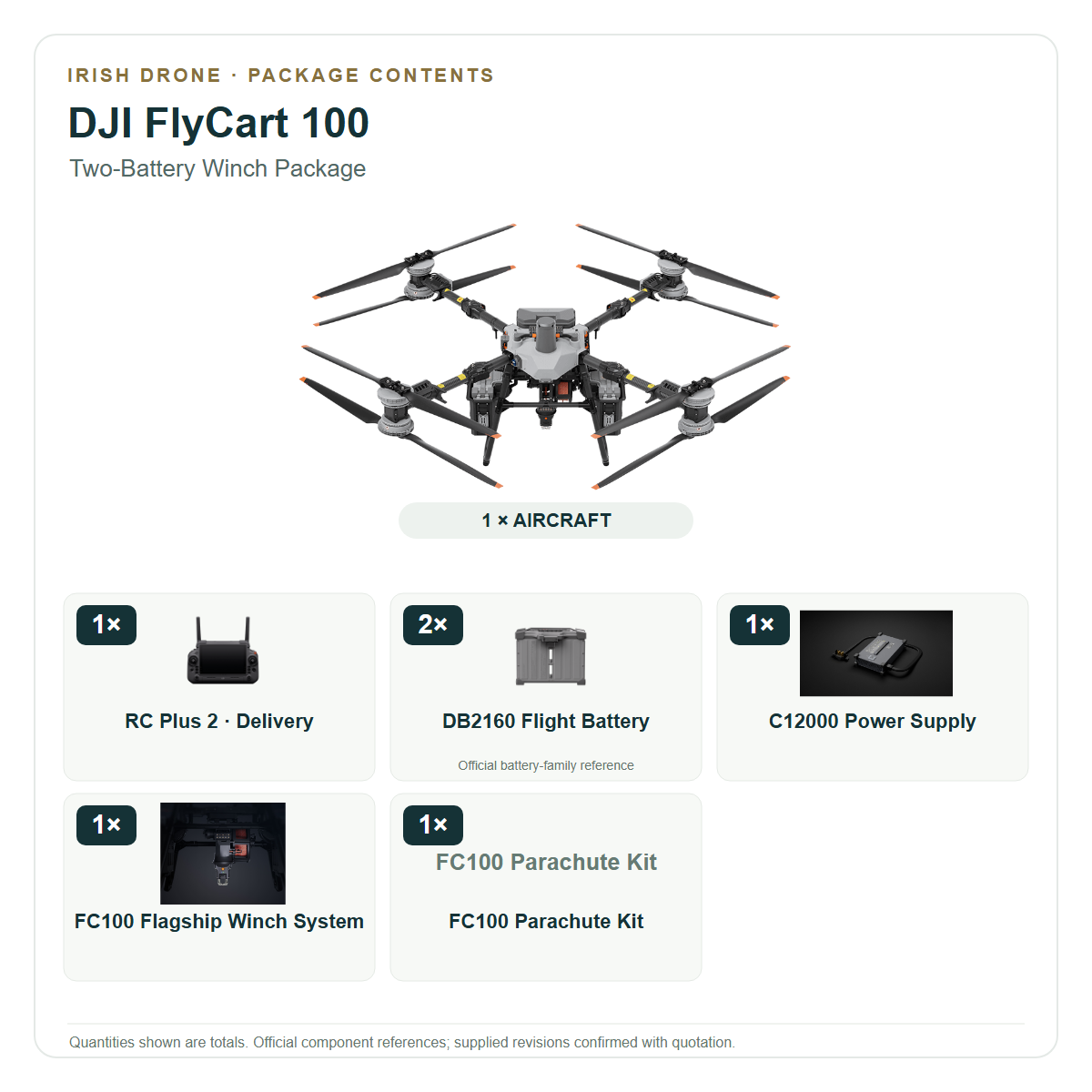
For a different load class, review the FlyCart 100 Two-Battery Winch Package against the same requirement. Do not compare aircraft names without considering charging power, the number of complete battery sets and the receiving method.
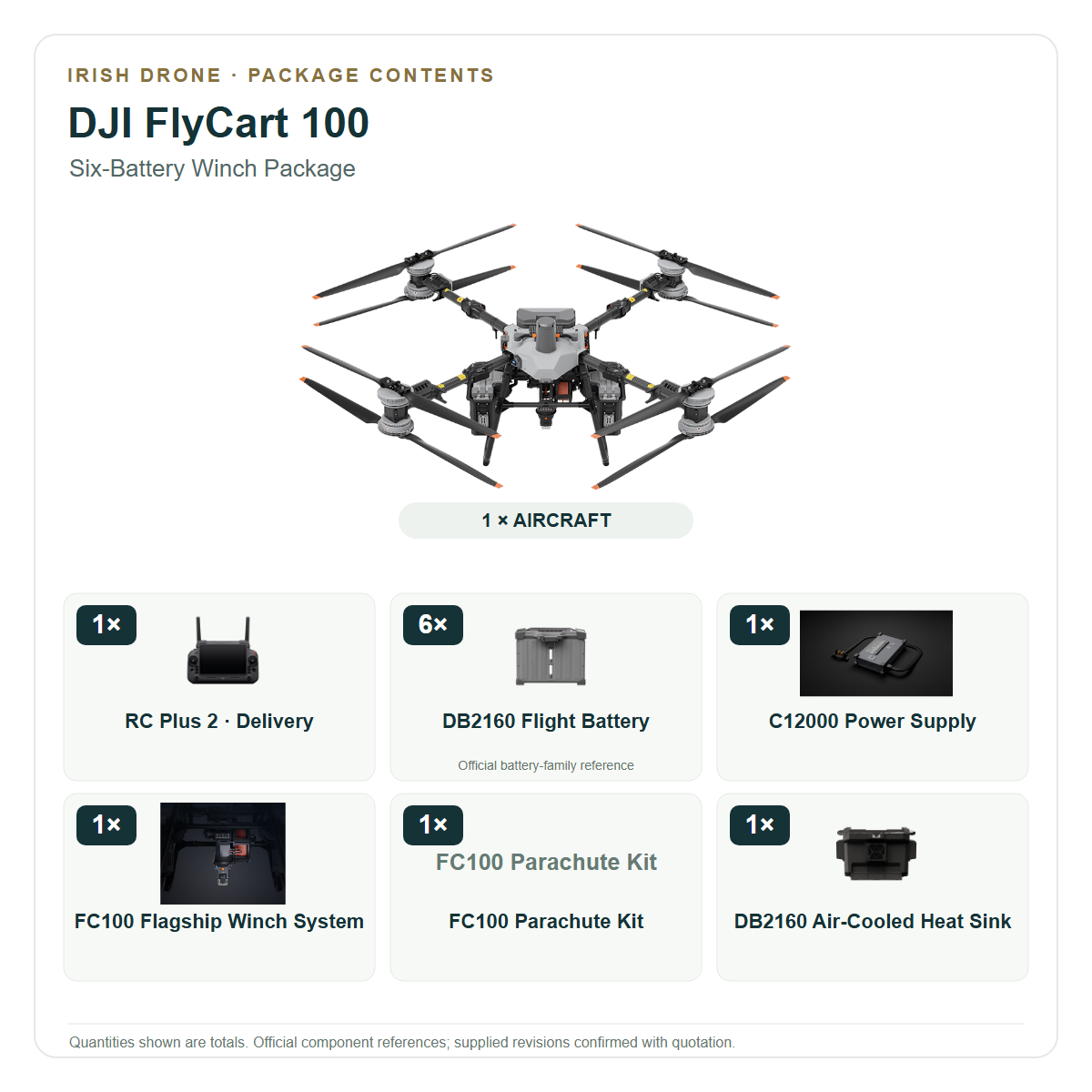
Keep commissioning, training, freight and operating permissions separate from hardware unless the written quotation expressly includes them. A controller battery or USB charger must not be counted as additional flight-battery capacity.

Illustrative site lift: identify the first failed assumption
Illustrative example, not a flight approval: a team proposes three small boxed components, each assumed for planning to weigh 8 kg, plus 3 kg of combined packaging and lifting fittings. The arithmetic gives a 27 kg assembly. It does not prove that the assembly is appropriate for any aircraft, because the real mass, applicable payload accounting and handling conditions still need checking.
During the briefing, the intended receiving area is found to overlap a vehicle delivery route. That conflict is resolved before any demonstration. The team also confirms that the three boxes can be delivered separately if the receiving procedure supports it; splitting the load becomes an option rather than an assumption.
The exercise succeeds as a planning exercise if it exposes these dependencies. It should not be reported as a productivity result, a proven operating radius or an example of an authorised construction delivery until the required evidence actually exists.
Close the lift and preserve the useful record
After a delivery, record whether the consignment was accepted, whether packaging or fittings were damaged and whether the route or receiving sequence differed from the plan. Reconcile returned hardware and remove a suspect battery or lifting component from the next cycle. Avoid turning a successful first lift into permission to ignore changes later in the day.
The IAA guidance on operational authorisations is a reminder to check the operator’s permissions, pilot competence and insurance for the actual operation. This construction workflow does not replace those requirements or the site’s wider safety arrangements.
Before requesting a quotation, submit the consignment list, site interfaces, delivery method and proposed work window. Ask what the commissioning exercise will verify and what will cause it to stop. A complete answer connects hardware, competent people and site control; it does not promise that buying a drone automatically creates a usable lifting service.
Frequently asked questions
Does the operator’s flight authorisation replace site coordination?
No. The flight must fit its authorisation and the construction site must support the agreed working areas, interfaces and receiving procedure.
Is a two-battery package a complete three-set rotation?
No. Two individual flight batteries form one dual-battery set. Rotation stock and charging throughput need separate planning.
Explore the aircraft and packages
Follow the product page for the exact configuration and included equipment. Equipment selection and operating authorisation are separate parts of the project.


Talk to Irish Drone about your project
Send us the site, task, load or application material, intended operating pattern and available charging supply. We can help scope a suitable aircraft and package and discuss the preparation needed for an Irish operation.
Contact usPlan the next part of your operation
Official sources and technical guidance
These links support specific facts in the guide. Check the current revision and operating conditions when preparing a real project.




Leave a comment