
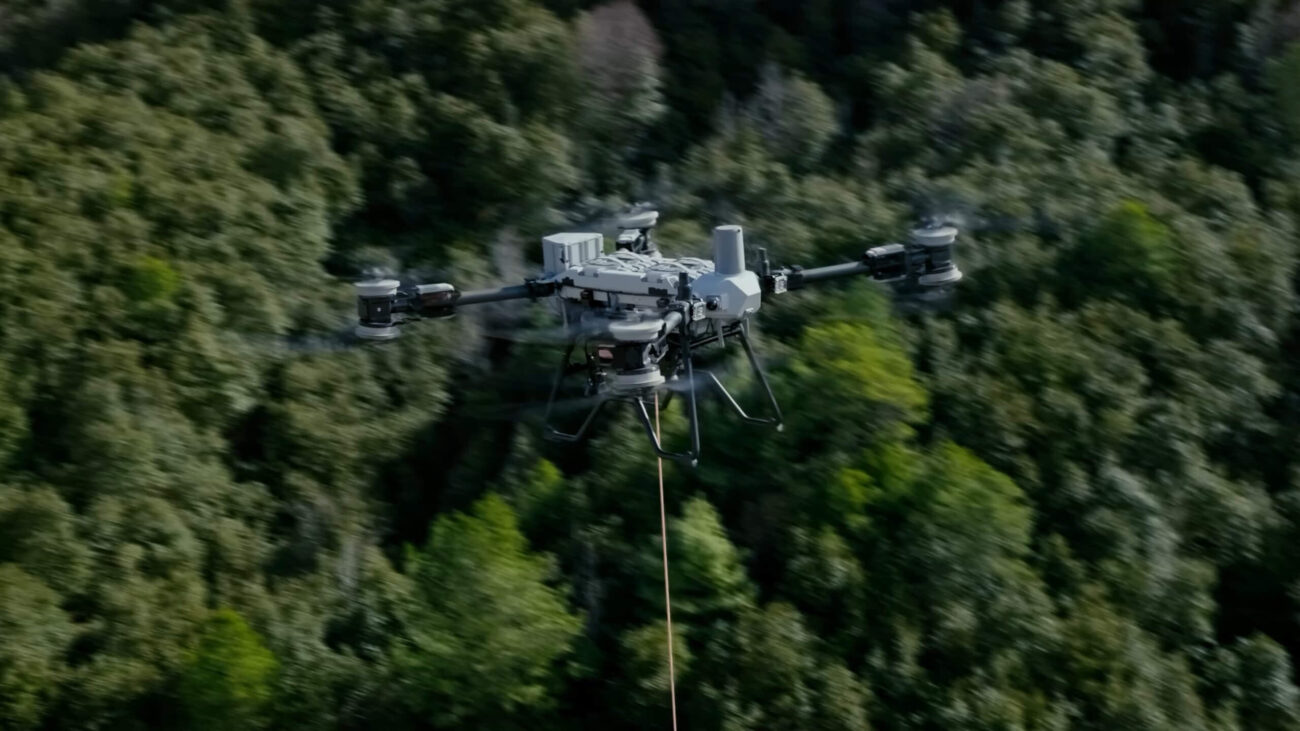
Forestry delivery is a materials-handling problem through changing terrain and vegetation. The consignment and the ground team matter as much as the aircraft.

Keep the purpose tied to a real supply task
Forestry cargo work should start with the supplies that a crew actually needs: packaged hand tools, guards, stakes, protective equipment or planting materials. This is a different task from photographing tree condition, mapping growth or surveying habitat. A useful article and a useful equipment enquiry should keep that distinction clear.
Record where each item starts, where the crew needs to receive it and how it will move from the receiving point into the work area. Aerial transport does not necessarily solve the final ground-handling step. Seedling trays, for example, still need protection and a suitable place for the crew to accept and move them.
Review the heavy-lifting range as a set of candidate configurations. Do not assume that a difficult walking route or a forestry application image is enough to establish an appropriate operation.
Treat long, flexible and fragile supplies differently
Mass alone is a poor description of forestry supplies. A bundle of stakes can be long, a bag of loose items can change shape, and planting material may be vulnerable to crushing or movement. Record dimensions, centre-of-mass behaviour, protrusions and the method used to prevent individual items escaping.
Use purpose-assessed packaging and attachment points. Do not tie a collection of items together and assume that the resulting bundle is a suitable lifting assembly. The loaded system must remain stable through pickup, transit, delivery and the unloaded departure sequence.
For smaller consignments, the FlyCart 30 Two-Battery Winch Package is an equipment list to examine, not an automatic recommendation. Confirm the complete lifted mass against the exact FC30 configuration and the official specifications, including the different conditions for dual- and single-battery modes.
Identify the package condition that was weighed and inspected. If rain adds water to a porous covering, or the crew adds another tool or changes the supports, recheck the actual assembly. Keep the revised record with the consignment so the flight team does not inherit an obsolete mass or attachment assumption.

Survey vegetation and work activity as changing conditions
Inspect both working areas and the proposed route with current information from the forestry team. Identify tall trees, projecting branches, suspended wires, narrow openings, felled material, harvesting machinery and routes used by workers or the public. Note features that could catch a cable or require the load to pass near vegetation.
A route that appeared open during a visit can be changed by harvesting, stacked timber or moving equipment. Agree who will check it again before the work window and who can declare it unavailable. The receiving point needs the same review; a mapped clearing may contain new obstacles by the time supplies arrive.
The FC200 manual warns that small obstacles, sloping wires and objects in weaker sensing directions may not be reliably detected. Treat the survey as a human decision record rather than delegating clearance of a wooded corridor to obstacle sensing.
Build the receiving method around the crew’s work
Choose a receiving point where the aircraft and load hazards can be controlled and where accepted supplies can be moved away without blocking the next delivery. Consider the crew’s footing, handling equipment and ability to keep other workers informed. Avoid a plan that requires someone to stand beneath the intended load to make the delivery possible.
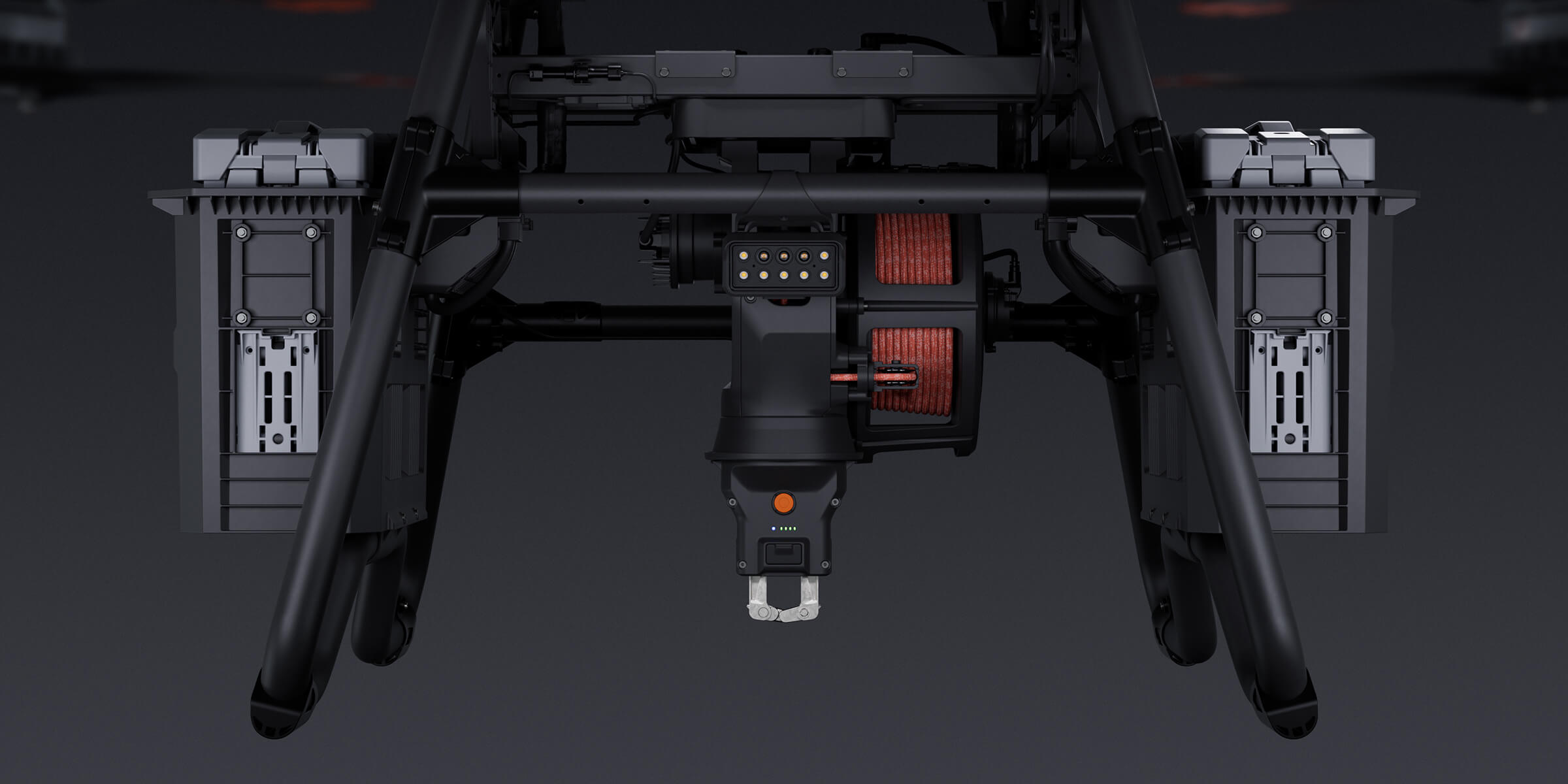
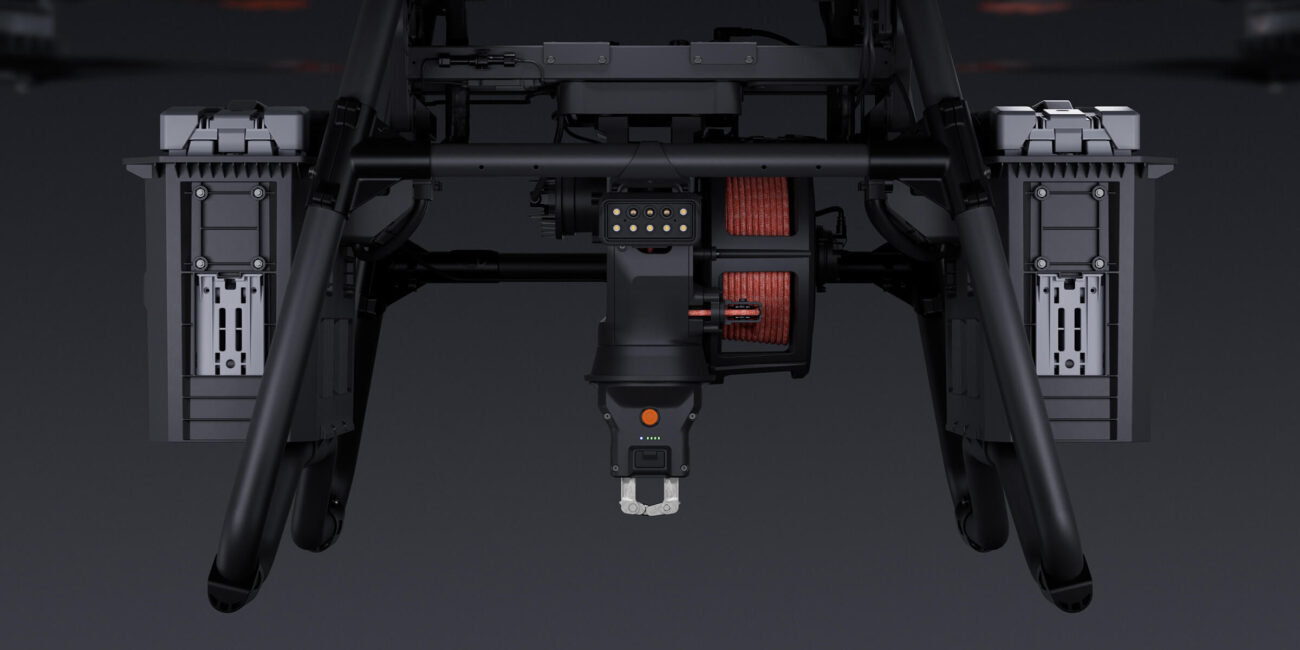
Determine whether a prepared landing workflow, powered lowering or a fixed-cable system matches that point. A powered winch may allow the aircraft to remain above the destination, but it introduces release, snagging and swing-management tasks. A fixed cable requires its own clearance and aircraft-height assessment.
Receiving instructions should include an unavailable-point response. If machinery or people enter the area, the crew must be able to stop the sequence and the pilot must have an agreed return or contingency option. Do not rely on the receiver to improvise once the aircraft arrives.

Screen cargo instead of assuming every forestry item is ordinary freight
Prepare a written cargo description that identifies fuels, chemicals, spare lithium batteries and any other item needing a dangerous-goods assessment. A sealed container or a small quantity does not remove that question. Flight batteries installed to power the aircraft and spare batteries carried as cargo have different roles; do not confuse the two in the consignment list.
The EASA Open-category conditions expressly exclude dangerous-goods carriage and material dropping. Heavy transport must be assessed through the appropriate operating framework; an agricultural or forestry purpose is not a blanket exemption. This article concerns controlled transport, not spraying, spreading or an assumed right to release materials over land.
Ask the operator to confirm what cargo it is prepared and authorised to carry. Also obtain appropriate land-manager cooperation and check the environmental and access requirements affecting the particular site. Aviation permission alone does not settle every land-use question.
Plan the launch base and battery sets
Assess how aircraft, batteries and charging equipment will reach the launch base. Identify ground condition, shelter for the charging workflow and the verified electrical or generator route. Keeping the aircraft supplied with charged, inspected batteries is a separate logistics task from moving the forestry consignment.
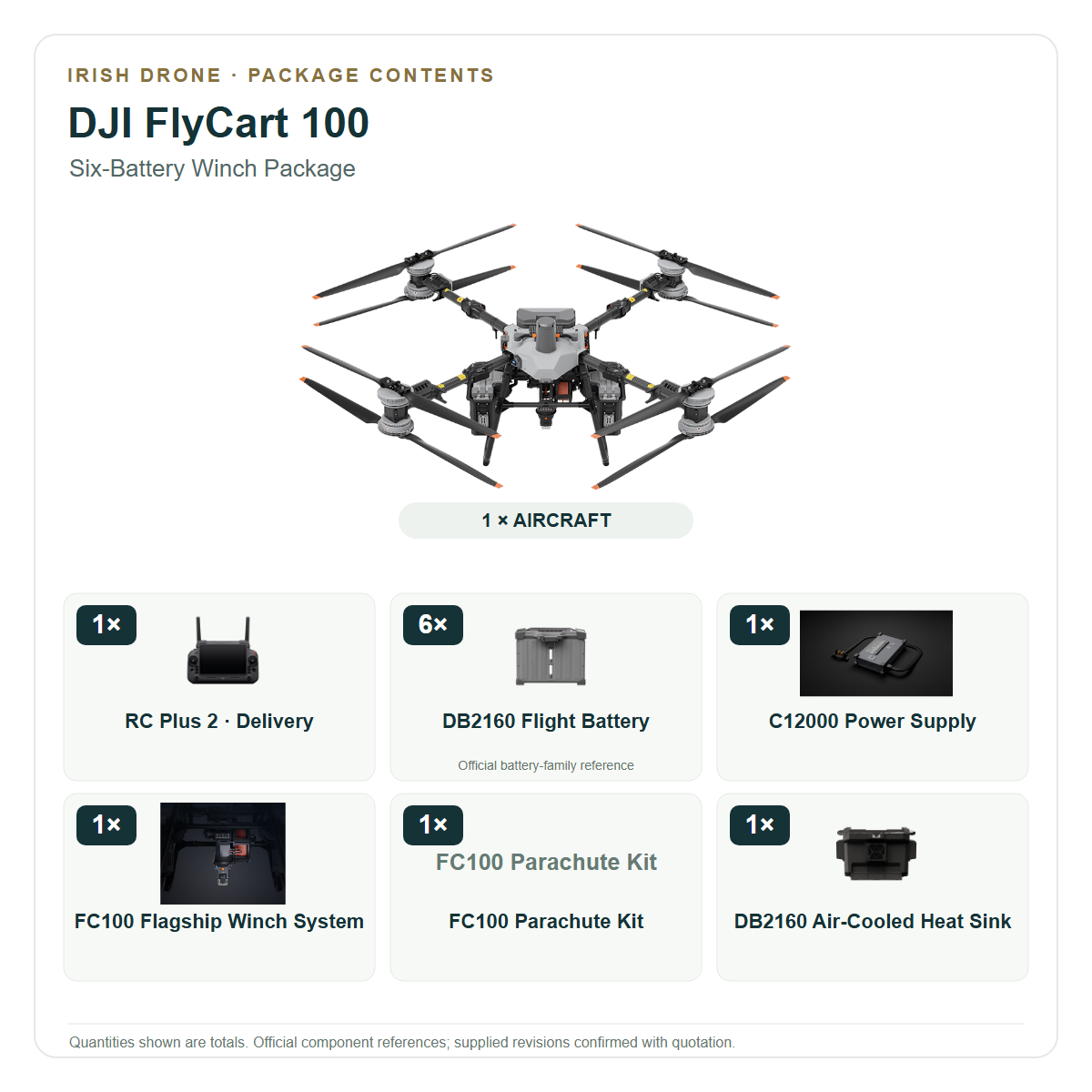
For a higher load class, the FlyCart 100 Six-Battery Winch Package provides three dual-battery sets from six individual flight batteries. Its listed charging and cooling equipment should be checked against the intended cycle; the quantity does not guarantee uninterrupted deliveries.
The FlyCart 200 Four-Battery DL200 Configuration represents a different DB2400 system and remains quote-only. The Chinese regional source is not evidence that the same configuration is currently supplied or approved for an Irish forestry operation.

Illustrative forestry exercise: protect the planting material
Illustrative example: a planting crew wants trays of plants and separate guards at an uphill work area. The initial request describes only a total weight. A ground review shows that the trays need support to avoid movement, while the guards create a bulky package with a different handling requirement.
The team prepares and weighs separate candidate assemblies, chooses a receiving area and checks how the crew will move the supplies from that point. The operator then assesses the route, weather exposure and contingency arrangement. No flight is assumed merely because the loose materials fit a headline kilogram value.
The exercise should record packaging condition, receiving clarity and the actual energy cycle if an authorised demonstration proceeds. It should not claim better plant survival, faster planting or fewer labour hours without evidence designed to measure those outcomes.
Use the feasibility record to request the right configuration
Send the supplier a consignment register, route and receiving-point sketches, photographs of the prepared assemblies and the proposed charging arrangement. Mark unknown masses, access restrictions and unresolved dangerous-goods questions openly. A useful response may ask for further information rather than select an aircraft immediately.
Check the operator’s applicable permissions and competence using the IAA’s operational-authorisation guidance. Agree a work-window briefing and a stopping method that the forestry and flight teams understand. Training and emergency preparation should address this cargo task, not only general familiarity with the aircraft.
The next step is a controlled assessment with the people who will actually load, fly and receive the supplies. A complete package should support that method. It should not be presented as a substitute for suitable packaging, an available receiver or the required operational authorisation.
Frequently asked questions
Is this a tree-monitoring workflow?
No. It addresses transporting physical forestry supplies and preparing the loading, route and receiving chain.
Can fuel or spare tool batteries be treated as ordinary cargo automatically?
No. Describe and screen the consignment for dangerous-goods requirements before the operator accepts it.
Explore the aircraft and packages
Follow the product page for the exact configuration and included equipment. Equipment selection and operating authorisation are separate parts of the project.

Talk to Irish Drone about your project
Send us the site, task, load or application material, intended operating pattern and available charging supply. We can help scope a suitable aircraft and package and discuss the preparation needed for an Irish operation.
Contact usPlan the next part of your operation
Official sources and technical guidance
These links support specific facts in the guide. Check the current revision and operating conditions when preparing a real project.
DJI’s Chinese-market T200 and FC200 references may require China Mainland to be selected in the official site’s region settings; the default region can display a not-found page. Their regional technical data does not establish an Irish configuration or operating approval.


Leave a comment