
A controller setting is an instruction. A measured, repeatable result is the evidence needed to assess the working system.
Separate three questions before testing
A spraying-system assessment should answer three different questions. Are the sensors and metering functions correctly calibrated? Does the system deliver the intended quantity consistently? Does the intended target receive an acceptable distribution under the proposed conditions? A favourable answer to one question does not settle the others. A tank that empties at the expected pace may still produce an unsuitable deposition pattern.
Begin with a written purpose and acceptance criteria agreed by the operator and the responsible application specialist. Identify the exact aircraft, spraying hardware, controller software and test arrangement. Keep this technical exercise separate from permission to apply a plant-protection product. The associated pesticide-permission guide covers the legal questions. IAA agricultural guidance remains relevant even when planning a clean-water flight: using water does not automatically make a material-release operation eligible for an otherwise inapplicable category.
Inspect and document the working configuration
Before calibration, inspect the equipment according to its current manual. Record installed atomisers, pumps, hoses, filters and relevant replacement parts. Check for contamination, damage, leaks and assembly problems before assuming that an unexpected result is a software issue. Confirm that measuring equipment and water used for the agreed test are suitable, and that the ground setup can be managed without exposing people to the active system.
The T25P and T100 documentation collections are model-specific starting points. Use the appropriate procedure and revision rather than copying menu names or test quantities from another generation. A supplier demonstration on a different aircraft does not commission the system being delivered. If an installation detail or a sensor result is unresolved, retain it as a defect to investigate; changing several settings at once makes it harder to identify the cause.
Follow the exact sensor-calibration procedure
Use the manufacturer’s prescribed process for the relevant weight, flow and pumping functions. Record the starting condition and the measured reference used, together with the result or message returned by the system. Do not substitute a guessed calibration quantity because it appeared in an online tutorial for another model. Follow safe handling and maintenance procedures throughout; a technical article is not a replacement for the operator’s training and manual.
DJI’s T-series troubleshooting guidance identifies trapped air, flow meters and weight-sensor issues among the causes requiring attention. That supports checking the measurement chain, not blindly recalibrating until a warning disappears. If calibration repeatedly fails or a physical fault is suspected, stop the test and use the appropriate service route. Keep the failed result in the commissioning record so that a later pass has a traceable explanation.
Independently check what the system delivers
After the model-appropriate calibration, agree a safe means of comparing commanded delivery with an independent measurement. Define the interval or test segment, the reference measurement and the allowable difference before starting. Use the actual intended configuration and record relevant settings. Repeat the assessment sufficiently to identify inconsistency rather than accepting a single favourable reading.
Teagasc’s general sprayer guidance notes the importance of checking speed and flow information on which application control depends. Applying that principle to an Agras commissioning exercise requires a suitable drone-specific method, not a copied tractor calibration setting. Reconcile the displayed quantity, independently measured use and material remaining. Investigate discrepancies before assessing field deposition. Do not adjust the intended agronomic instruction simply to make a displayed number agree with a poorly understood physical result.
Use a planned deposition assessment
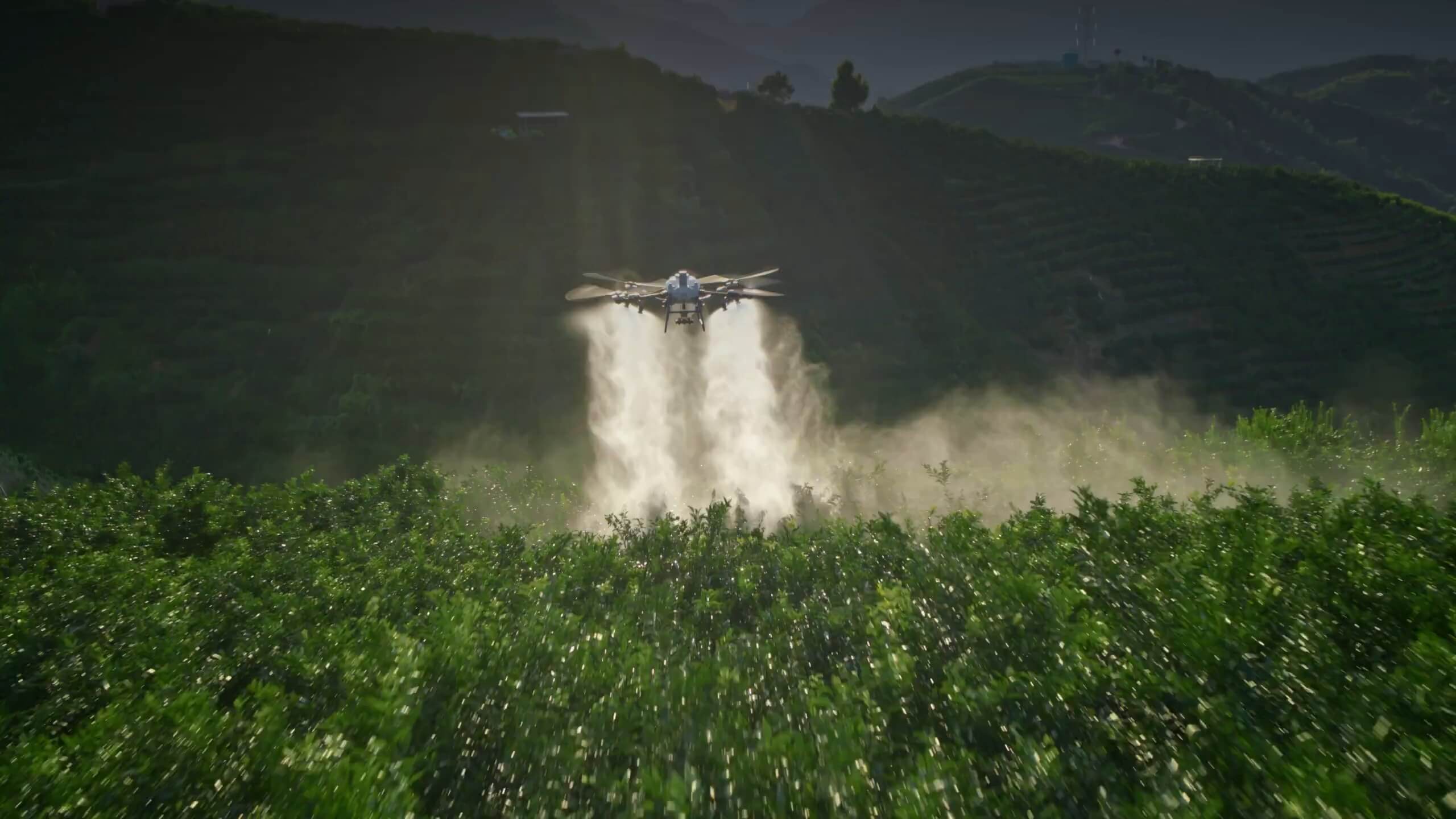
Design the deposition check around the intended target and the question being asked. A competent specialist may choose suitable collectors or water-sensitive cards, positioned to examine distribution across the proposed working pattern and relevant target surfaces. Define where each sample belongs and how it will be assessed. Use a safe, authorised test arrangement and retain the weather and configuration information needed to interpret the observations.
Cards are useful evidence of where droplets arrive; they do not, by themselves, establish biological efficacy, product dose or compliance with a label. Avoid inventing a universal coverage percentage or declaring success from the most attractive card. Inspect variation, poorly reached positions and boundary behaviour. The suggested assessment framework is an original commissioning recommendation, not a claim that a particular collector method, flight setting or crop treatment has been validated by Irish Drone or Teagasc for these aircraft.
A test sheet should identify each sample by block, position, orientation and collection time. Keep rejected or damaged samples and explain their status. This prevents a reviewer from comparing samples gathered at different positions or treating a missing card as evidence of satisfactory coverage.

Illustrative example: a change in installed equipment
Imagine an operator receiving an aircraft with a different spraying configuration from the one used in an earlier demonstration. This is an illustrative acceptance scenario. The team first identifies the actual installed parts and the applicable limits. It then repeats the required calibration and an agreed clean-water verification rather than importing an old configuration file and assuming that the earlier result still applies.
The comparison record keeps sensor results, measured delivery and deposition observations in separate columns. If the displayed delivery is consistent but the distribution is unsuitable at one test position, that is investigated as a different problem from an inaccurate meter. If several variables are changed together, the trial cannot explain which change mattered. A controlled sequence makes the next decision clearer: accept the demonstrated setup, revise and retest one condition, or hold commissioning pending a service or technical review.
Keep the material, environment and permissions in view
Any subsequent treatment requires its own check of the precise material, intended use, application conditions and permissions. DAFM’s professional-user information describes obligations that are separate from aircraft capability. A clean-water assessment cannot establish that a plant-protection product may legally be applied by drone, and aviation authorisation does not automatically grant agricultural permission. Refer the legal question to the separate pesticide-permission guidance and the relevant authorities.
Keep environmental and contamination controls in the test plan as well. Identify how water and any later material are handled, how equipment is cleaned and how the next job is protected from carry-over. A maximum aircraft wind figure is not a spraying recommendation. Do not extrapolate a successful assessment under one set of conditions to a different crop, liquid, configuration or weather pattern without an appropriate review.
Commission a repeatable method, with records
The handover should contain the exact equipment list, manual revisions, calibration results, independent measurements, sample locations and interpretation of the deposition observations. Retain unresolved defects and the limits within which the result was accepted. Agree when a changed material, component or relevant setting requires reassessment. Give the receiving operator enough information to repeat the agreed checks rather than only a screenshot showing a successful calibration message.
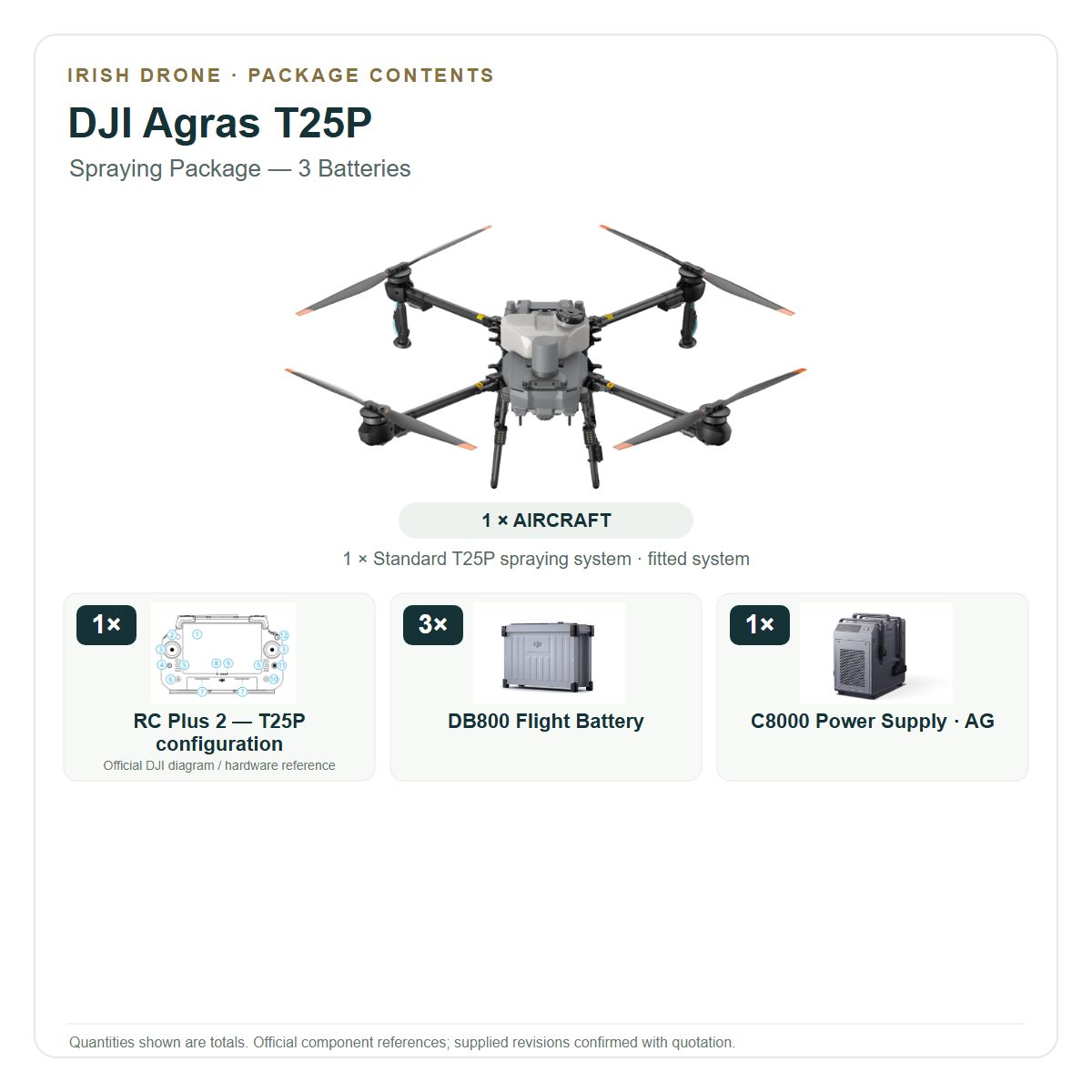
Use the T25P spraying package or T55 three-battery package as the start of a configuration discussion with Irish Drone. Ask what commissioning evidence will be supplied and what remains the operator’s or application specialist’s responsibility. A useful acceptance test demonstrates a sound process and identifies limitations. It does not promise a particular crop result, reduce a pesticide label to an aircraft setting or replace the permissions required for the eventual work.
Frequently asked questions
Does successful calibration prove a treatment is effective?
No. Sensor calibration, delivered quantity, deposition and biological outcome are separate questions.
Can clean-water trials bypass operating permission requirements?
No. Use an appropriate lawful test arrangement; water release is not a general exemption from the applicable aviation rules.
Explore the aircraft and packages
Follow the product page for the exact configuration and included equipment. Equipment selection and operating authorisation are separate parts of the project.

Talk to Irish Drone about your project
Send us the site, task, load or application material, intended operating pattern and available charging supply. We can help scope a suitable aircraft and package and discuss the preparation needed for an Irish operation.
Contact usPlan the next part of your operation
Official sources and technical guidance
These links support specific facts in the guide. Check the current revision and operating conditions when preparing a real project.


Leave a comment