

An EU registration or foreign operational authorisation is the starting evidence, not a blanket permission for any Irish site. Apply the appropriate host-state process.

Separate the state of registration from the state of operation
An agricultural contractor or cargo operator registered in another EASA state may want to undertake work in Ireland using an existing operating system. The first question is which legal basis supports the intended flight. The Article 13 rules distinguish operational-authorisation, standard-scenario declaration and appropriately privileged LUC cases. Do not group them into a single form called a European drone licence.
The relevant home-state authorisation must actually cover the proposed operation and configuration. A company authorised for one form of camera work cannot assume the document also permits a heavier aircraft, suspended loads, spraying or a different visibility basis. Check the aircraft list, operating limitations, procedures and privileges before starting the Irish submission. Similarly, an Irish customer hiring an overseas crew should request the relevant evidence rather than treating nationality or an EU training certificate as proof that the commercial task can begin. The practical objective is a traceable route from the existing legal basis to the actual Irish project.

Prepare the Irish location and evidence pack
IAA UAM 009, revised in June 2025, describes the Irish application materials. For an authorisation-based proposal, these include the relevant form and authorisation, location information in a KML file, updated operational material and compliance evidence as applicable, and environmental screening where required by the location. Read the current document for the exact submission requirements; do not rely on an old dealer checklist or a form saved from a previous project.
The KML and accompanying map should describe the complete relevant footprint, not only the take-off point. Use consistent identifiers, coordinates, height references and dates. The IAA volume and buffer guidance helps define the spatial information. If a generic authorisation is relied on, explain the site-selection and acceptance process and show that this location meets it. An attractive satellite view does not establish population exposure or ground control on the day, so support the mapping with the actual survey and operational arrangements.
Local aviation confirmation does not replace task permissions
Use the current IAA geographical-zone information and obtain any required access or coordination for the actual locations. Also review insurance territory and activity, site access, privacy and environmental conditions. IAA UAM 009 expressly includes local matters in the cross-border process. A foreign policy certificate or home-state manual may need supporting confirmation to show how the Irish task is covered and managed.
For agricultural pesticide spraying, resolve the separate Irish DAFM activity, product, equipment and user requirements. Permission or a demonstration in another European country does not establish that the proposed Irish use is permitted. For cargo, describe the actual goods and their classification rather than importing a generic approval for deliveries. A useful permission register separates each workstream and assigns a responsible person. The crew should see clearly which items are complete, which carry conditions and which remain unresolved before it is asked to mobilise.

Northern Ireland and the UK use a separate framework
A route or contract involving Northern Ireland must not be treated as simply another EU Article 13 site. UK aviation requirements are administered through the UK Civil Aviation Authority. The CAA guidance for work operations explains its Specific-category operational-authorisation requirements. Similar terminology does not make an IAA authorisation or an EASA training record a blanket UK permission.
For an all-island business plan, create a separate regulatory workstream for each jurisdiction and check any proposal that crosses the border in flight. Do not infer the international-flight conditions from a routine road movement of equipment between jobs. Insurance, radio equipment, goods transport and other arrangements can also require review for the actual project. This article does not attempt to complete a UK application. Its practical message is to identify the jurisdiction at the proposal stage so a promised delivery date is not built on an incorrect assumption about recognition.
Illustrative project sequence and the equipment discussion
Imagine an EU contractor considering a FlyCart materials-lifting task at an Irish renewable-energy site. This is a planning example. First compare the proposed aircraft, loads and visibility basis with the existing home authorisation. Next survey the Irish site, map the relevant footprint and update local mitigations. Identify the correct Irish submission route, resolve any authority questions and obtain the required outcome before operating. Complete site, insurance and task-permission checks in parallel rather than assuming the aviation confirmation answers them all.
Keep the final documents available to the crew and ensure they match the configuration actually brought to the site. A package substitution, changed winch arrangement or new receiving location should trigger a scope check. Irish Drone can help with the equipment information and preparation of an Irish operating proposal, including SORA support where appropriate. Bring the existing authorisation, intended site, load schedule and relevant aircraft documents. Those inputs make it possible to discuss a workable package and evidence plan without promising recognition or an authority decision in advance.
Record the final confirmation reference and its conditions in the job pack, together with the underlying authorisation. A site briefing should identify both documents and any local limits so that the crew does not accidentally work from a superseded home-country procedure.
Frequently asked questions
Can an EU operational authorisation be used immediately at any Irish site?
Do not assume that. For authorisation-based Specific operations, follow Article13 and the Irish local-condition confirmation process before the intended operation.
Is Northern Ireland covered by the same Article13 process?
No. Check the separate UK CAA framework for the actual UK operation.
Does an STS declaration follow exactly the same submission route?
No. The declaration and confirmation documents have a distinct route; the whole operation and aircraft must still satisfy the applicable STS.
Explore the aircraft and packages
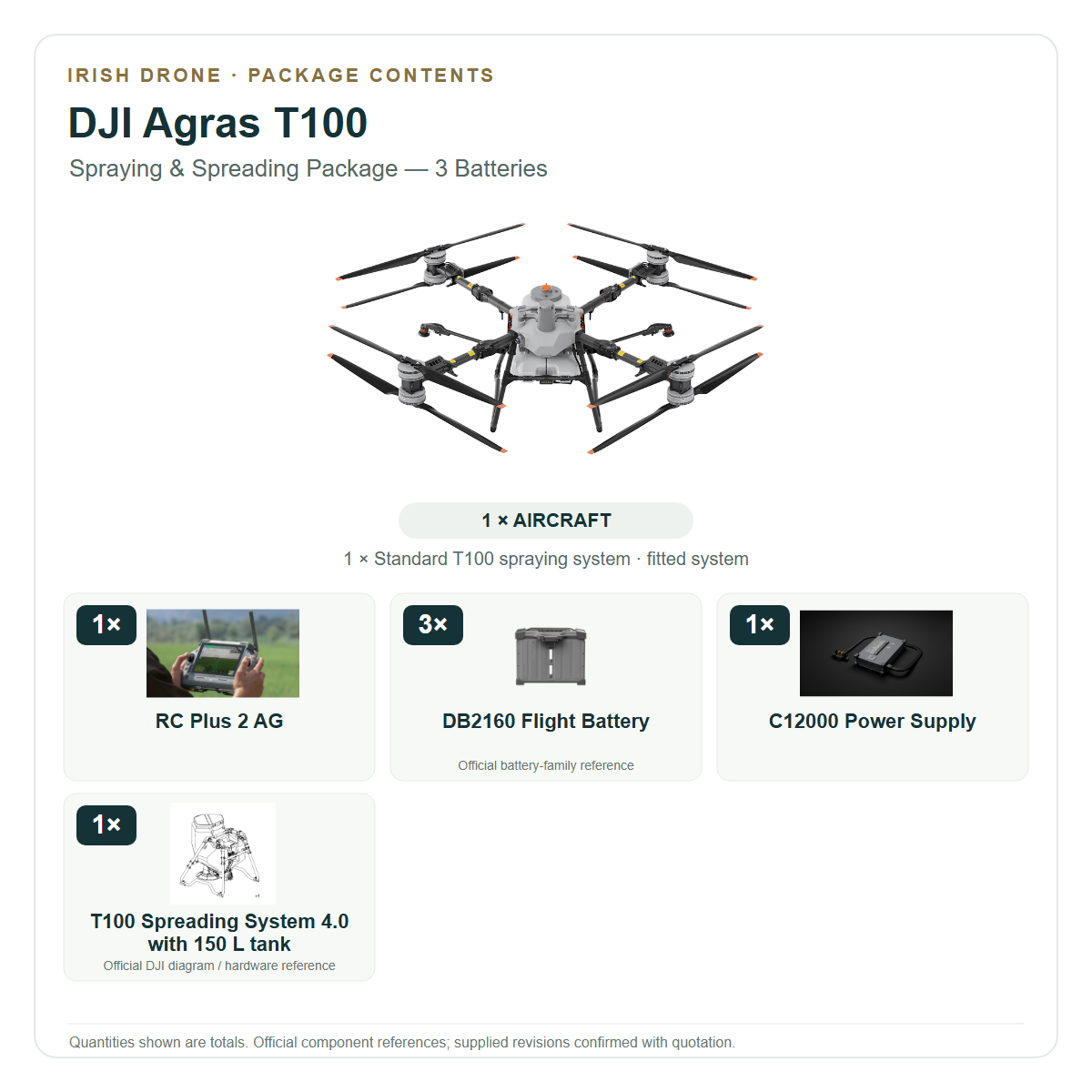
Follow the product page for the exact configuration and included equipment. Equipment selection and operating authorisation are separate parts of the project.


Talk to Irish Drone about your project
Send us the site, task, load or application material, intended operating pattern and available charging supply. We can help scope a suitable aircraft and package and discuss the preparation needed for an Irish operation.
Contact usPlan the next part of your operation


Official sources and technical guidance
These links support specific facts in the guide. Check the current revision and operating conditions when preparing a real project.




Leave a comment