

From the first operating brief to the IAA application: a practical SORA guide for Irish agricultural, lifting and cargo projects.

Can an Agras or FlyCart fly legally in Ireland?
Yes, a viable operation can have a route to authorisation, but buying the aircraft is only one part of the project. Start with the exact job, operating area, aircraft configuration and people exposed to the flight. Heavy lifting, agricultural application and many beyond-visual-line-of-sight operations need an assessment for the Specific category. An aircraft advertised with a large payload or long transmission range does not bring permission to use that capability in Irish airspace.
SORA means Specific Operations Risk Assessment. It is the structured assessment that supports an application; the IAA issues the operational authorisation. The assessment belongs to an operation with defined limitations. It is not a general aircraft certificate, a pilot licence or a permit to carry out every job in the country.
This guide follows a new operator from a first project brief through the evidence portfolio, IAA submission and operational release. The examples are planning examples, not approved flight plans. Use the separate supporting guides for pilot competence, pesticide rules, insurance and cross-border work.
Start with the IAA operational authorisation routes and check whether a standard scenario or predefined assessment genuinely fits before selecting the bespoke SORA route.
1. Choose the regulatory route before choosing the largest aircraft
Write a one-page description of what will leave the ground. Record the aircraft, battery arrangement, equipment, load, loading method, flight path, height, intended weather envelope and whether anything is released. Do not classify the job from the empty aircraft mass. Include the actual loaded configuration and the manufacturer’s maximum limits.
The Open category has several conditions, including a maximum take-off mass below 25 kg, visual-line-of-sight and height requirements, and restrictions on dropping material and carrying dangerous goods. Meeting one condition does not cancel the others. A low flight over privately owned farmland is not automatically an Open-category flight. Most of the large Agras and FlyCart configurations discussed in this series need a Specific-category route; a higher-risk proposal can require a different route, including Certified-category requirements.
| Potential route | Question to resolve | Evidence to retain |
|---|---|---|
| EU standard scenario, STS | Does every condition fit, including the required aircraft class and operational limits? | Scenario comparison and declaration requirements. |
| Predefined risk assessment, PDRA | Does the actual operation fit the published assessment without unsupported substitutions? | Completed compliance checklist and supporting documents for an authorisation application. |
| Bespoke SORA | What risks and assurance requirements arise from this particular operation? | Assessment, operations manual and a traceable safety portfolio. |
| Existing LUC privileges | Does the operator already hold privileges that cover this operation? | Actual certificate and privilege scope; buying a drone does not create them. |
For a first proposal, a shorter route with controllable ground access may be more workable than a long route across several landholdings. That is a project-design recommendation, not a rule that rural operations always qualify for a low risk level.
See IAA operational authorisation routes for the available routes; the current EASA June 2026 Easy Access Rules — SORA 2.5 main body explains the assessment applicability and screening.
2. Which SORA version does the IAA accept in November 2026?
For a new project, establish the methodology at the start and use matching forms and evidence throughout. The IAA’s UAM 012, Issue 6, dated 15 May 2026, accepts SORA 2.5 applications and also retains a SORA 2.0 form. Its published transition wording expects SORA 2.0 to remain in force until the end of 2026, with withdrawal expected through an AMC change. An expected transition is not proof that the change has already occurred.
This article explains the SORA 2.5 workflow. It has ten steps and 17 operational safety objectives. In this version, containment is Step 8, safety objectives are Step 9 and the comprehensive safety portfolio is Step 10. Older material may show 24 objectives and a different sequence. Do not combine an old spreadsheet, a new form and an unlabelled risk table.
Create a methodology register on the first page of the assessment: version, date, source edition, form revision and any written agreement with the authority. If an assessment already exists under 2.0, ask how its renewal or change should be handled rather than silently translating its numbers into a 2.5 table. Recheck the published transition at submission, particularly for applications extending into 2027.
Version evidence: IAA UAM 012 — application guidance, Issue 6, 15 May 2026 and EASA June 2026 Easy Access Rules — SORA 2.5 main body.
3. Establish the operator, aircraft records and competent team
Name the legal person or business taking responsibility for the operation. Operator registration and remote-pilot competence are separate records. Keep the registration details current, identify who controls the operating procedures, and identify the person authorised to release the aircraft into service.
Build a configuration sheet for each intended aircraft. Include its exact manufacturer model designation, serial number, applicable flight manual, battery type and count, remote controller, lifting or application equipment, firmware baseline, remote-identification provision and any safety modifications. A catalogue name such as T200 or FlyCart 200 is not evidence that a particular imported unit has all the conformity and design documentation needed for an Irish application. Resolve that documentation before making a delivery-dependent operating promise.
Write a task-based competence matrix. The remote pilot needs to manage the aircraft, payload and abnormal procedures. A loading technician needs to understand attachment, mass and exclusion procedures. An observer needs a defined role and communications method. Identify maintenance responsibilities and absence cover. An A2 certificate or a manufacturer familiarisation session should not be sold as blanket permission to operate a heavy drone.
For each role, record prerequisites, initial training, assessed practical tasks, supervision, recurrent practice and evidence of currency. A useful commissioning exercise tests who can stop the job, how a load is rejected and how the team identifies a battery that must not return to service.
Check the current IAA drone operator registration, IAA remote pilot competency and IAA direct remote identification requirements against the configuration and authorisation sought.

4. Step 1: describe one operation that the team can actually deliver
The concept of operations, often called CONOPS, connects the commercial job to the safety case. Make it concrete enough that a reviewer can follow a flight without having visited the site. Describe the start of the working day, aircraft assembly, checks, loading or filling, departure, work segment, arrival, release or unloading, return and shutdown.
For agricultural lifting, state whether the task is moving sealed supplies to a hillside, transporting harvested produce or another defined material. For crop application, identify the substance and release method; seed, fertiliser and plant protection products are not interchangeable descriptions. For construction logistics, identify the cargo dimensions and attachment system as well as mass. A long flexible item can behave differently from a compact load of the same weight.
Define normal, contingency and emergency procedures separately. A brief pause because a gate opens should lead to an established action, not an improvised debate. Describe how flight termination or a forced landing is commanded, who is informed and how the load affects the response.
Useful first deliverable: a two-page narrative, a route map, a configuration sheet and a table of operational limits. Check these four items for contradictions before expanding the manual. If the narrative says VLOS but the route disappears behind a ridge, the concept needs redesign or a properly supported BVLOS proposal.
EASA SORA 2.5 Annex A — operation information and compliance matrix provides the official framework for presenting operation information; IAA UAM 012A — SORA 2.5 application form identifies the fields the authority will ask the applicant to connect.
5. Draw the flight geography, contingency volume and ground risk buffer
A line on a satellite image is not the complete operational area. Show the planned flight geography, the additional space for contingency action and the ground risk buffer. Add heights, reference levels and map scale. Mark the adjacent areas that could be reached after a loss of control. Keep the map revision linked to the manual and risk assessment.
For a lifting job, account for the suspended system and load as well as the aircraft. A lower operating height can reduce some exposures but can also constrain obstacle clearance, cable handling and recovery options. Do not select a generic buffer copied from a small camera-drone job. Use the aircraft behaviour, speed, navigation uncertainty, response times and the accepted assessment method to justify the geometry.
Walk the site. Record homes, tracks, public roads, access gates, overhead lines, livestock areas, footpaths, nearby workplaces and potential gathering places. Establish how an unexpected person is detected before entering an exposed area. A landowner agreeing to take-off is not evidence that all adjoining land is under operational control.
Practical output: one overview map, one detailed loading-area plan and an access-control schedule. Mark who closes each access point, who checks it, when the check expires and the action if control is lost. Keep any conceptual diagram clearly labelled; a diagram in an article cannot supply a numeric flight boundary.
Use IAA UAM 008 — flight geography, contingency volume and ground risk buffer alongside the applicable SORA edition. It explains the IAA approach to defining and presenting these areas.
6. Steps 2–3: establish ground exposure and justify each mitigation
In SORA 2.5, intrinsic ground risk considers aircraft characteristics and the population exposure in the operational area and buffer. Complete the applicable official assessment using documented dimensions, speed and population assumptions. Do not assign a risk class simply because the site is described as a farm, forest or wind farm.
Ask what happens on the actual day. A normally quiet track may serve walkers at weekends. Contractors may arrive at a receiving point. A farmyard may contain workers who were never briefed as part of the drone operation. Separate the loading crew from uninvolved people and record how that distinction is maintained. Consent on a form alone does not give a person the knowledge or ability to follow the operation’s precautions.
Keep a mitigation register with five fields: the hazard addressed, the proposed measure, the required robustness, evidence that it works and the person responsible for maintaining it. A parachute, operational restriction or access-control arrangement only earns the credit justified by the assessment. Advertising language such as ‘built-in safety system’ is not a substitute for configuration-specific evidence.
If the risk is too high, change the job before purchasing more equipment. Moving a departure point, excluding a public path from the route or splitting a task into separate operating areas may be a more realistic design change than relying on evidence the manufacturer cannot provide. That is an engineering decision to assess, not a guaranteed reduction in the final risk class.
The official ground-risk and mitigation framework is in EASA June 2026 Easy Access Rules — SORA 2.5 main body and its linked Annex B. Retain the original calculations and evidence, not just the final score.
7. Steps 4–6: assess airspace and the ability to respond to other aircraft
Rural land can still have helicopters, general aviation, emergency services or low-level activity. Review the airspace along the full route and at the proposed heights, not only above the launch point. Use current geographical-zone information and the applicable aeronautical information and notices. Identify any permissions or coordination that the location requires.
The assessment distinguishes initial air risk, strategic measures and the tactical response to remaining encounter risk. Keep those arguments separate. Choosing a quieter operating window is different from detecting an approaching aircraft and taking a timely avoidance action. An ADS-B display or an aircraft’s advertised transmission range does not demonstrate that every relevant aircraft will be detected.
For VLOS, assess the actual view with terrain, background, weather and task workload. For BVLOS, describe the proposed detect-and-avoid arrangements and the evidence needed for the applicable requirements. Do not turn VLOS into BVLOS informally by placing untrained people along a route. Observers and any handovers must be part of the accepted concept and communications procedures.
Write the stop and resume decisions. Who calls an airspace conflict? Which action is appropriate with a suspended load? Where can the aircraft go without creating a worse ground hazard? Test the communication chain during an appropriate ground exercise before treating it as an effective barrier.
Consult the IAA UAS geographical zones and the air-risk sections and annexes of EASA June 2026 Easy Access Rules — SORA 2.5 main body. A drone operational authorisation does not remove a separate geographical-zone or airspace condition.
8. Step 7: use the SAIL result to identify the evidence burden
The Specific Assurance and Integrity Level, SAIL, connects the residual risk assessment to the required assurance. It is an output of the operation’s ground and air risk, not a value chosen from a product brochure. Two jobs using the same aircraft can lead to different evidence requirements.
Use the result as a commercial checkpoint. Can the operator implement the procedures? Can the aircraft designer supply the needed design evidence? Are the proposed safety components documented for the exact aircraft mass and installation? Is the required external assessment available? Resolve these questions before committing to a demanding route and a fixed service start date.
A practical decision meeting should record three alternatives: proceed with the present concept, reduce the exposure by changing the operating design, or stop because the evidence path is not presently achievable. This prevents a team from treating SORA as a form-filling exercise after all equipment and contracts have been purchased.
Keep claims about design verification precise. Lower-risk routes do not mean that technical evidence is unnecessary; higher requirements may involve EASA design verification or certification. The exact route must follow the relevant safety objectives, containment requirements and authority assessment. A dealer cannot replace missing designer evidence with a sales statement.
See the SAIL and design-assurance provisions of EASA June 2026 Easy Access Rules — SORA 2.5 main body and the criteria in EASA SORA 2.5 Annex E — integrity, assurance and safety objectives.
9. Step 8: prove containment rather than assuming return-to-home is enough
Containment concerns what can happen outside the intended operational area after a loss of control. Examine the adjacent ground and airspace as a separate part of the assessment. A quiet work area next to a busy road or an outdoor gathering is not equivalent to an isolated site with the same planned flight line.
Compare normal flight-control functions with the containment measures that the assessment actually requires. Return-to-home, obstacle sensing, geofencing and an emergency stop each have particular behaviours and limitations. Do not describe them collectively as an independent flight termination system. Identify dependencies on the same power supply, navigation source, command link or software.
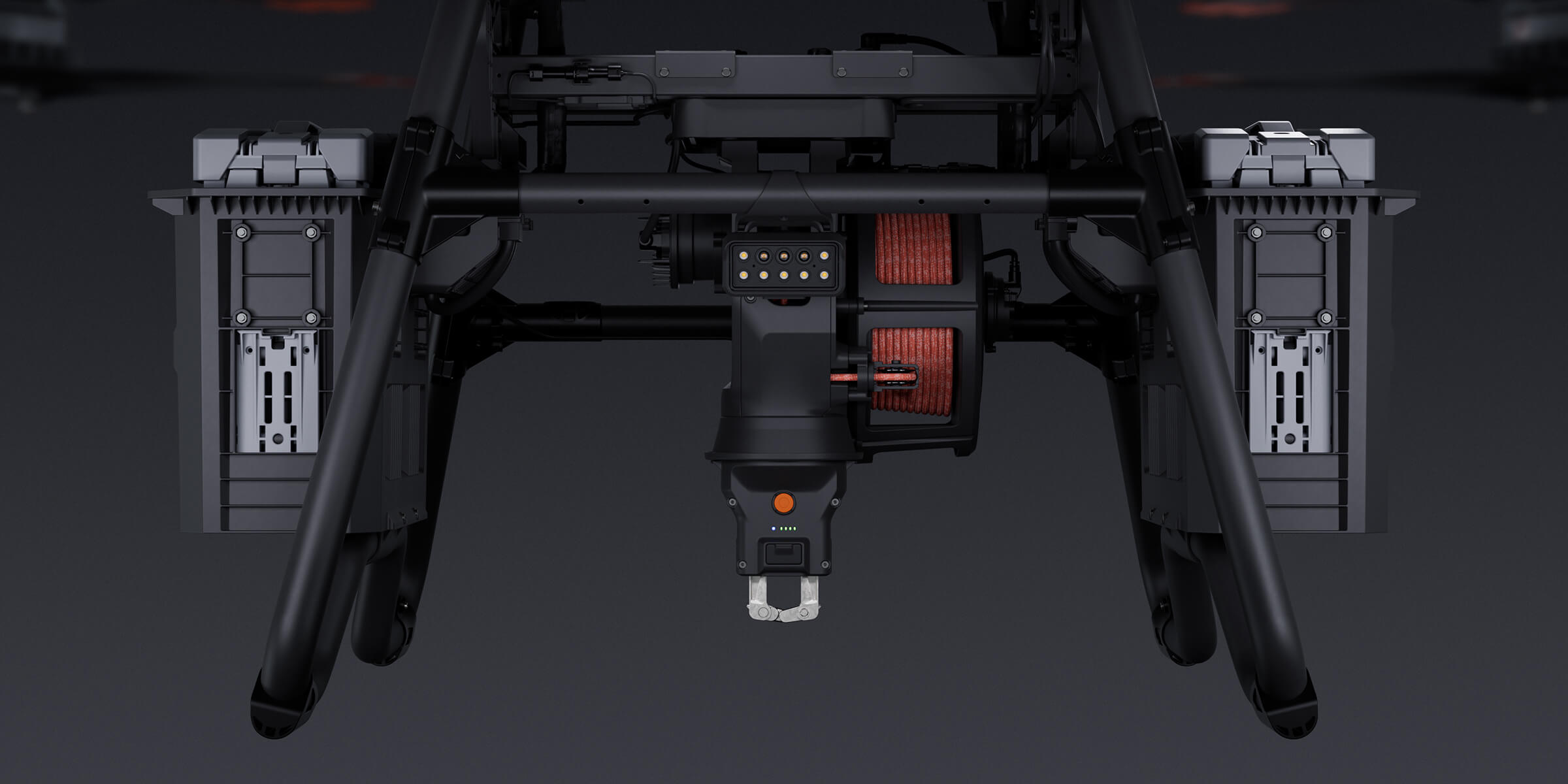
If a termination system or other modification is proposed, obtain documentation for the exact integration. Check maximum take-off mass, aircraft variants, installation instructions, test evidence, maintenance, activation and limitations. A component advertised as compatible is not, by itself, proof of the required robustness for the entire installation.
For cargo work, include the load and release behaviour in the failure analysis. An aircraft contained inside an area does not necessarily mean a detached load remains there. For application work, consider the release state following a fault. Keep any additional containment or impact-mitigation credit tied to evidence rather than assumed from the presence of a parachute or cable release.
IAA UAM 013 — enhanced containment and flight termination is relevant IAA guidance. Apply it with the chosen SORA edition and current requirements; do not copy a historical compatibility list as proof for a new model.
10. Step 9: turn the safety objectives into an evidence matrix
Build a compliance matrix with one row for every applicable objective. Keep columns for the requirement, required robustness, claim, evidence reference, document revision, responsible person and open issue. A green tick without an evidence reference tells the reviewer little.
The strongest rows explain both integrity and assurance. Integrity describes how effective or reliable a measure must be; assurance concerns confidence that this has been achieved. For example, saying that the crew is trained is a claim. The syllabus, practical assessment, training records and recurrent checks supply the evidence appropriate to the requirement. The precise criteria come from the relevant annex, not this illustration.
Include the aircraft designer, maintenance arrangements, external services, human factors, operating procedures and environmental limits where applicable. If a mission relies on RTK corrections, communications coverage, a generator or a loading contractor, describe what happens when that supporting service deteriorates or disappears.
Make the matrix usable after authorisation. An operator should be able to trace a changed charger, updated procedure or revised training syllabus to the assumptions it affects. Keep unresolved rows visible. Marking them complete because a document is being requested makes the portfolio appear more mature than it is.
The current EASA SORA 2.5 Annex E — integrity, assurance and safety objectives provides the detailed criteria; EASA SORA 2.5 Annex A — operation information and compliance matrix includes guidance on presenting the compliance case.
11. Step 10: assemble a comprehensive safety portfolio that can be reviewed
Create a short document index before assembling attachments. It should allow a reviewer to start at a claim and locate the supporting evidence quickly. Use stable filenames, revision numbers and page or section references. Avoid sending several contradictory versions of the same manual.
| Portfolio item | What a useful version contains |
|---|---|
| Application and operation summary | Matching operator, aircraft, locations, limits and methodology. |
| SORA assessment and compliance matrix | Traceable assumptions, calculations, mitigation claims and evidence references. |
| Operations manual | Roles, normal/contingency/emergency procedures, limitations and site assessment. |
| Technical evidence | Applicable manuals, configuration, design declarations or assessments, maintenance and safety-system evidence. |
| People and site evidence | Competence records, crew briefing method, maps, access control and coordination. |
| Supporting permissions and insurance | Certificates and approvals for the actual activities, with relevant conditions. |
Run a contradiction check. Do all documents use the same mass, aircraft variant, speed, operating height, crew size and battery configuration? Does the emergency response plan use the same site names and access routes as the map? Can the promised containment measure be found in the actual configuration?
An internal desktop exercise is useful evidence preparation: walk through one normal sortie and two abnormal situations, recording missing decisions. It is not permission to test an unauthorised heavy-drone flight. Any flying used to obtain evidence needs its own appropriate legal basis.
Use the comprehensive-portfolio framework in EASA June 2026 Easy Access Rules — SORA 2.5 main body and the presentation guidance in EASA SORA 2.5 Annex A — operation information and compliance matrix.
12. Submit to the IAA: forms, email, fees and review
Download the current application and compare every field with the document index. Under UAM 012, the submission goes to drones@iaa.ie; MySRS is used for the invoice. The current guidance lists the operations manual, emergency response plan if separate, insurance certificate and supporting evidence, with the SORA documents and referenced material for a SORA application. If the files are very large, agree a secure transfer method with the IAA.
Budget separately for the authority’s charges, specialist technical evidence, training, insurance and the operator’s preparation time. The 2026 Schedule 6 lists €3,595 for an initial SORA application, renewal or major amendment at SAIL I–II, with an additional €3,595 for SAIL III and higher. It lists €1,541 for additional dangerous-goods approval and €1,797 for a PDRA initial application, renewal or amendment. These are authority schedule entries, not a quotation for Irish Drone’s services or the total project cost. The schedule states that its charges are VAT exempt; do not add 23% VAT to those IAA figures.
UAM 012 says to allow up to 30 days from submission to commencement of review. That is not a 30-day approval promise. The guidance uses a Common Response Document to exchange remarks. Assign someone to control responses, revised files and evidence references, rather than answering technical comments in scattered emails.
Before submission, confirm the methodology, scope and any uncertainty about design evidence with the authority. A narrower, well-supported application is usually a more controllable project than a broad proposal with unresolved assumptions; this is preparation advice, not a guaranteed faster regulatory outcome.
Check IAA UAM 012 — application guidance, Issue 6, 15 May 2026, IAA UAM 012A — SORA 2.5 application form and the current IAA 2026 Schedule 6 — UAS fees immediately before applying.
13. Two worked project briefs: farm spreading and remote-site lifting
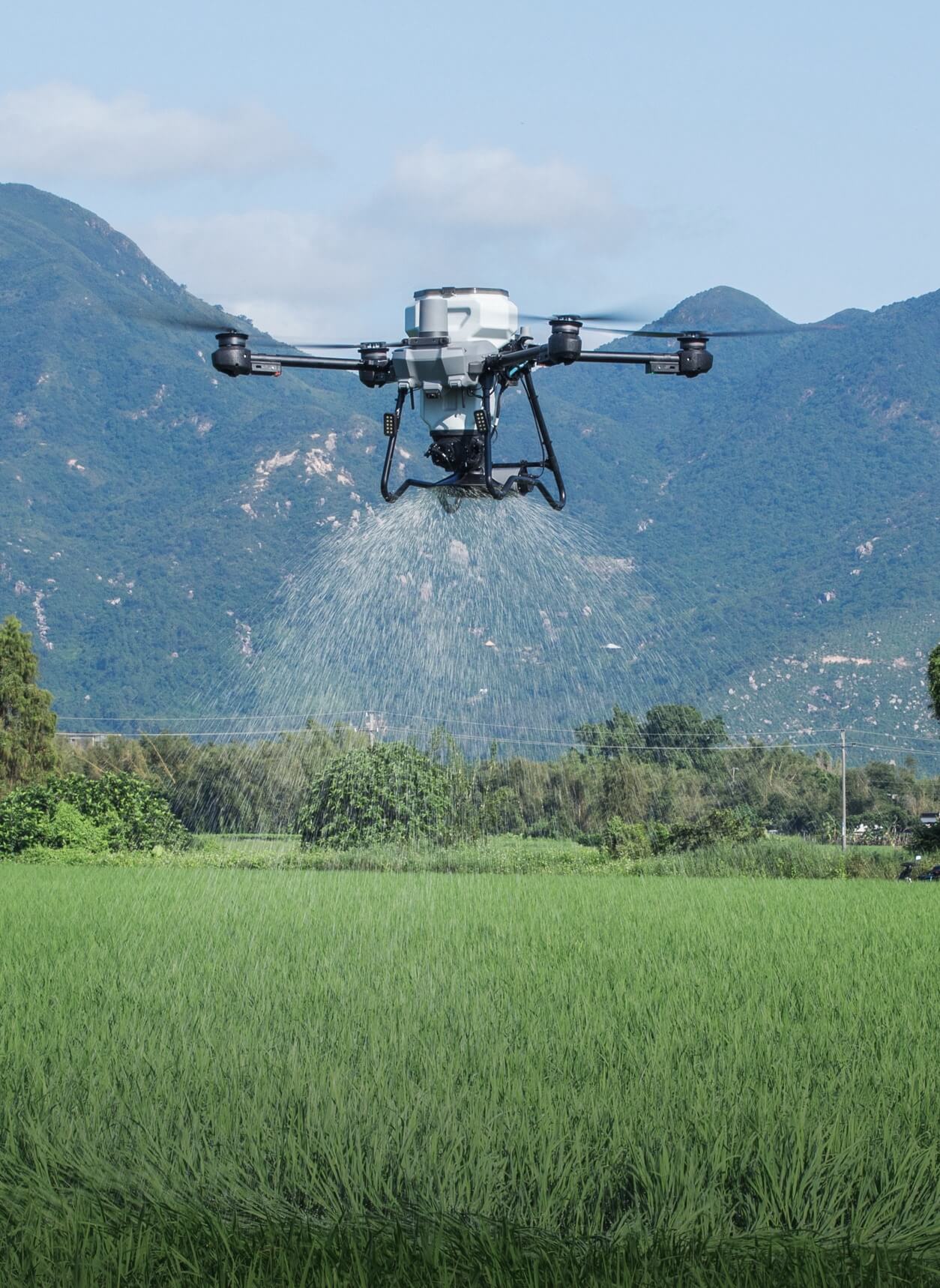
Illustrative farm brief: a contractor proposes spreading seed on one defined parcel. The initial file should identify the seed, application system, aircraft configuration, flight lines, boundary treatment, gates, neighbouring homes, workers, weather limits and the method of measuring delivered mass. A seed-spreading concept does not establish permission to spray a plant protection product later. Changing material and equipment can change the operation and require reassessment.
The package choice follows the brief. A compact parcel may favour easier transport and turnaround rather than the largest tank or payload. A contractor covering separated sites needs to evaluate the time spent moving, setting up and briefing each landowner. Treat advertised peak work rates as manufacturer test figures, not as a commitment for Irish fields with different boundaries and conditions.
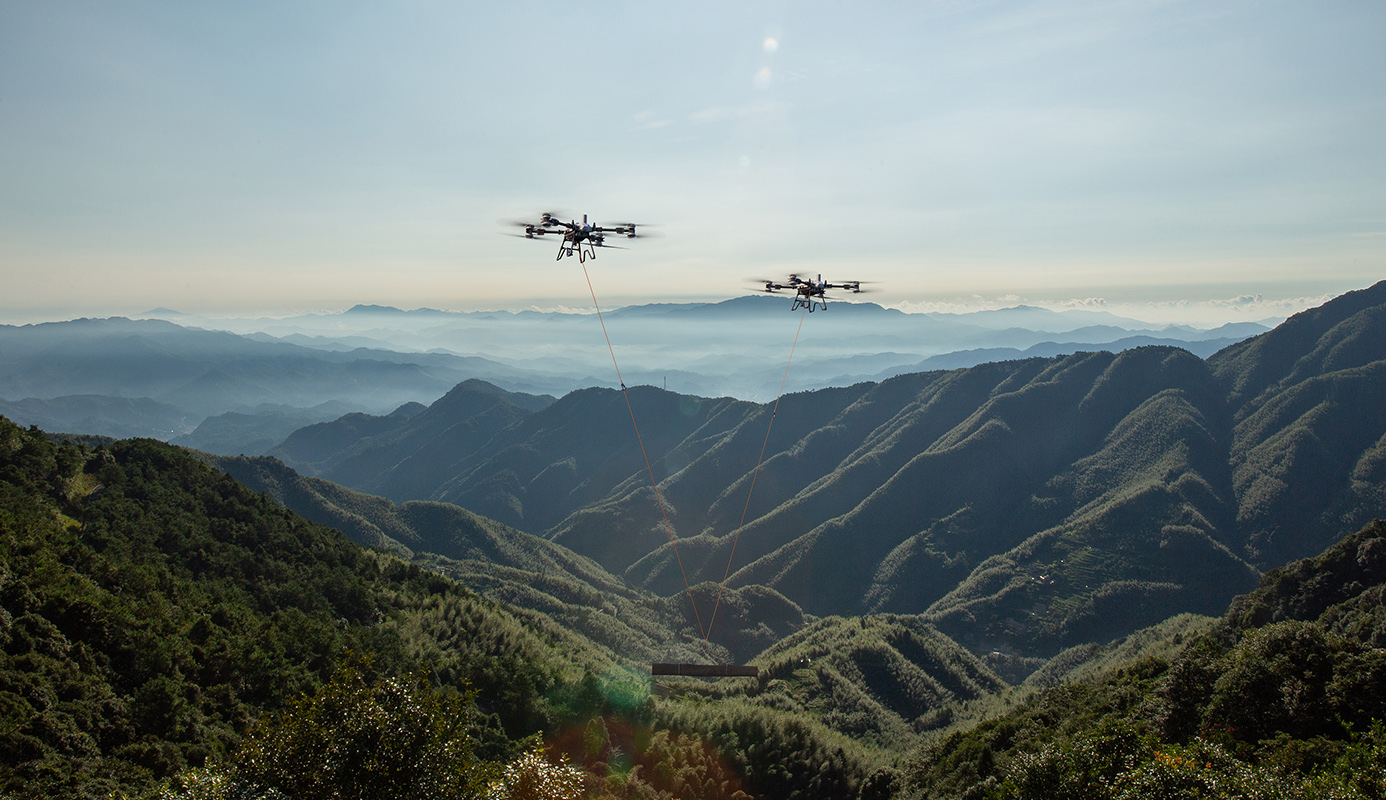
Illustrative lifting brief: a utilities team proposes moving compact, non-dangerous spares from a controlled loading area to a controlled receiving point. Establish the load envelope, attachment arrangement, route visibility, cable or winch operation, mass including rigging, access control and emergency response. A route crossing a public road needs explicit treatment; it is not solved by lifting quickly.
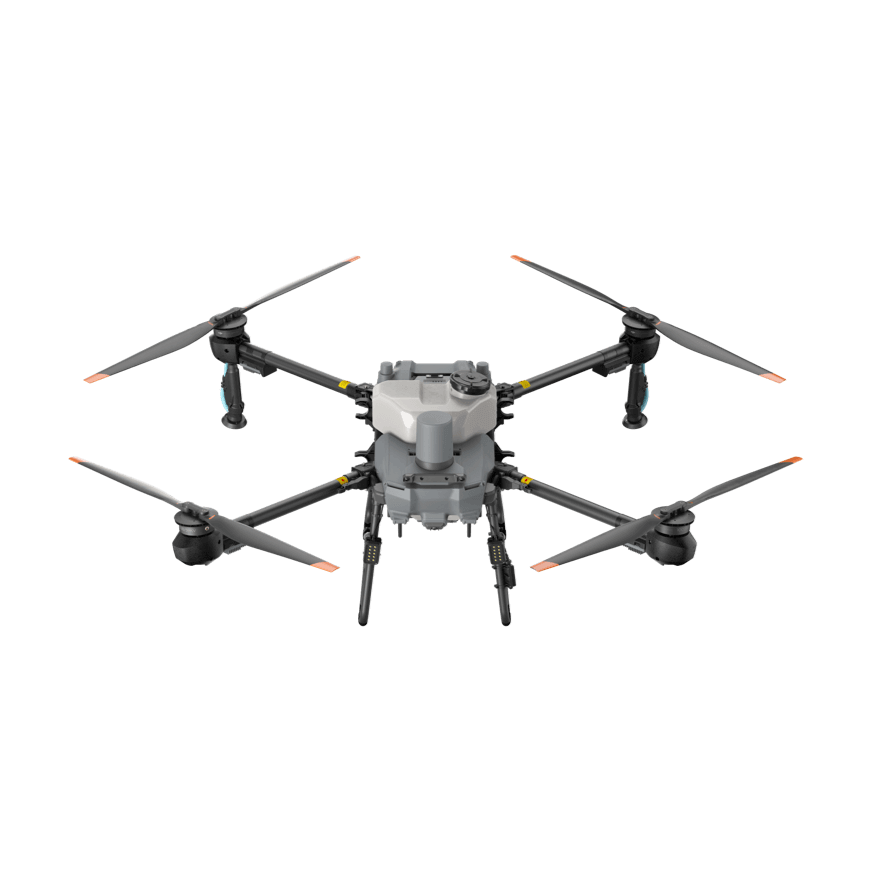
A FlyCart winch package can be relevant where touchdown is unsuitable, while a fixed-cable lifting system has a different method and equipment scope. Check the model-specific system, not merely the word ‘lifting’. For a T200 farm-lifting enquiry, do not substitute a spraying mission: DJI describes that model as an agricultural lifting aircraft. Resolve exact market configuration and documentation before committing either platform to an Irish authorisation proposal.
These briefs show what to investigate. They intentionally do not assign a SAIL, buffer distance or approval result without a site-specific assessment.

14. Battery rotation improves turnaround; it does not extend an authorised flight
Separate sortie endurance from daily throughput. An extra battery can reduce waiting on the ground, but each flight still needs sufficient energy for the load, wind, climb, route, contingency and landing reserve. Replacing a battery after landing does not make a route with inadequate reserve acceptable.
A three-battery plan may make sense for a particular single-battery aircraft if charging, cooling and handling can keep pace with the work cycle. It does not mean three complete sets for an aircraft using two batteries at once. For dual-battery operation, count matched serviceable sets and define how the manufacturer permits them to be used and charged.
Generator refuelling is a ground-support task. It does not put fuel into an electric drone or create continuous flight. Verify the generator, charger, input power and model-specific charging arrangement, then measure actual turnaround under permitted conditions. Include cooling, connections, inspections, material handling and crew workload in the calculation.
What does seven minutes mean? DJI’s current Chinese specifications for T200 and FlyCart 200 label seven minutes as maximum loaded hover time with four batteries; the loaded two-battery reference is four minutes. DJI’s global FlyCart 100 page separately lists a seven-minute loaded flight-time test for its single-battery emergency configuration. These are different test conditions, and none is a seven-minute climbing allowance. A test continued to battery depletion is not a mission plan with operating reserves. Use the detailed endurance and rotation guides for the complete conditions and practical calculations.
Refer to the exact conditions on DJI FlyCart 100 specifications; do not transfer the figure to a different aircraft or battery arrangement.
Exact T200 and FC200 references: DJI T200 Chinese specifications and DJI FlyCart 200 Chinese specifications. The regional figures do not establish the documentation or approval of an Irish configuration.
15. Aviation approval does not replace spraying, site or environmental permissions
Maintain a permissions register with a separate row for each relevant authority and land or asset controller. Record what permission covers, its conditions, expiry and the person responsible. An IAA assessment addresses aviation risk; it does not decide whether a chemical application, land use or recording activity is lawful.
For pesticides, start with the Irish agricultural rules and the Department of Agriculture, Food and the Marine. The IAA’s published UAM 016 agricultural guidance, dated May 2024, describes the separate aerial-spraying restrictions and reports that no Irish derogation had been adopted at that time. Do not turn the existence of a theoretical licensing route into a claim that routine drone pesticide spraying is currently available. Obtain current written DAFM confirmation for the actual product, equipment and proposed operation before contracting it.
Seed and fertiliser work still needs the correct aviation treatment and applicable agricultural and environmental checks. Cargo needs accurate classification too: dangerous goods are not identified by mass alone. Keep substance information, packaging and specialist advice where relevant, and discuss the appropriate approval route rather than assuming all cargo falls under a standard SORA case.
Also address land access, workers, livestock, protected sites, water, noise, privacy and insurance as relevant to the job. These are concrete project dependencies. Explain them to the customer during scoping so the equipment package and proposed application remain consistent.
Read IAA UAM 016 — agricultural applications, 30 May 2024 with the current sector rules; use the separate pesticide-permissions article for the detailed Irish legal distinction.
16. After approval: release the actual job, control changes and plan renewal
Read the issued authorisation as an operating document. Compare its aircraft, locations, activity, crew and limitations with the planned work. Put its conditions into the job pack and the go/no-go checklist. Do not treat approval of one concept as automatic permission for a longer route, different payload, new pilot arrangement or different aircraft variant.
Before each deployment, check current site access, airspace, weather, aircraft condition, crew fitness and any customer-side obligations. Confirm that temporary changes have not invalidated the assumptions: a new public event, construction crane, blocked receiving point or moved loading area can alter the original safety argument. Give the pilot a clear stop authority even when a customer is waiting.
Keep an operational record that supports later review. Record flights, loads or material, battery identities, faults, maintenance and changes relevant to the operation. Use occurrence-reporting and emergency procedures when required. Review recurring interruptions as evidence that the operating concept or site control may need improvement.
The IAA’s current guidance states a two-year operational-authorisation validity and permits renewal applications up to 60 days before expiry. Treat the issued authorisation and current guidance as the reference, and allow time for changed rules and revised evidence. A renewal should review the safety case, not simply change a date on an old application.
A useful handover to the operating team includes the controlled manual, authorisation conditions, site-assessment method, crew records, maintenance baseline, emergency contacts and a change-control register. That turns the preparation effort into an operating system that can be used on the ground.
Renewal and application provisions: IAA UAM 012 — application guidance, Issue 6, 15 May 2026. Check the actual issued conditions before every expansion of scope.
Need help preparing your SORA application?
Irish Drone can help you scope the proposed operation, choose a relevant aircraft and package, organise the CONOPS and operations-manual inputs, and prepare the evidence needed for a SORA application. Start by sending us the location, task, intended aircraft, load or material, route, operating height and planned crew arrangement.
We will identify the preparation work and any manufacturer, training, insurance or sector-permission dependencies before agreeing the support scope. The operator remains responsible for its operation, and the IAA makes the authorisation decision. We do not promise approval or an approval date.
Frequently asked questions
Does a SORA approve the aircraft for every Irish job?
No. It supports assessment of a defined operation. The IAA issues an authorisation with scope and limitations; changes may require reassessment or an amendment.
Is SORA 2.5 the only accepted version in Ireland in November 2026?
The IAA’s published May 2026 guidance accepts SORA 2.5 and also retains 2.0, with 2.0 withdrawal expected at the end of 2026. Confirm current transition provisions at submission.
Can an IAA authorisation alone permit pesticide spraying?
No. The separate Irish pesticide, product, equipment and DAFM permissions must be resolved; aviation approval does not replace them.
Does the IAA promise approval within 30 days?
No. UAM 012 says to allow up to 30 days from submission to commencement of review, not approval.
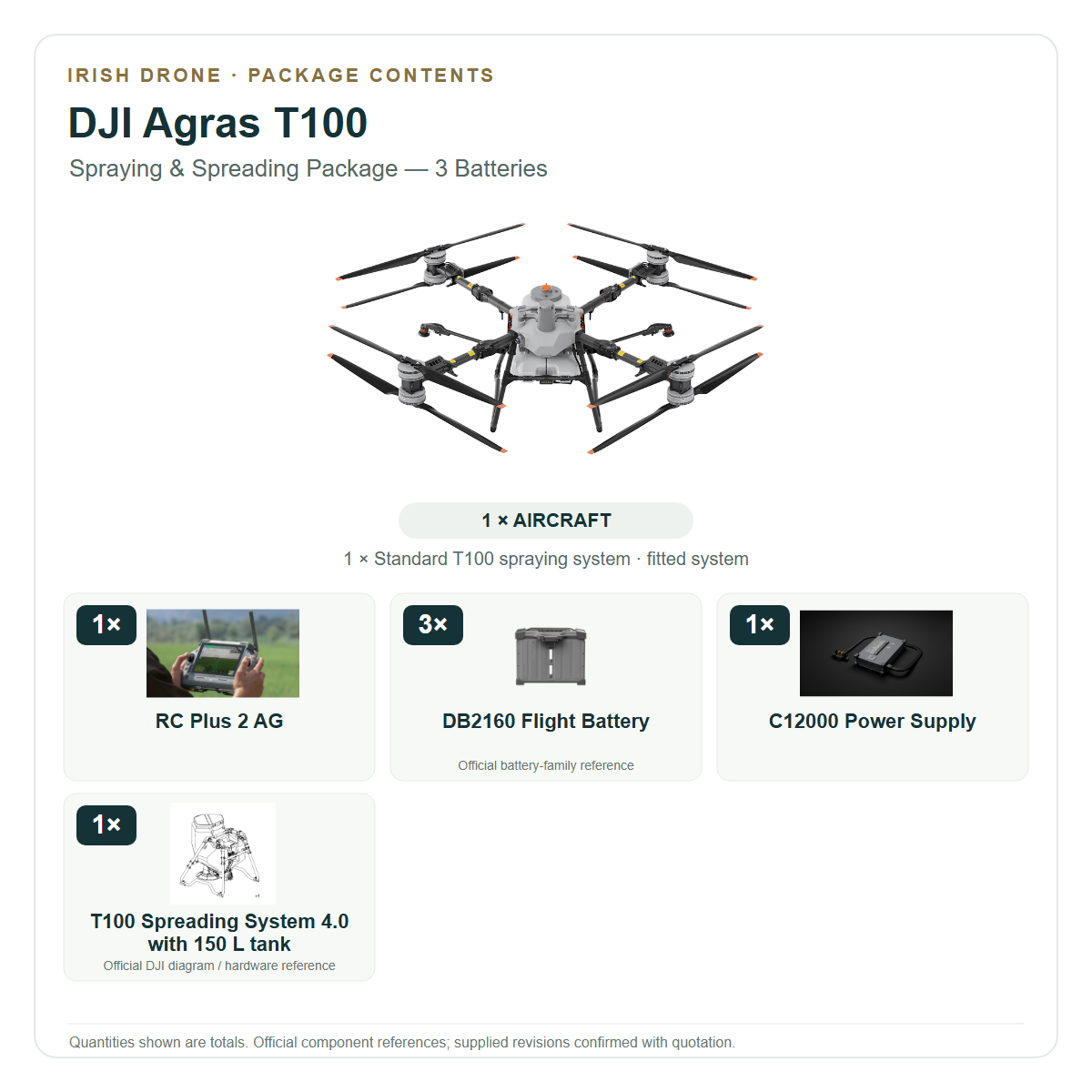
Explore the aircraft and packages
Follow the product page for the exact configuration and included equipment. Equipment selection and operating authorisation are separate parts of the project.

Plan the next part of your operation




Official sources and technical guidance
These links support specific facts in the guide. Check the current revision and operating conditions when preparing a real project.
DJI’s Chinese-market T200 and FC200 references may require China Mainland to be selected in the official site’s region settings; the default region can display a not-found page. Their regional technical data does not establish an Irish configuration or operating approval.
- IAA UAM 012 — application guidance, Issue 6, 15 May 2026
- IAA UAM 012A — SORA 2.5 application form
- EASA June 2026 Easy Access Rules — SORA 2.5 main body
- EASA SORA 2.5 Annex A — operation information and compliance matrix
- EASA SORA 2.5 Annex E — integrity, assurance and safety objectives
- IAA operational authorisation routes
- IAA UAM 008 — flight geography, contingency volume and ground risk buffer
- IAA UAM 013 — enhanced containment and flight termination
- IAA 2026 Schedule 6 — UAS fees
- IAA UAM 016 — agricultural applications, 30 May 2024
- IAA drone operator registration
- IAA remote pilot competency
- IAA UAS geographical zones
- IAA direct remote identification
- DJI FlyCart 100 specifications
- DJI T200 Chinese specifications
- DJI FlyCart 200 Chinese specifications

Pingback: FlyCart 30 vs 100 vs 200: Task-Based Selection | Irish Drone
Pingback: Choosing a DJI Agras in Ireland | Farm & Contractor Guide
Pingback: EU Drone Operations in Ireland: Article 13 Cross-Border Guide
Pingback: Heavy-Lift Drone Insurance & Operating Records Ireland
Pingback: Drone CONOPS & Operations Manual Ireland: Practical Guide
Pingback: Drone Pesticide Spraying Ireland: DAFM & IAA Requirements
Pingback: VLOS & BVLOS Planning for Heavy Drones in Ireland
Pingback: Agras & FlyCart Pilot Training in Ireland: What to Prepare
Pingback: Heavy Drone Rules Ireland: Open, Specific or Certified?
Pingback: Agricultural Drone Roles | Spraying, Spreading & Lifting